Cart
0


FL, IF

Internally flawless


Last updated: June 3, 2026
By using ronoradiamond.com or placing an order with us, you agree to these terms. Please read them before purchasing.
By placing an order, you confirm that you are at least 18 years old and legally able to enter a binding agreement.
We do our best to make sure all product descriptions, images, and specifications are accurate. However, slight differences in color or appearance can happen due to photography, screen settings, or natural variation in gemstones and metals.
All diamonds sold by Ronora Diamond are real CVD lab-grown diamonds. They are chemically, physically, and optically identical to mined diamonds — created using Chemical Vapor Deposition technology. They are conflict-free.
All prices are in USD unless stated otherwise. Prices can change without notice, but the price at time of your order confirmation is what you pay. We are not responsible for currency conversion fees or exchange rate changes.
We accept all major credit and debit cards, PayPal, and other payment options shown at checkout. All payments are processed securely.
For custom orders: full payment is charged when your order enters the casting stage. We’ll notify you when this happens.
Having trouble paying on the website? Contact us on WhatsApp at +91 96625 52146 and we’ll help.
Custom pieces are made specifically for you. Here’s what you need to know:
You are responsible for providing the correct ring size when ordering. We offer one free resize within 6 months of purchase where the ring design allows. If we made your ring in the wrong size due to our error, we resize or replace it — including all shipping — at no cost.
IGI certification is included for center stones of 1.00ct or larger. For smaller stones, or for multi-stone pieces where no single stone is 1.00ct+, IGI is not included unless the listing says otherwise.
The certificate ships with the jewelry or is provided digitally. If the stone you receive doesn’t match the certificate, contact hello@ronoradiamond.com immediately.
International orders may be subject to import duties, customs fees, or taxes in your country. These are entirely the customer’s responsibility. We have no control over these charges and cannot predict their amount.
Everything on ronoradiamond.com — product images, descriptions, logos, design files, and written content — belongs to Ronora Diamond Jewelry. You may not copy, reproduce, or use our content commercially without written permission.
Our maximum liability for any claim is the amount you paid for the product in question. We are not liable for indirect or consequential losses. We are not responsible for delays caused by customs, carriers, natural disasters, or other events outside our control.
These terms are governed by the laws of India. Any disputes will be handled exclusively in the courts of Surat, Gujarat, India.
We may update these terms at any time. Changes take effect immediately when posted. Continuing to use our website after changes means you accept the updated terms.
Ronora Diamond — Made for the Moments.
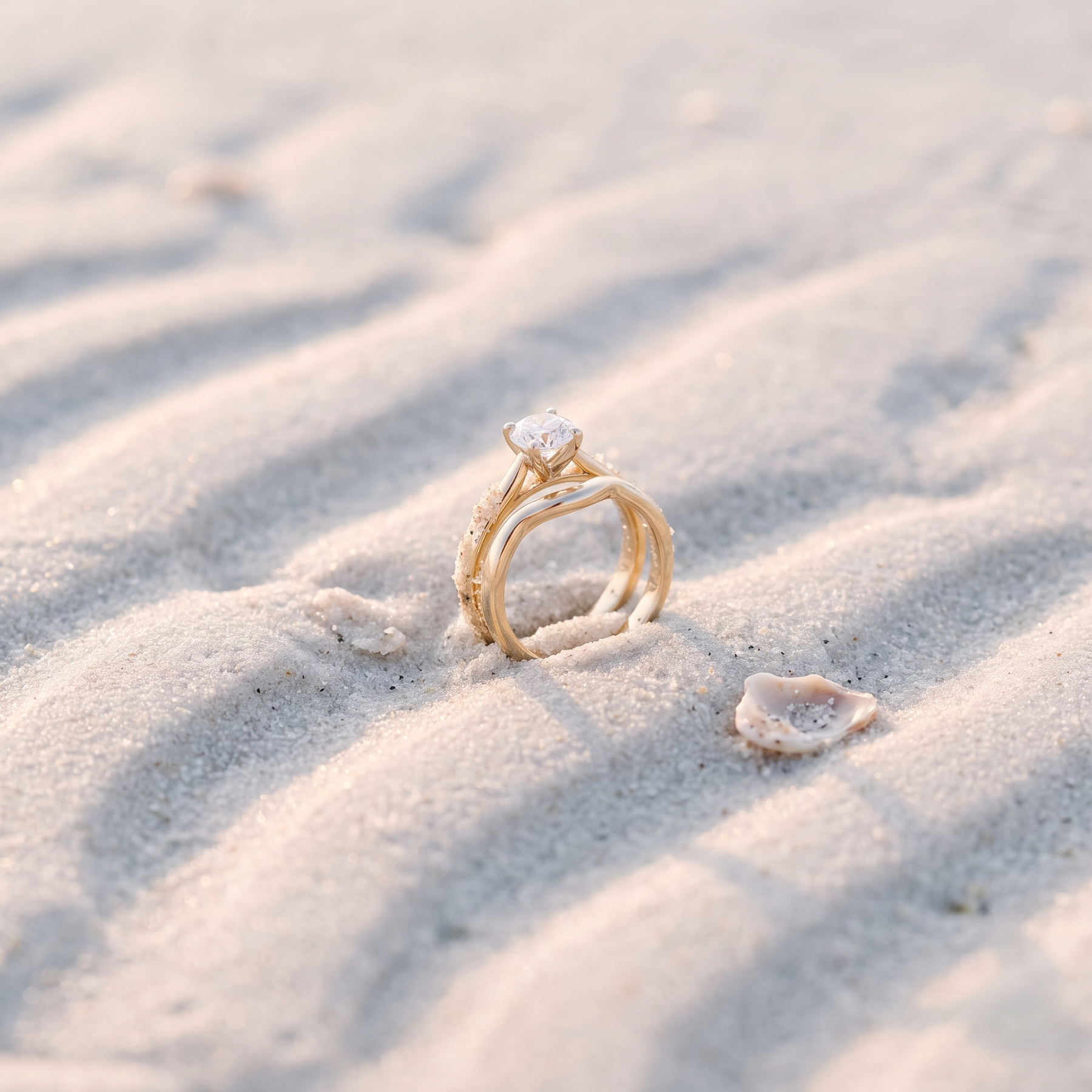
Diamond clarity describes the natural characteristics visible within or on a diamond. Understanding clarity grades helps you compare stones thoughtfully while balancing appearance, rarity, and value.
Clarity refers to the presence of inclusions or imperfections within a diamond. Inclusions materialize within a diamond when tiny particles of gas, metal and dust are caught inside the structure as it grows. Blemishes affect the surface of the gem.
Click a grade below to view inclusions

Flawless. The diamond is flawless. Stones like this are extremely rare, expensive, and difficult to buy.
Internally Flawless The diamond is internally flawless but has tiny external blemishes. Rare, hard to find, and beautiful.
Very, Very Slightly Included. Inclusions are present, but extremely hard to see - even under 10x magnification.
Very, Very Slightly Included. Inclusions are present, but extremely hard to see - even under 10x magnification.
Very Slightly Included. inclusions are present, but hard to see under 10x magnification.
Very Slightly Included. inclusions are present, but hard to see under 10x magnification.
Slightly Included. Inclusions are easy to see under 10x magnification. Some are visible to the naked eye.
Diamonds with large inclusions and blemishes have poor clarity. Diamonds with small (or no) inclusions or blemishes have good clarity. The position, size and visibility of inclusions can have a huge impact on its clarity and price.
It’s important to note though: clarity has nothing to do with the brilliance and sparkle of a diamond. What could affect a stone’s sparkle factor is cut, which you can read more about under the ‘Cut’ article.
Clarity can impact the price of a diamond, which tends to be a top consideration for most diamond buyers. Only the most rare and expensive diamonds have no inclusions. Unless you recently won the lottery, you may want to find out more about optimizing clarity and minimizing cost!
A more affordable way to get diamonds with little to no inclusions is to go lab-grown. Lab-grown diamonds still have inclusions, but you'll more easily find diamonds with high clarity grades at an affordable price point.
Internally flawless


Very very slightly included


Very slightly included


Slightly included

Included
To determine the clarity of a diamond, the GIA (Gemological Institute of America) uses a diamond clarity scale consisting of 11 grades:
| Clarity grade | Meaning |
|---|---|
| Flawless (FL) | No inclusions or blemishes using 10x magnification |
| Internally flawless (IF) | No inclusions using 10x magnification |
| Very, very slightly included (VVS1 and VVS2) | Slight inclusions barely visible to a skilled diamond grader using 10x magnification |
| Very slightly included (VS1 and VS2) | Small inclusions ranging from difficult to somewhat easy to identify by a grader using 10x magnification |
| Slightly included (SI1 and SI2) | Inclusions are visible with 10x magnification |
| Included (I1, I2 and I3) | Obvious inclusions using 10x magnification which might affect brilliance and transparency |
A diamond certificate reveals the clarity of the diamond among its other grading characteristics. Ronora displays the clarity grade where grading information is available. Shorthand grades such as VVS1 or SI2 are used by jewellers all over the world, so it is worth understanding their meaning when shopping for a diamond.
No two diamonds are the same! It's crucial to examine a diamond closely before buying it using something like Keyzar's 3D preview tool. If inclusions are located in the table of a diamond, they will generally be easier to see. Even a small one could ruin your ring’s appearance.
Keep in mind that inclusions and blemishes may not be visible to the naked eye and only under the close inspection of a trained diamond-grader. Even if a trained eye were to find inclusions using a loupe, what matters most is that the stone is eye-clean. Many times, inclusions that are visible under a loupe are not visible to the naked eye.
A diamond that is 'eye-clean' is one that has no imperfections visible to the naked eye. This is the only thing you should be after (unless you’re a professional diamond trader). Spend your money on size, not on clarity. Go for the minimum clarity: eye-clean. SI1 diamonds are usually eye-clean but to make absolutely sure, use our 3D preview tool to see for yourself. If you go for a brilliant cut diamond, a below-SI1 clarity may not be an issue as the sparkle will obscure the inclusions and blemishes.
Low sparkle cuts like the Asscher generally need to have a higher clarity to avoid visible imperfections. For step-cuts, we don’t recommend going for clarity less than VS. If you want to splurge, we suggest doing so on cut; not on clarity.
If your cut is poor, it doesn’t matter how clean the diamond is. It’ll look lifeless and crummy. So don’t spend the bulk of your budget on clarity, allocate your budget mostly to cut and carat size.
Our advice is to aim for eye-clean diamonds in lower clarity grades. If you choose Keyzar, we recommend you to get in touch with us for advice on specific diamonds. We might help you save even more money by using prongs and bezels to hide light defects.
The good news is you don’t need to spend a fortune to find a high quality diamond with superb clarity and sparkle. You just need to consider the 4C’s: Cut, Clarity, Color and Carat Weight. Hopefully, you now have a better idea of how to find a beautiful diamond.
Design your engagement ring and center stone
Carat weight is a universal unit of measurement in the jewelry industry. Contrary to what most people think, it doesn't refer to diamond size. It refers to diamond mass (i.e. weight).
Understanding the significance of carat weight can help you get a heavier, bigger-looking stone for less money. Missing the point on carat weight makes you vulnerable to overpaying for a scrawny, ugly-looking stone. Understanding diamond weight is that important. Below, we'll share everything you need to know carat weight. We'll cover size, price, quality, and more. Let's start with the basics.
What even is a carat? We're not talking about the preferred snack of your favorite cartoon rabbit. It's a unit of measurement specifically used for defining the weight of a gemstone. Adults usually think diamond carats are way more fun than rabbits' carrots…

1 carats
Carats measure a stone’s weight. The higher the carat weight, the heavier and bigger a center stone. Use the slider to see how diamond size changes with carat weight.
The size of a diamond is proportional to its carat weight. When rough diamonds are cut and polished into finished diamonds, up to 2/3 of the total carat weight may be lost. Since larger rough gems of high quality are found less frequently than smaller rough gems of high quality,
In other words, a carat tells you something about a diamond’s size… But not in the way you might be expecting. Since carat weight is related to the length, width, and depth of a diamond, the relationship between carat weight and size is not directly 1:1. In the image above, the carat weight increases by 1 carat (that is, 0.2 grams) and increases in diameter only by 1.5mm. This is an example of how carat weight and length/width of the stone is not necessarily a 1:1 relationship.
(Note: the ratio between carat weight and stone dimensions also changes depending on stone shape. So, stone size increases at a different rate per carat in round versus oval stones)
Gemstones vary in density and anatomy. Rubies are usually cut to be deeper than diamonds. This means a 1 carat ruby will be a little smaller in dimensions than an equivalent diamond. This (or the contrary) is true for many other stones. Topaz is denser than diamonds, meaning it also looks smaller.
One carat weighs 0.2 grams, or 0.007 ounces. A diamond weighing 1 gram would be 5 carats. Now that's a big chunk of diamond! Diamonds are also referred to in points. 1 carat is 100 points, while a half-carat diamond might be called a 50-pointer diamond.

Balanced proportions and good light return, although some light may escape through the diamond.
Close to ideal in light reflection and proportions, with strong brilliance and limited light leakage.
Optimized proportions and symmetry return a high level of light for outstanding brightness, fire, and scintillation.

A noticeable warm tint can be visible, especially in larger diamonds. J can offer strong value when its warmth complements the setting.
A slight warm tint may be visible from some angles. It can appear softer when paired with a warm-toned metal.
Near-colorless. Subtle warmth may appear during close comparison, while the diamond generally looks bright face-up.
Near-colorless. Any tint is difficult to see without comparison, making G a popular balance of appearance and value.
Colorless. Only a gemologist is likely to detect the faintest trace of color under controlled grading conditions.
Colorless. Minute traces of color are extremely difficult to detect, even during professional grading.
Colorless. D is the highest grade on the GIA color scale and shows no detectable color under controlled grading.