Halloween Sale: Free Express Shipping Until October 31, Plus 10% Off Everything Until December 31
Shop Now
Extra 10% Off Your First Order: Code WELCOME10
Create Account
Extra 5% Off Orders Over $3,000, Applied Automatically
Order by December 2 for Christmas Delivery (Express Shipping)
Lifetime Warranty on Manufacturing Defects | 15-Day Returns and Exchanges
Conditions apply
Gift-Ready Luxury Packaging | Free Shipping on All Orders!
Your welcome offer is ready. Apply it now and the saving shows at checkout.
WELCOME10 is applied. You save .
We could not apply the offer to this cart. If you think this is a mistake, please contact us.
We've sent you an email with a link to update your password.
Reset your password
We will send you an email to reset your password.
Ring Styles
What do you know about
engagement rings
Step into the world of diamond. Unearth the brilliance and eco-conscious charm of these gems. Explore their origin and distinctive qualities on this captivating journey.
engagement rings
Everything You Need to Know About Engagement Ring Styles
A bypass ring, a pavé solitaire and a crossover band
Quick Summary
Ring style is the design of the whole ring: how many stones it carries, how the band is shaped, and what character the finished piece has. It is a separate decision from diamond shape and from setting type. A solitaire and a halo can hold the identical stone and look nothing alike. This page is the index. Each style below has its own full guide. Ronora builds every one to order, in solid 9K, 14K or 18K gold, platinum or 925 silver, around a real CVD lab grown diamond in the D-E-F colourless range.
Most people arrive with a diamond shape in mind and no idea what to call the ring they want. That is normal. Shape, style and setting are three different decisions, and only the first one is obvious.
Shape is the outline of the stone, covered in our diamond shapes guide. Setting is the mechanism that physically holds it, covered in setting types. Style, the subject of this page, is the design of the ring as a whole. The International Gem Society uses the same separation, and keeping the three apart makes comparing rings far easier.
Engagement Ring Styles
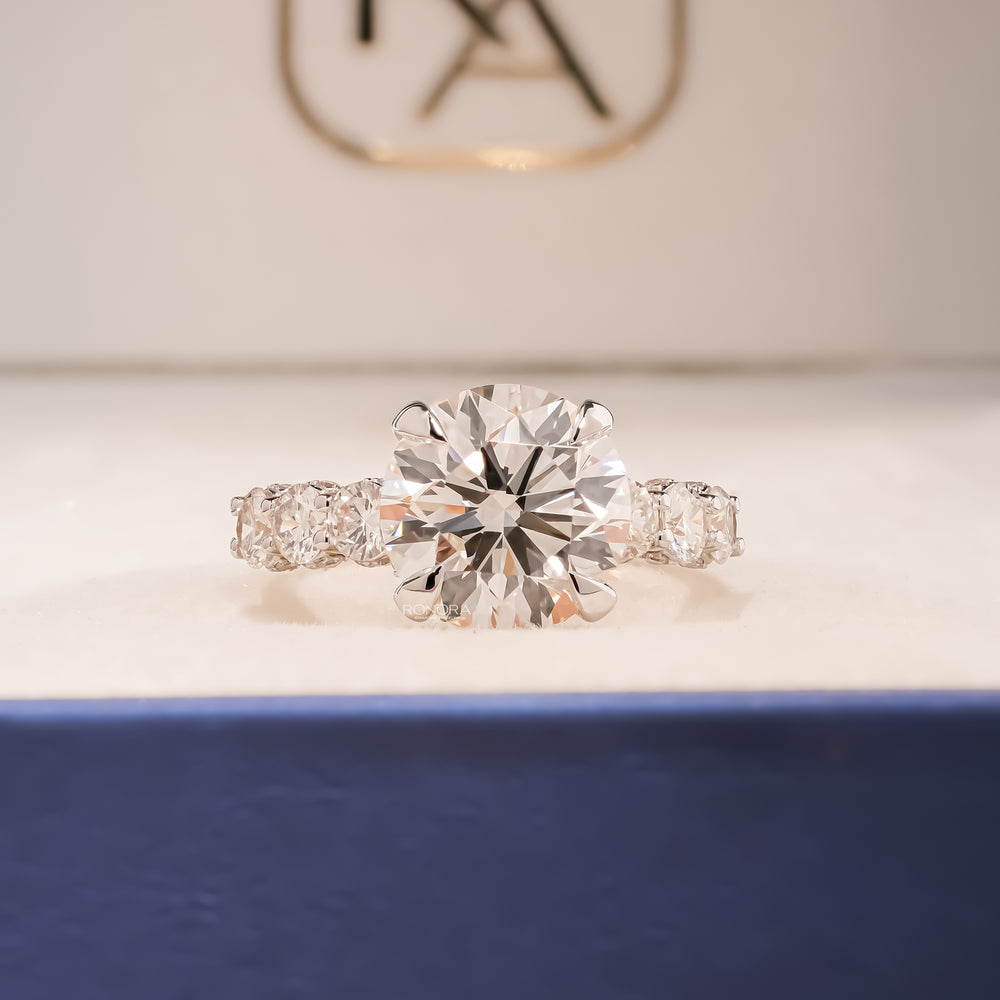
Solitaire. One stone, nothing else. The purest expression of a diamond and the style that never dates. A thin band makes the centre stone look larger.
Halo. A ring of small diamonds circling the centre stone. Makes a 1ct stone span about as wide as a 2ct, and frames the shape.
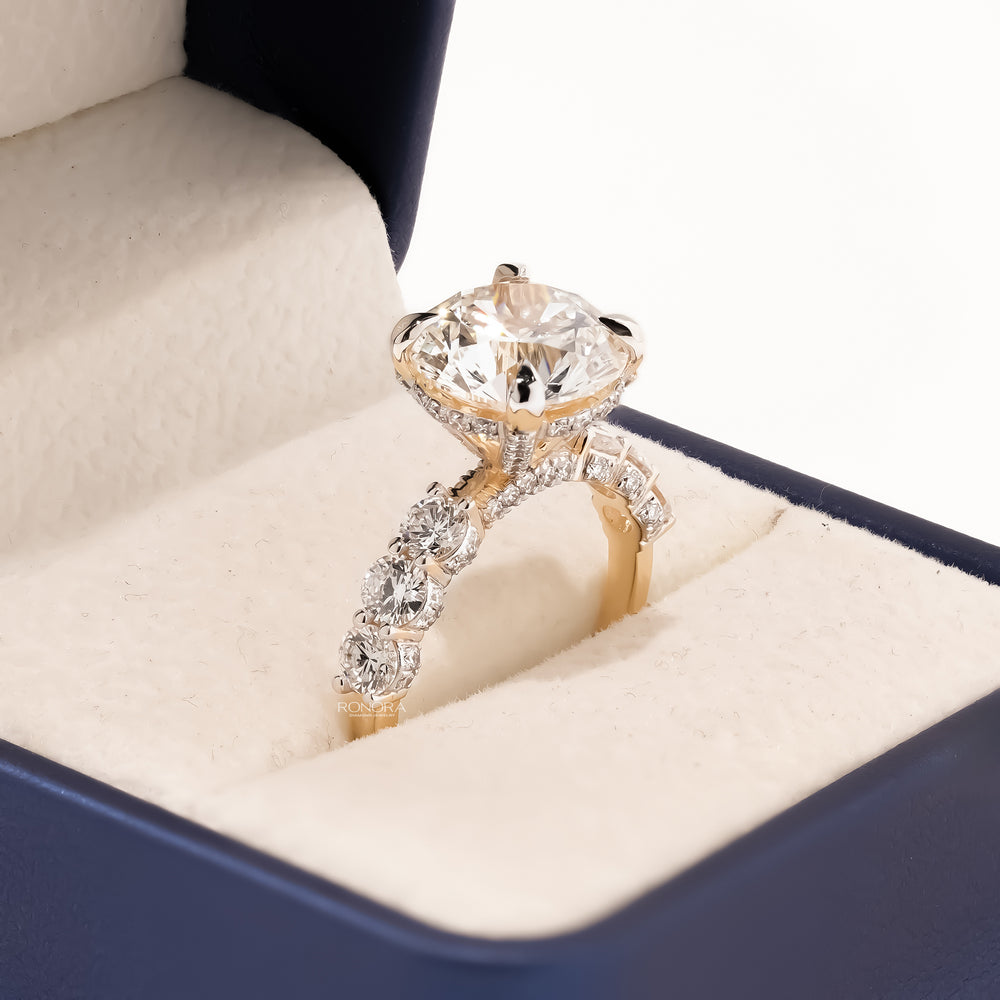
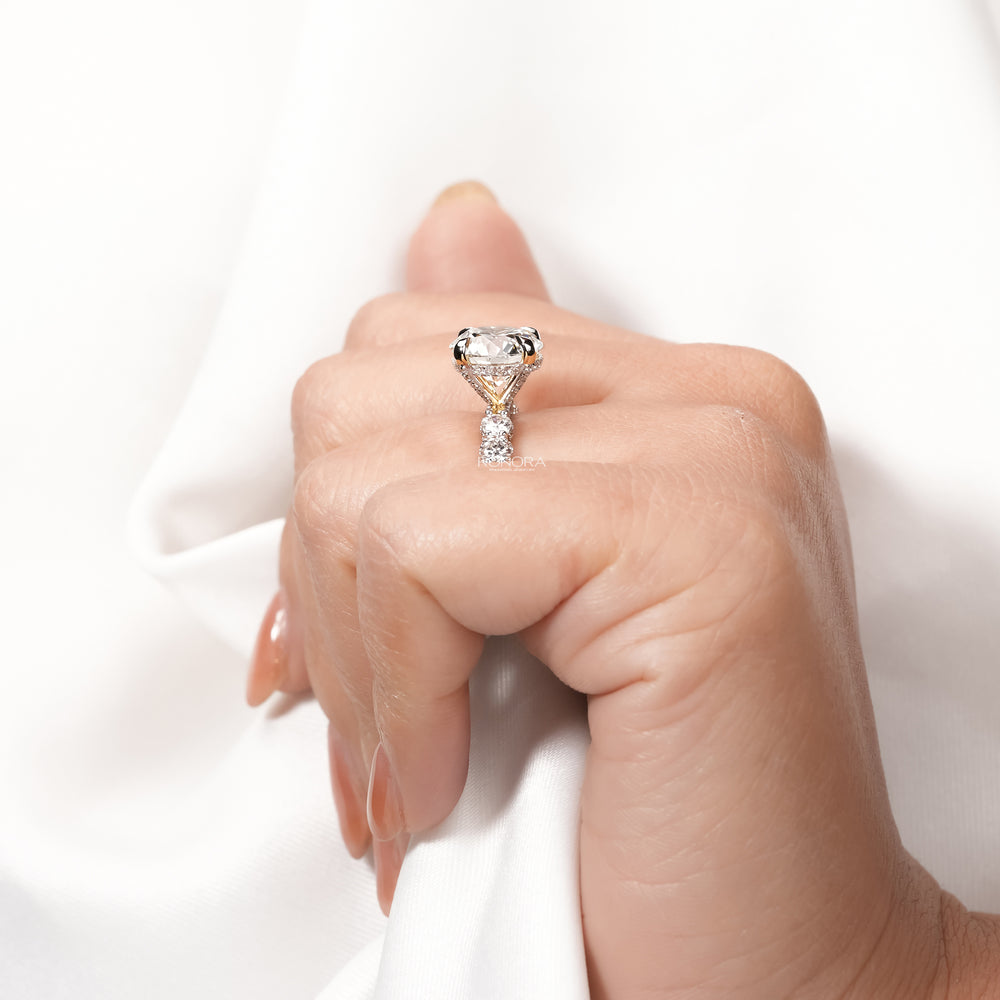
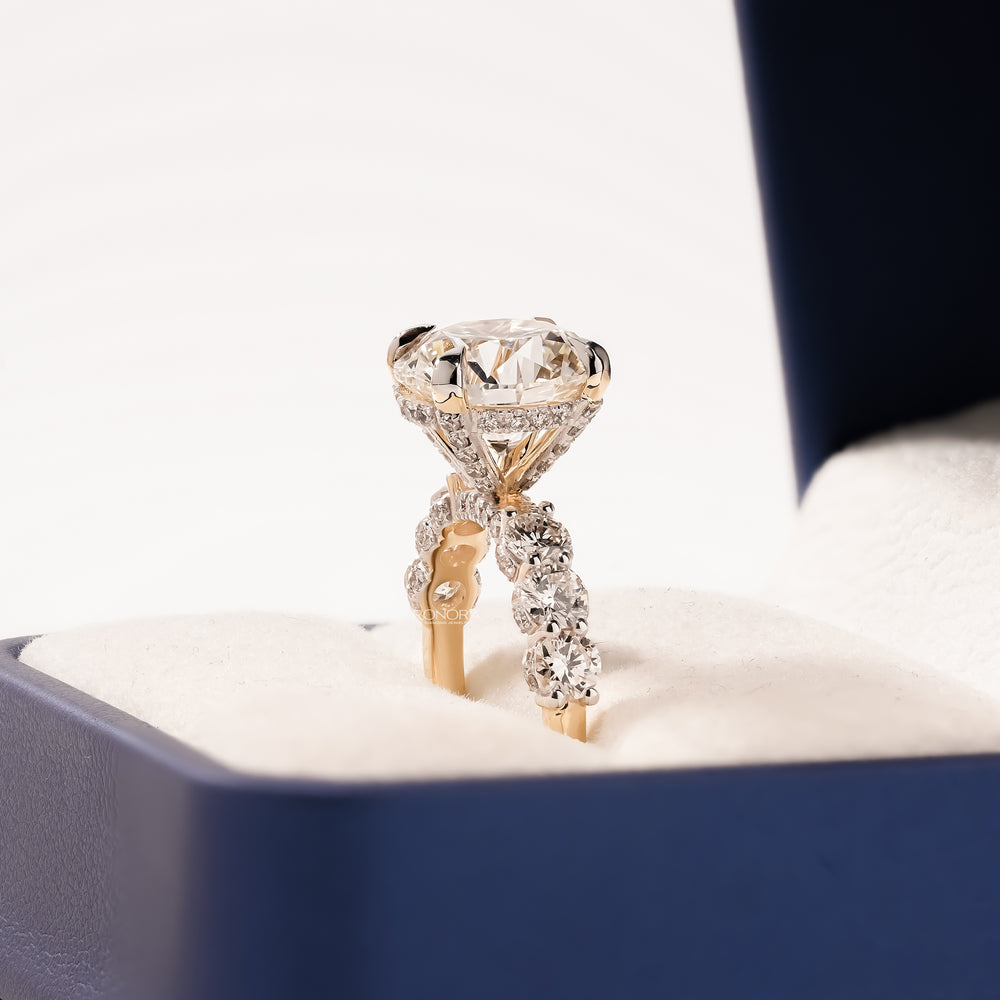
Hidden halo. The same idea tucked under the girdle where you only see it from the side. Currently the most requested detail we make, and it keeps the outline of the shape completely clean.
Trilogy, or three stone. A centre stone with a matched pair beside it, often read as past, present and future. The side stone cut sets the character of the whole ring.
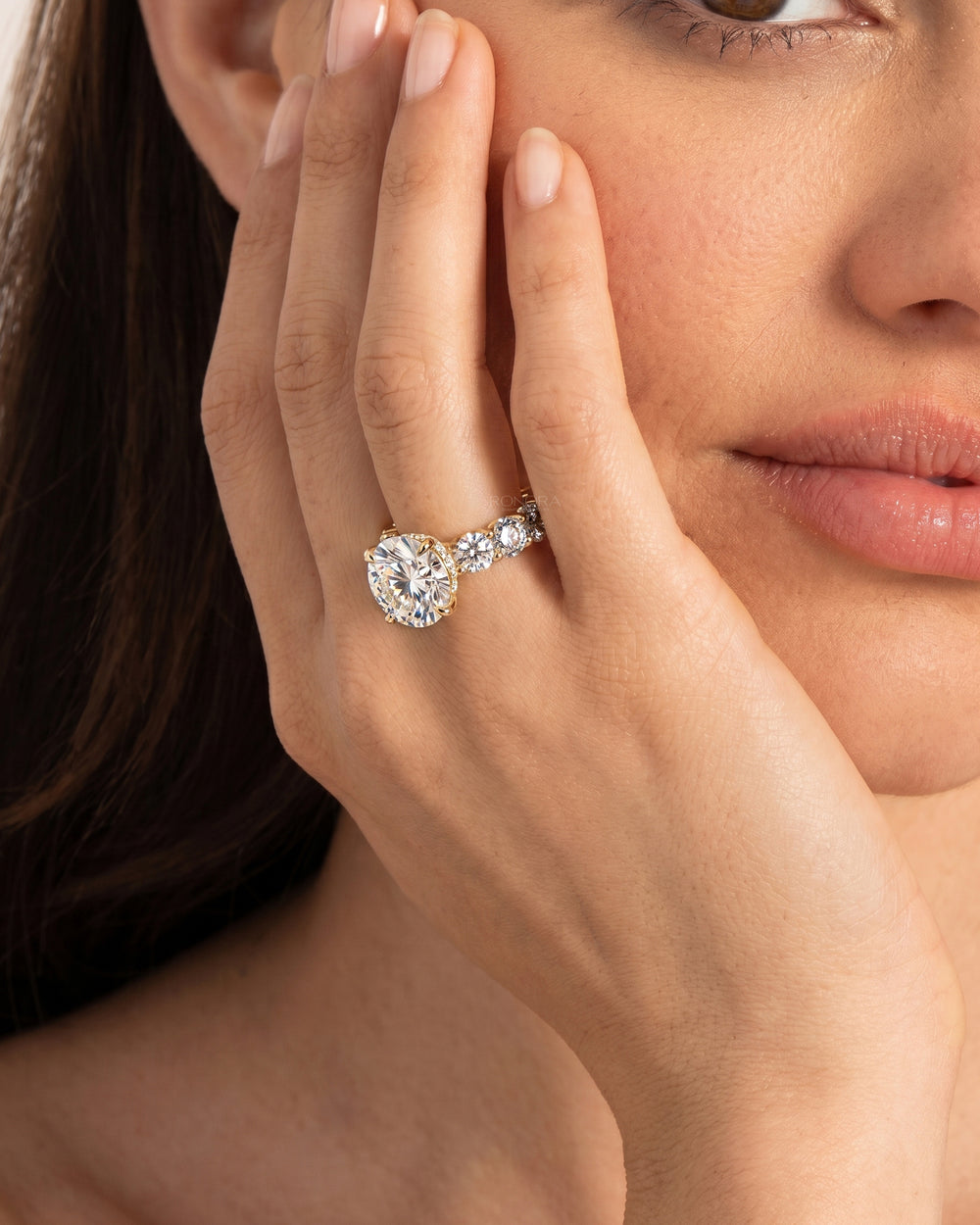
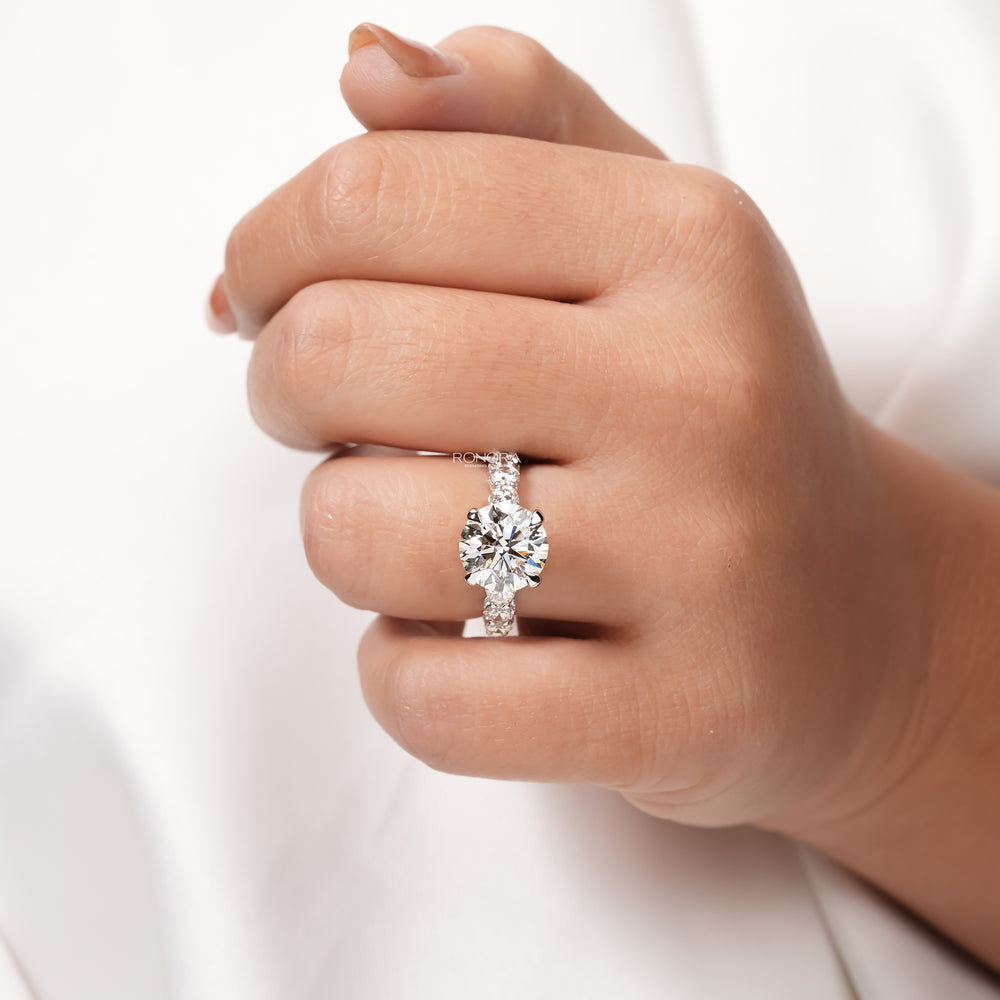
Side stone. Accent stones along the shoulders rather than a full second tier. Adds sparkle while keeping the centre clearly dominant.
Pavé. Tiny diamonds set flush along the band so the metal almost disappears. The most common way to add brilliance to any style.
Vintage. Milgrain edges, filigree galleries and engraved shoulders. Suits antique-leaning shapes such as the Asscher, the cushion and the Dutch marquise.
Bezel. A metal rim around the whole stone. The most secure and the most modern, and the best answer for anyone who works with their hands.
Minimalist. A thin band, a low profile and no ornament. Quiet, comfortable, and easy to stack later.
Nature inspired. Leaf, vine and branch motifs worked into the band. Organic rather than geometric.
Coloured diamond. A fancy yellow, pink or green centre instead of a colourless one. Rarer, and unmistakably a choice rather than a default.
Promise ring. A smaller commitment piece, usually well under a carat, worn before an engagement or alongside one. A different statement rather than a lesser one.
Three pavé set engagement rings in radiant, round and oval
Every Engagement Style Compared
The same diamond looks completely different in each of these. Presence means how much room the ring takes up on the hand for a given centre stone.
Every Engagement Style Compared
Style
What it is
Presence on the hand
Best for
Solitaire
One stone, nothing else
Smallest
Anyone who wants the diamond to speak for itself
Halo
A ring of accents around the centre
Largest gain, a 1ct spans like a 2ct
Maximum presence for the carat weight
Hidden halo
Accents tucked under the girdle
None from above, lifts from the side
A clean outline with a private detail
Three stone
A centre with a matched pair
Wide, but reads as three stones
Symbolism and a formal look
Side stone
Accents along the shoulders
Moderate
Sparkle while the centre stays dominant
Pavé
Small stones flush along the band
Widens the band, not the centre
Light along the whole ring
Vintage
Milgrain, filigree and engraving
Moderate
Antique character and detail up close
Bezel
A metal rim around the stone
Can read slightly smaller
Working hands and a modern line
Minimalist
Thin band, low profile, no ornament
A thin band makes the centre look larger
Everyday comfort and later stacking
Nature inspired
Leaf, vine and branch motifs
Moderate
Something organic rather than geometric
Coloured diamond
A fancy colour centre stone
Same as the shape allows
A deliberate, unmistakable choice
Promise ring
A smaller commitment piece
Small by design
A meaningful gift before an engagement
If you are unsure, start with a solitaire and add later. A solitaire can be rebuilt into a halo or a three stone; the reverse is far harder. Each style above links to its own full guide.
Wedding and Anniversary Styles
Eternity band. Diamonds all the way round. A full eternity cannot be resized; a half eternity can, and looks identical from above. Read the guide before you choose.
Curved band. Contoured to nest against a solitaire or a long centre stone. Essential with pear, marquise and oval centres, which rarely sit flush against a straight band.
Wedding band. The plain or lightly set band worn alongside the engagement ring. Matching metal and profile matters more than matching ornament.
Anniversary ring. A later addition, usually with more stones than the original. Often worn on the right hand.
Men's ring. Wider profiles, heavier metal and either no stones or a small number set flush into the band.
Stackable. Thin bands designed to be worn several at a time, mixing metals and stone sizes.
An engagement ring worn with a matching half eternity band
How to Choose a Style
Start with the hand, not the trend. A large halo overwhelms a small hand; a thin minimalist band disappears on a large one. Proportion decides more than fashion.
Think about the wedding band early. A tall cathedralsolitaire, a hidden halo or a long pear centre will dictate what can sit next to it later. Deciding now saves a compromise in a year.
Match the style to the life. If the wearer works with their hands, a bezel or a low profile setting will survive where a raised solitaire will not.
Let the shape lead. Step cuts such as the emerald and Asscher suit clean geometric styles and three stone arrangements with baguettes. Antique-leaning shapes such as the cushion suit vintage detail. The heart carries its own meaning and needs little help.
Protect what can chip. Points and corners are the vulnerable parts. See setting types for how each option handles that.
Check the metal suits them. Style choices are easy to change on paper; metal is what they will look at every day. See jewelry metals.
Build It Your Way
Every style on this page is made to order in Surat, by hand, so nothing here is a fixed package. You can take any centre shape, any style and any metal and we will build the combination. Diamonds of one carat or more ship with their own IGI certificate. Next, read about the setting types that hold the stone, the metals the ring is made from, or browse all engagement rings.
Join for new designs, ring guides and private offers.
Sign up in one step with Google or your email.
By signing up, you agree to receive Ronora Diamond marketing emails and accept our Privacy Policy. You can unsubscribe at any time. The 10% code works once, on your first order.