Halloween Sale: Free Express Shipping Until October 31, Plus 10% Off Everything Until December 31
Shop Now
Extra 10% Off Your First Order: Code WELCOME10
Create Account
Extra 5% Off Orders Over $3,000, Applied Automatically
Order by December 2 for Christmas Delivery (Express Shipping)
Lifetime Warranty on Manufacturing Defects | 15-Day Returns and Exchanges
Conditions apply
Gift-Ready Luxury Packaging | Free Shipping on All Orders!
Your welcome offer is ready. Apply it now and the saving shows at checkout.
WELCOME10 is applied. You save .
We could not apply the offer to this cart. If you think this is a mistake, please contact us.
We've sent you an email with a link to update your password.
Reset your password
We will send you an email to reset your password.
Round Cut Diamonds
What do you know about
diamonds
Explore the captivating world of diamonds. Learn about their origin, beauty, and the 4 Cs that define their quality. Welcome to the world of timeless elegance and enduring brilliance.
diamonds
Everything You Need to Know About Round Cut Diamonds
Quick Summary
Round cut diamonds have been the preferred shape for centuries, known for their symmetry, light return, and timeless appeal. With 58 carefully angled facets, the round brilliant cut offers unmatched brilliance, fire, and scintillation that other shapes can’t match. Cut quality plays the biggest role in a diamond’s beauty and value, making the round brilliant a standout choice. Compared to shapes like oval, cushion, princess, or emerald, round cut diamonds consistently offer the strongest sparkle and most balanced look..
Round cut diamonds have long been the preferred choice for engagement rings and other types of fine jewelry. According to The Diamond Pro, they’re also the most popular cut, and for good reason. There’s something timeless about their perfect symmetry and the way they catch light with every turn. They’re not a trend. They’re the gold standard.
For over 600 years, round cut diamonds have been chosen for the moments that matter, whether you’re asking the biggest question of your life or celebrating something that words can’t quite capture. This guide walks you through everything you need to know about round cut diamonds, from sparkle science to setting styles, and why they remain the diamond of choice across generations.
Round cut Diamonds
What Is a Round Cut Diamond?
The modern round brilliant diamond is a masterpiece of geometry and light. With 58 facets including the culet (or 57 without) it’s cut to capture and reflect as much light as possible. Every angle, every plane, is carefully calculated to bring out maximum sparkle, making it the most brilliant of all diamond shapes. It adapts beautifully to any style while always delivering the same dazzling effect.
Before the round brilliant appeared, there was the Old European cut. This vintage equivalent to the modern round cut had taller crowns, larger culets, and a deeper glow. Old Euros are still beloved for their antique charm and soft, candlelight sparkle, but they lack the refined brilliance of today’s round cuts. If you want unmatched fire and scintillation, the round brilliant stands in a class of its own.
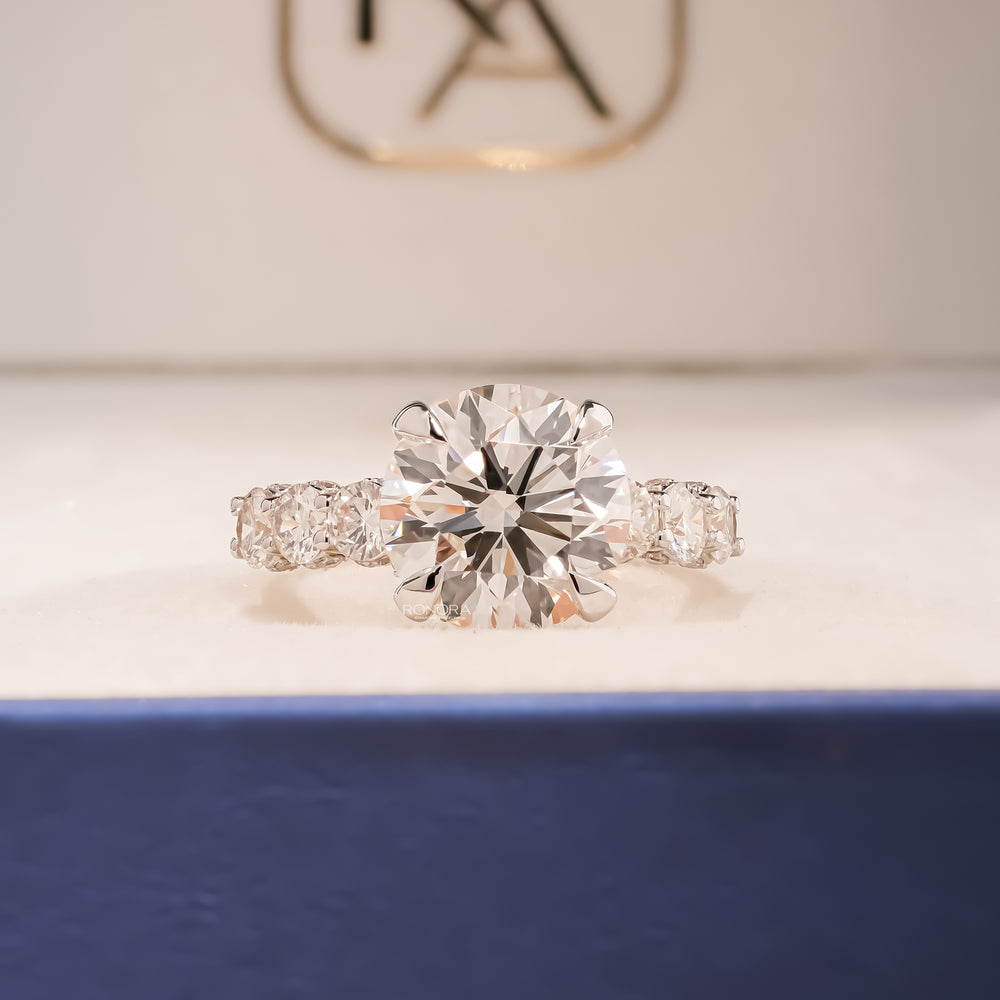
3.5 carat Round cut Diamond
The Science Behind the Sparkle: Brilliance, Fire, and Scintillation
A round brilliant diamond is the result of careful engineering, where each facet is shaped and angled to reflect and refract light with breathtaking precision. Three elements work together to create that magic: brilliance, fire, and scintillation.
Brilliance: Brilliance is the return of white light through the top of the stone. Round cut diamonds are crafted to reflect nearly 100% of incoming light, giving them their signature brightness. No other shape delivers the same crisp, icy glow.
Fire: Fire is the flash of rainbow color that dances across the facets. When a round cut is well-proportioned, you’ll see vivid sparks of red, blue, and green even in soft lighting. It’s this play of color that gives the diamond warmth and dimension.
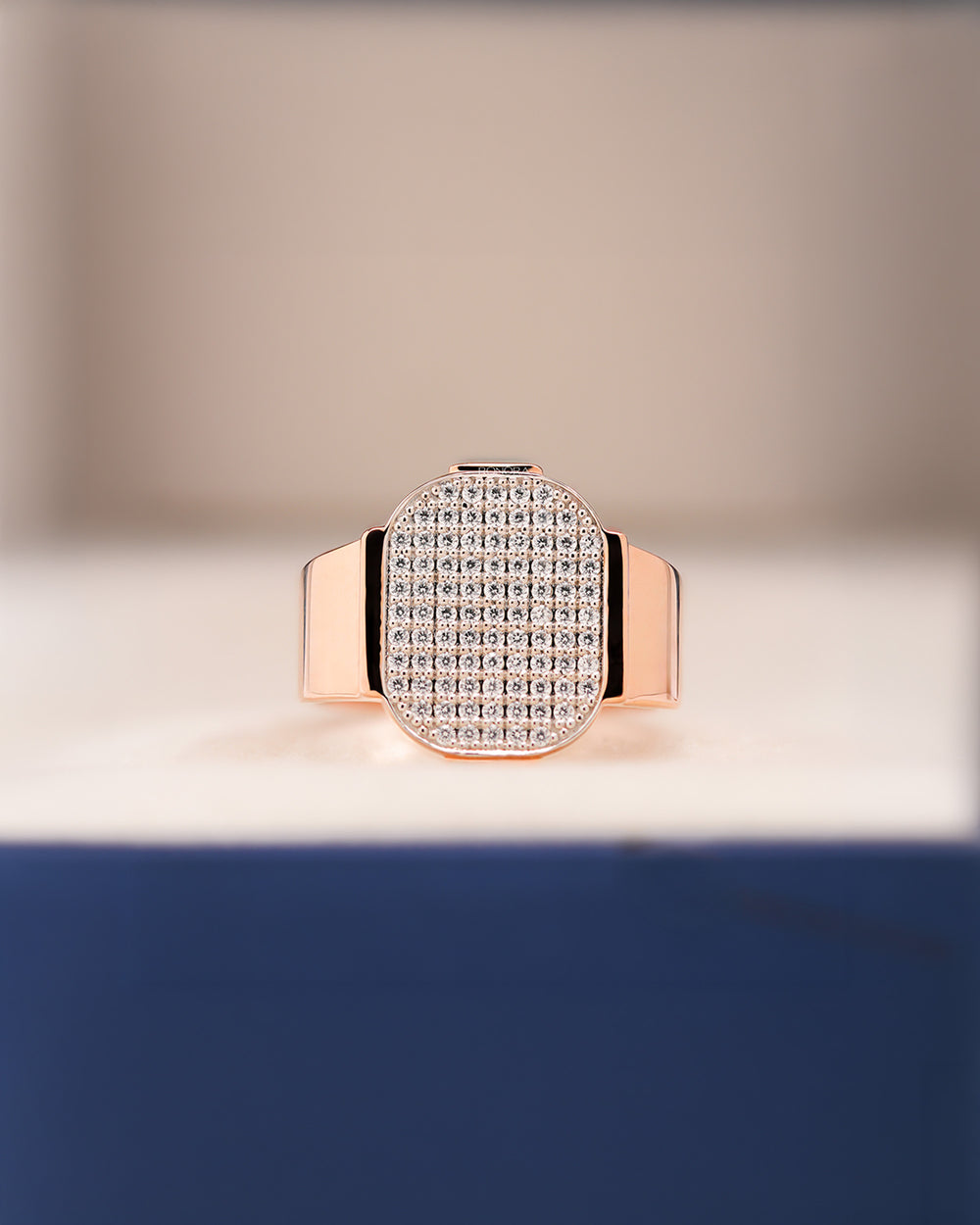
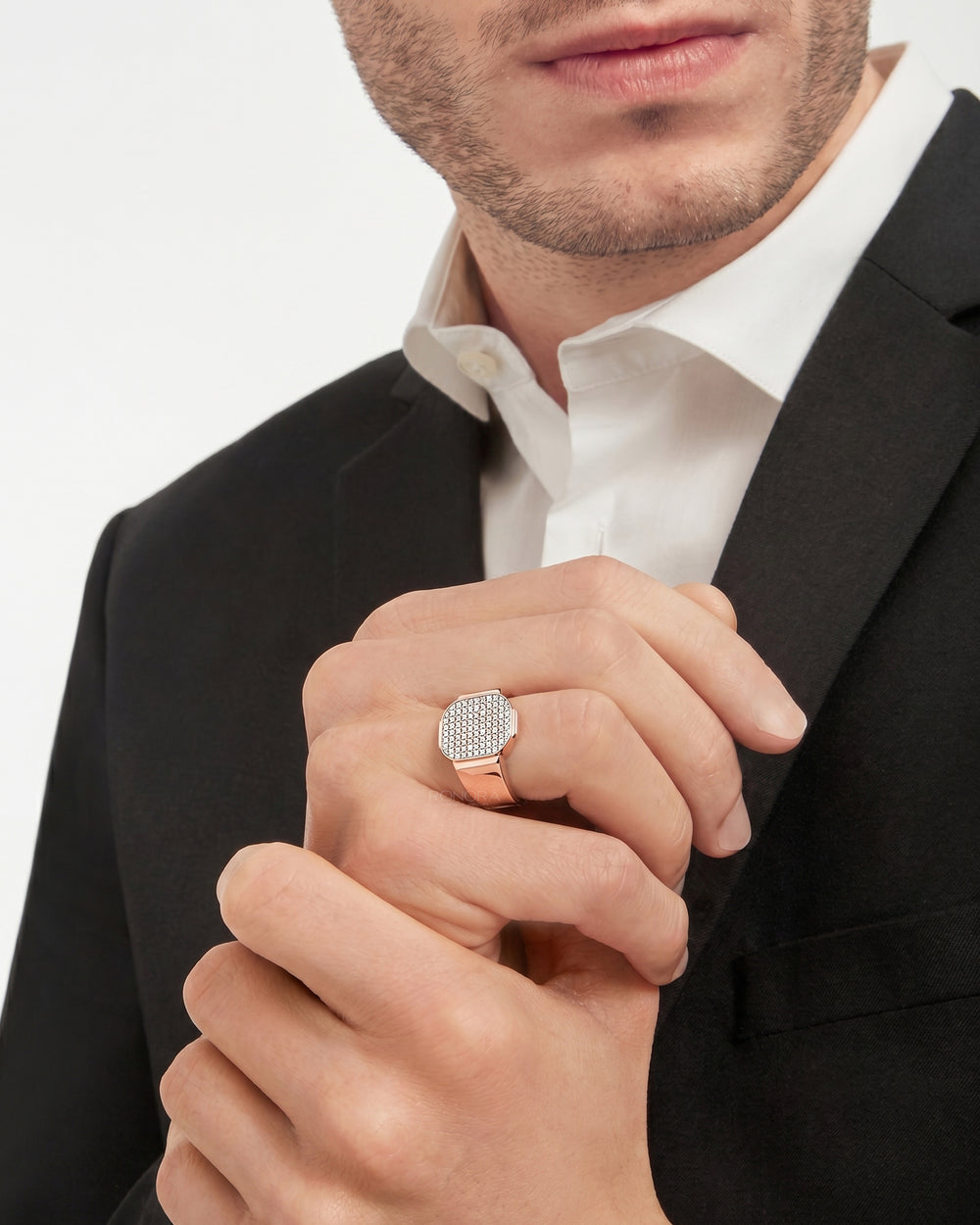
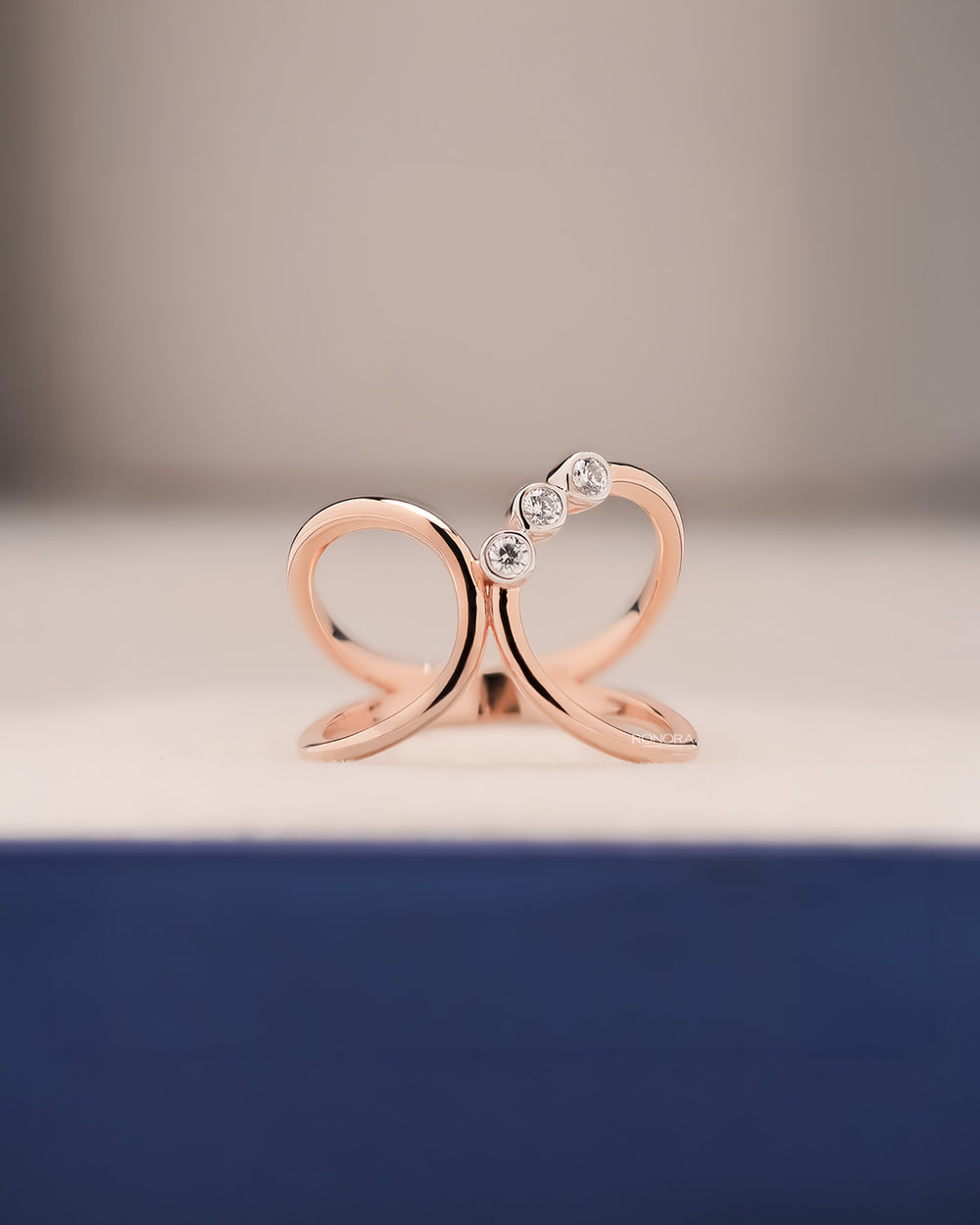
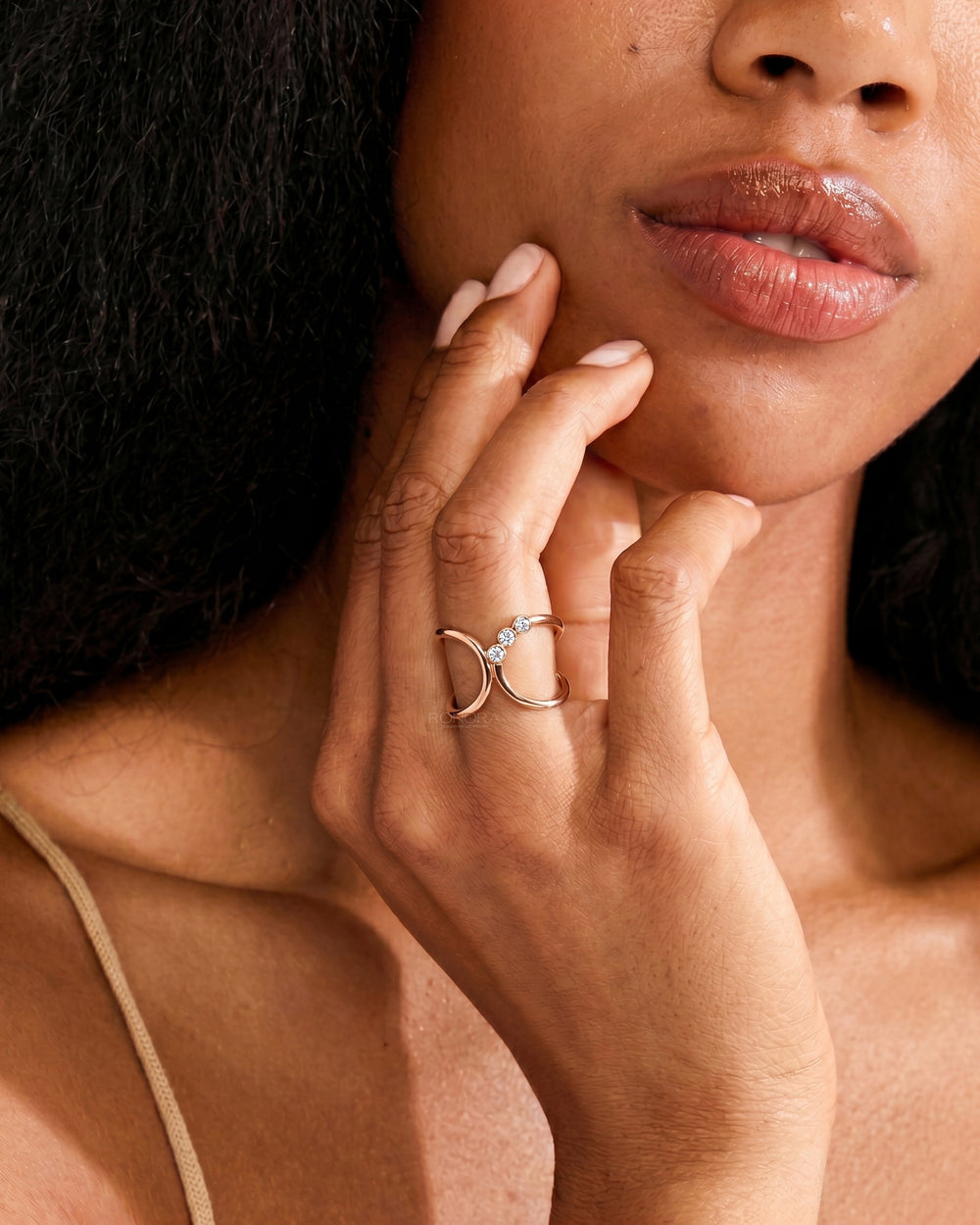
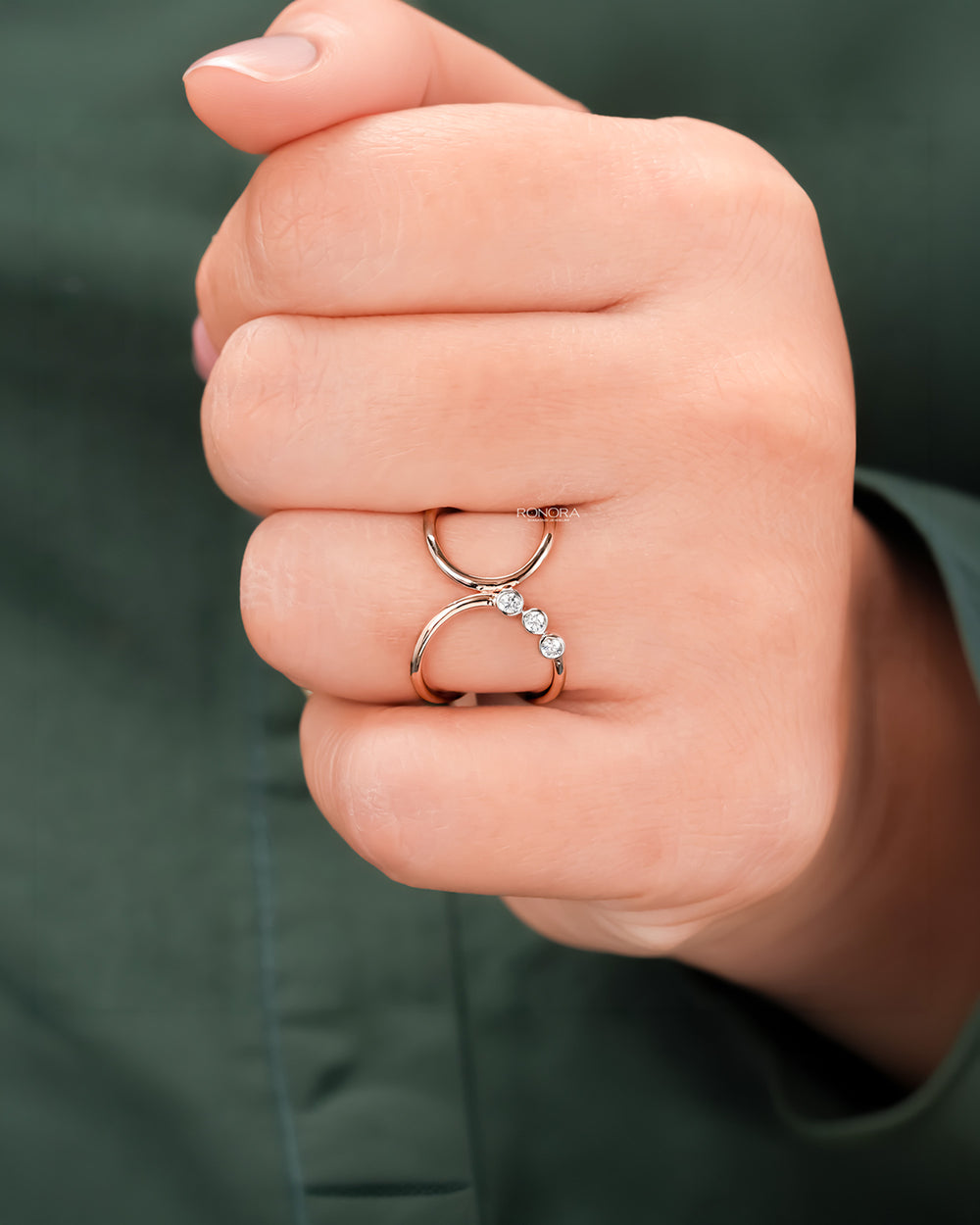
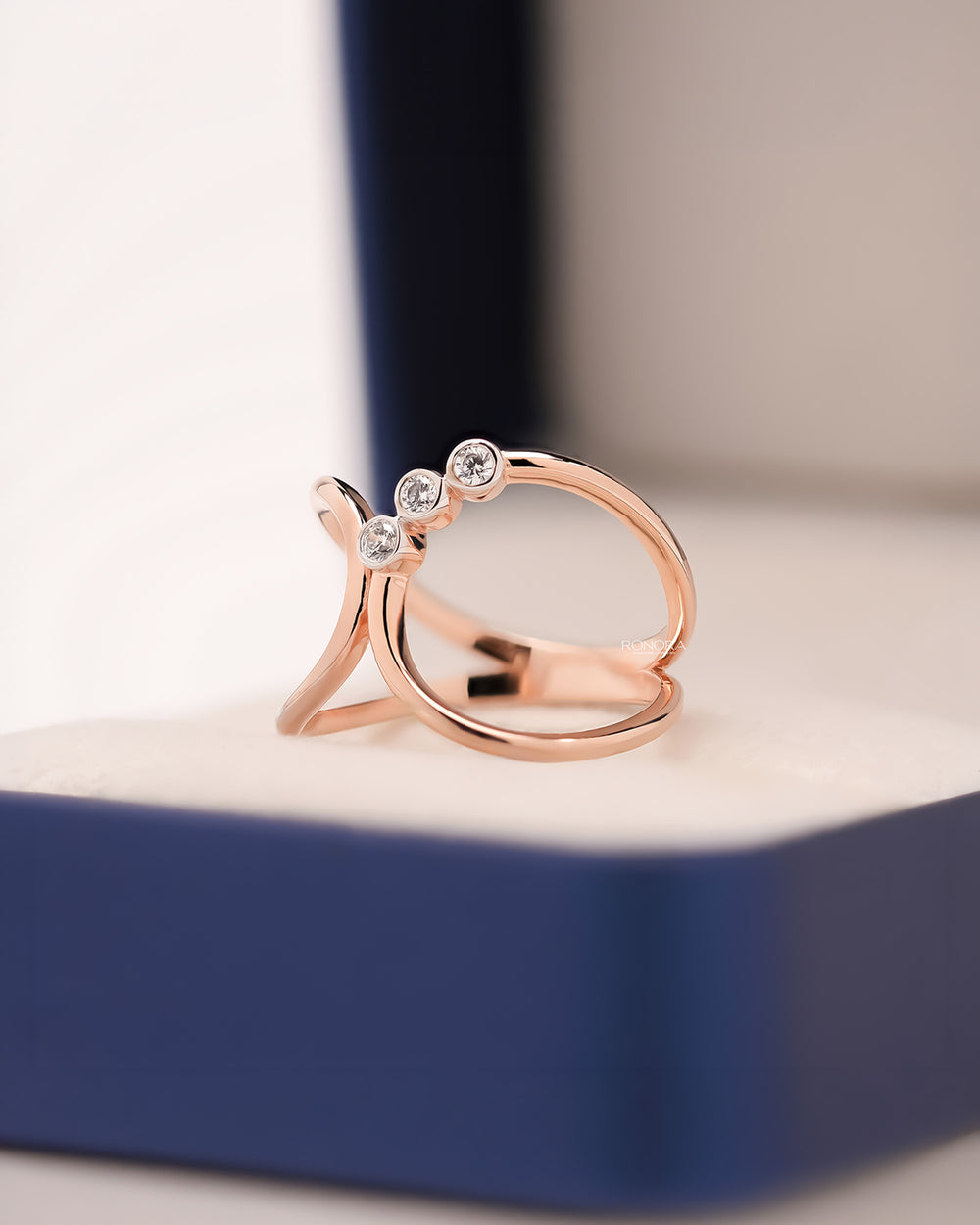
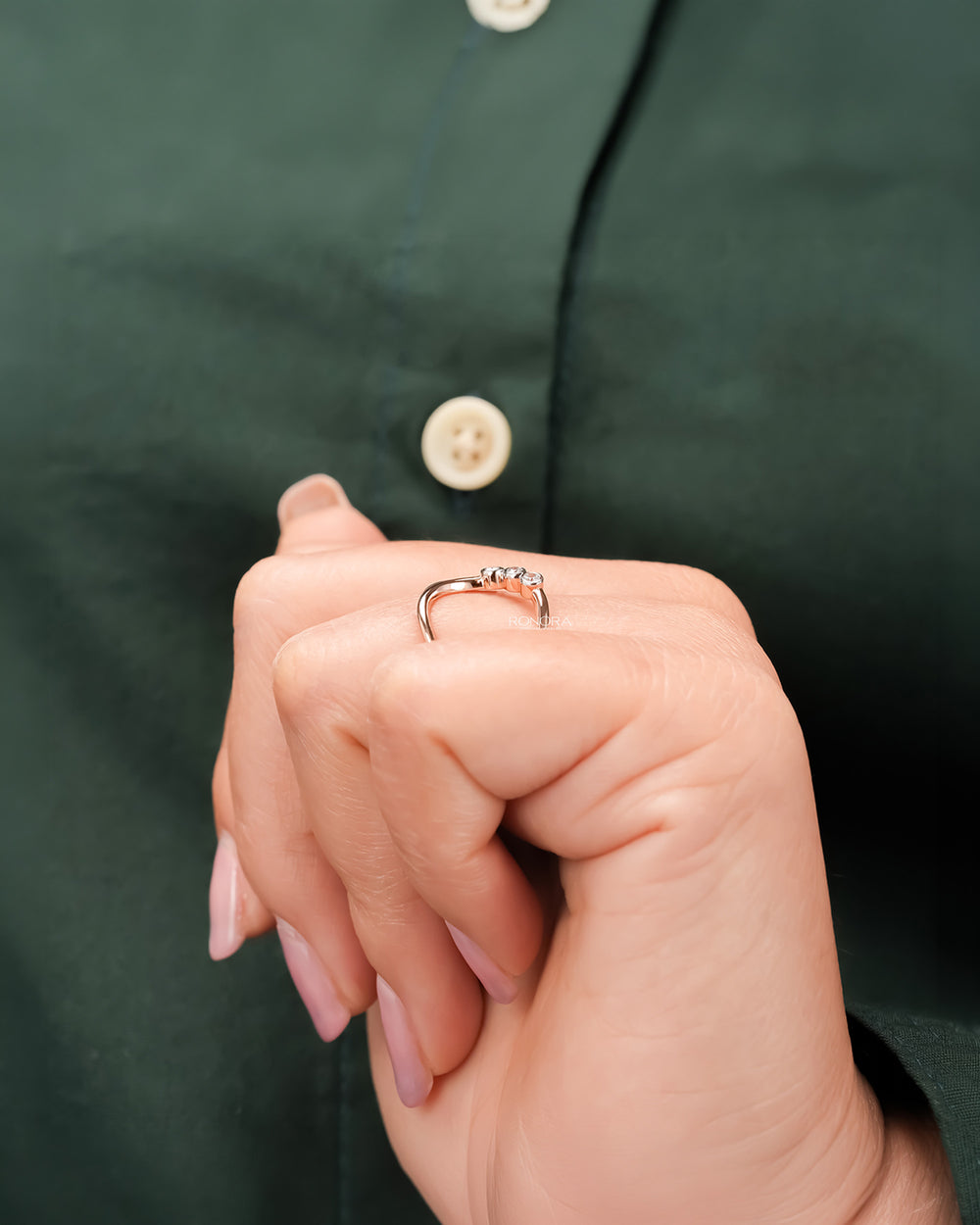
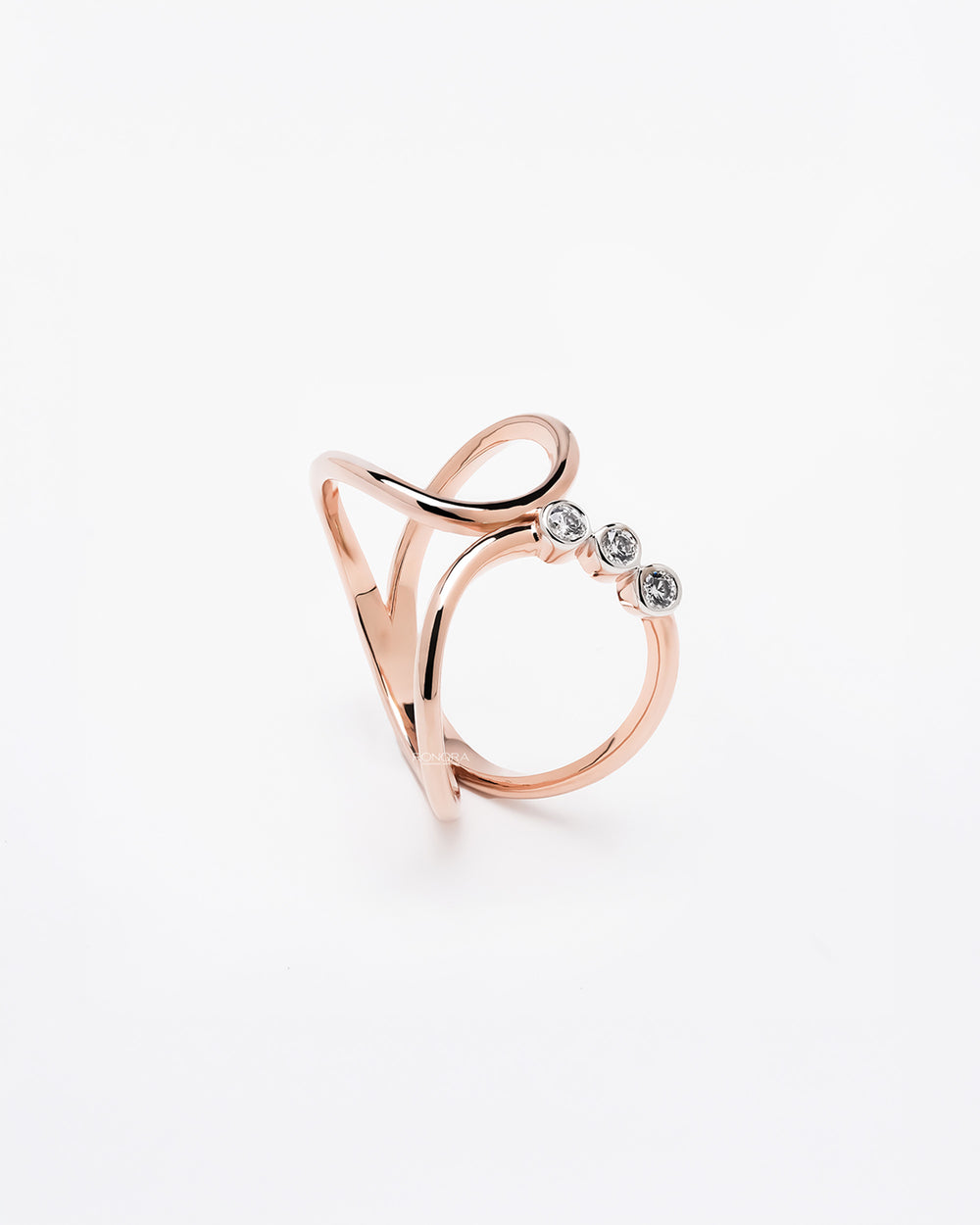
The Round-Cut Bypass Ring with Diamond Accents, the Classic Pavé Solitaire, and the Rose Gold Diamond Crossover Band.
Scintillation: Scintillation brings the stone to life as it moves. It’s the combination of white flashes and bursts of color that makes the diamond feel dynamic. There are two kinds: flash scintillation (white light) and fire scintillation (color).
At Ronora, every round cut diamond is pre-selected for brilliance, fire, and scintillation. To make it into the collection, a diamond must have ideal proportions: angles and facet placements that allow light to enter the stone, reflect internally, and return through the top with minimal loss. This includes proper crown height, table size, and pavilion depth, all of which affect how brightly the diamond appears.
A well-cut stone creates a balanced mix of white light, color flashes, and movement. That’s the kind of sparkle Ronora looks for: light that’s crisp, vibrant, and alive with every tilt. Only diamonds that meet these strict visual standards are chosen, so the light never stops dancing.
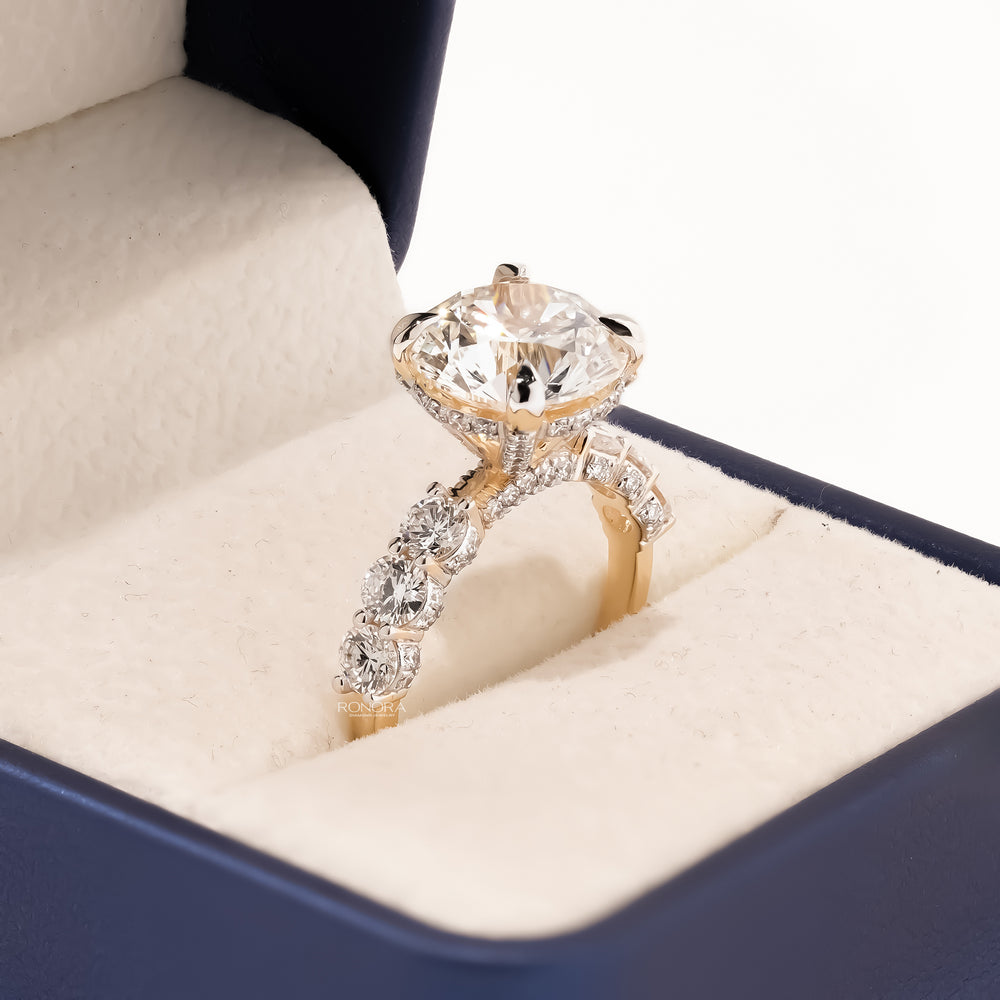
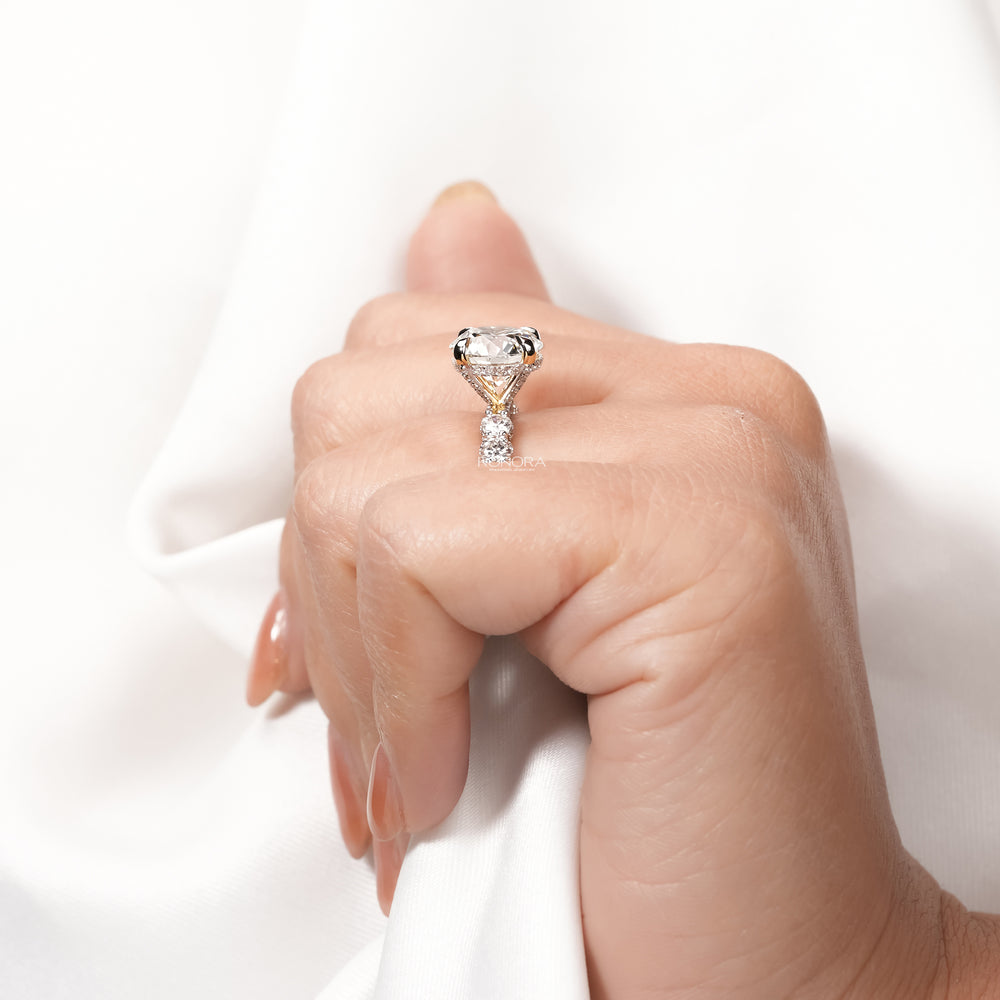
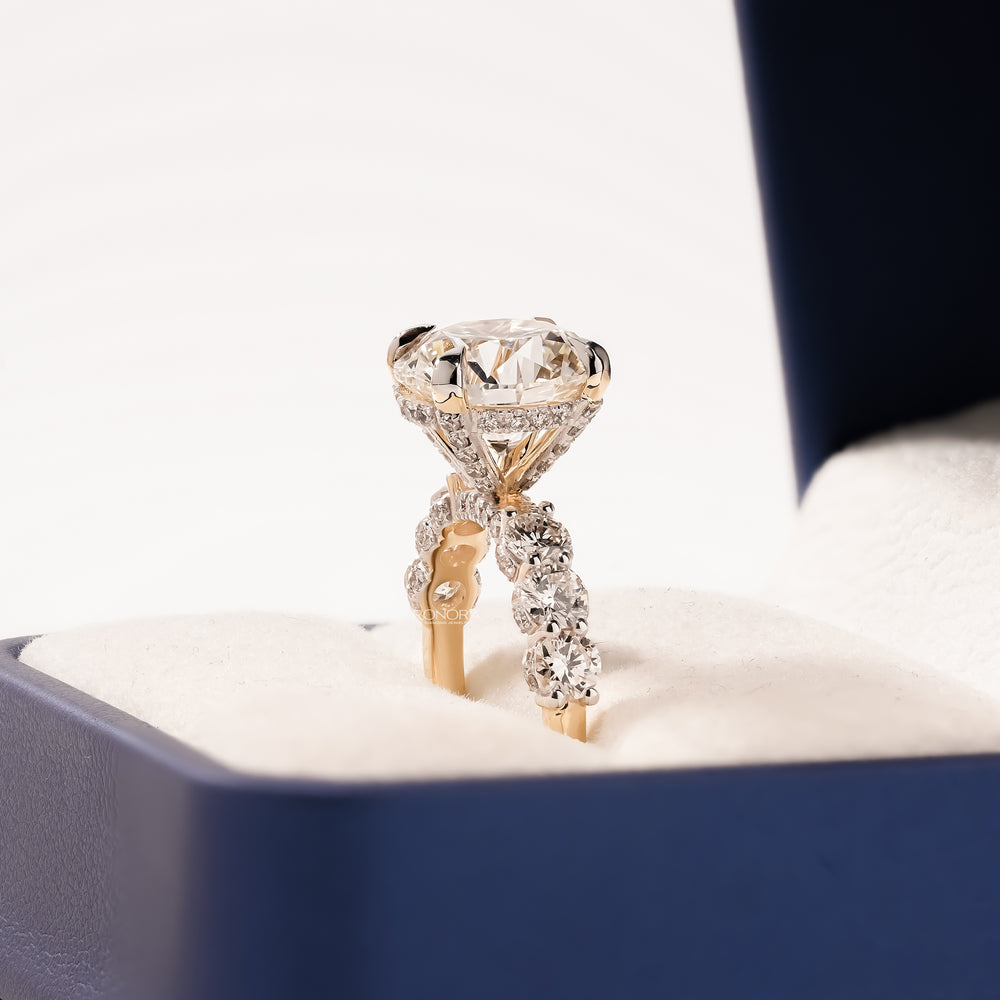
2carat Round Lab Diamond Engagement Ring with 3 carat Round Diamonds Half Eternity Band
How Cut Quality Impacts Beauty and Value
A diamond’s cut shapes how light travels through the stone, how brightly it shines, and how balanced it feels on the hand. The quality of the cut can make a diamond appear brighter, cleaner, and more radiant, regardless of its size or clarity.
Cut grades fall into several tiers. From bottom to top, they are:
Balanced proportions and good light return, although some light may escape through the diamond.
Close to ideal in light reflection and proportions, with strong brilliance and limited light leakage.
Optimized proportions and symmetry return a high level of light for outstanding brightness, fire, and scintillation.
Good: These cuts offer some light return but may lack symmetry.
Very Good: This cut grade has stronger brilliance with better proportions.
Excellent: Excellent cuts are finely crafted for maximum sparkle, with ideal proportions and symmetry that let light move effortlessly through the stone.
Ronora sells Excellent cut only. The scale above is the industry standard and it is worth understanding, but we do not stock Very Good, Good, Fair or Poor in any shape. Cut is the one of the 4Cs we will not compromise on, because it is the factor that decides whether a diamond actually sparkles.
Among the 4Cs, cut has the greatest effect on how a round brilliant diamond performs. A stone with perfect color and clarity can still fall flat if the cut is off, but a well cut diamond will always be stunning.
1 carat Round Moissanite Ring | Wide Pavé Band
Round Cut vs. Other Diamond Shapes
Every diamond shape has its own charm, but round brilliants continue to lead for a reason. Their perfect symmetry, exceptional light performance, and timeless design make them one of the most versatile choices in fine jewelry. While they pair effortlessly with nearly any setting, some couples still explore other shapes to find a look that better reflects their style or taste. For example:
Cushion cuts bring a romantic, pillow-like shape with a vintage feel, but they reflect less light than round brilliants, resulting in a subtler glow.
Oval diamonds offer an elongated silhouette that flatters the finger, though their brilliance feels a bit softer than that of a round cut.
See a round at actual size on your own ring size, or as a stud or pendant, with Find Me Diamond, our free diamond size visualizer. Every Ronora diamond is a real CVD lab grown diamond, made to order in Surat, India.
1 carat round (6.5 mm) on a US size 6.5 finger. Covers about 38% of the finger's width. Illustration drawn to scale with Find Me Diamond.
Round and Oval Engagement Ring
Princess cuts are bold and angular, offering sharp corners and a modern edge, though they lack the round cut’s continuous sparkle and symmetry.
Emerald cuts draw the eye with their clean lines and hall-of-mirrors effect, but they trade brilliance for clarity, making them more understated than radiant.
Round brilliant diamonds stand out in both performance and flexibility. If you’re looking for a stone that maximizes light and complements any setting, this shape continues to be the most beloved choice.
Radiant, Round and Oval Pave set Engagement Ring
Round Against the Other Shapes
Round is the benchmark every other shape is measured against. Here is how the main alternatives differ.
Round Against the Other Shapes
Shape
Outline
Sparkle
Hides flaws
Choose it for
Round
Perfect circle, 58 facets
Highest of any shape
Hides inclusions and tint best
Maximum sparkle, and a shape that never dates
Oval
Elongated curve
High, slightly softer
Good, but watch the bow tie
Looking larger per carat and lengthening the finger
Cushion
Square with rounded corners
Softer, more fire than brilliance
Good
A romantic, vintage feel
Princess
Square with sharp corners
High, but broken by the corners
Good
A modern, angular look
Emerald
Rectangular step cut
Flashes rather than sparkles
Shows everything, needs high clarity
Clean architectural lines
Radiant
Rectangle with trimmed corners
Very high, brilliant faceted
Very good
Emerald outline with round brilliance
Pear
One rounded end, one point
High
Good, protect the point
A distinctive silhouette
Round costs more per carat than any other shape, because cutting a round brilliant wastes more of the rough. If budget is the deciding factor, an oval or radiant gives you the most sparkle for the money. See all twelve in diamond shapes.
Round Diamond Size Chart
Millimetre measurements for a well proportioned round brilliant at every carat weight we cut. A round is measured across its diameter, so the length and the width are the same figure.
Round diamond sizes in millimetres by carat weight
Carat weight
Length × width
Approximate depth
Across in inches
0.50 ct
5.16 × 5.16 mm
3.17 mm
0.20 in
0.75 ct
5.91 × 5.91 mm
3.63 mm
0.23 in
1.00 ct
6.50 × 6.50 mm
4.00 mm
0.26 in
1.50 ct
7.44 × 7.44 mm
4.58 mm
0.29 in
2.00 ct
8.19 × 8.19 mm
5.04 mm
0.32 in
3.00 ct
9.37 × 9.37 mm
5.77 mm
0.37 in
These sizes assume the proportions we normally cut this shape to. The same weight drawn longer comes out narrower, and drawn rounder comes out wider. Set your own ratio and see the outline at true size on your screen with the diamond size calculator, or compare all twelve shapes side by side in the diamond measurements guide.
How a Round Diamond Looks on the Finger
The share of the finger's width a round diamond covers, by carat weight and US ring size. It is the stone's width divided by the inside diameter of the ring, so the same diamond looks bigger on a smaller finger.
How a Round Diamond Looks on the Finger
Carat
Size (mm)
US size 5 (15.7 mm)
US size 6.5 (16.9 mm)
US size 8 (18.1 mm)
0.50 ct
5.2 × 5.2
33%
31%
29%
0.75 ct
5.9 × 5.9
38%
35%
33%
1.00 ct
6.5 × 6.5
41%
38%
36%
1.50 ct
7.4 × 7.4
47%
44%
41%
2.00 ct
8.2 × 8.2
52%
48%
45%
3.00 ct
9.4 × 9.4
60%
55%
52%
See a round on your own ring size, or as a stud or pendant, with Find Me Diamond, our free diamond size visualizer drawn at actual size.
Should You Choose a Natural or Lab-Grown Round Cut Diamond?
When choosing a round cut diamond, one of the biggest decisions you'll make is between natural and lab-grown. Both options are real diamonds, identical in composition, structure, and visual beauty. The difference lies in their origin: one is formed beneath the Earth over billions of years while the other created in a lab using advanced technology that mirrors nature’s process. See the full comparison in diamond types.
By choosing our lab grown diamonds, together we can save:
250 tons of earth
removed to mine a carat of diamond
120 gallons of water
removed to mine a carat of diamond
143 lbs of carbon dioxide
emitted to extract a carat of diamond
Natural diamonds carry a sense of tradition and geological history. They’ve been passed down for generations and are often chosen by those who value rarity and legacy. Lab-grown diamonds, on the other hand, are a modern solution. They’re more budget-friendly, ethically made, and environmentally conscious, all without sacrificing brilliance or durability.
At Ronora, every diamond is lab grown. We do not sell mined stones. Each round cut is a real CVD lab grown diamond in VVS-VS clarity and the D-E-F colourless range, selected for its beauty, light performance, and balance. You get the brilliance and hardness of a mined diamond, without the mining, and at a size that would otherwise be out of reach.
Explore Ronora’s Round Cut Collection
A round brilliant diamond pairs easily with sleek modern settings, vintage-inspired bands, and everything in between. At Ronora, we offer a wide range of exquisite round cuts that meet all budgets and aesthetic preferences, so shop now to discover round brilliant engagement rings that bring beauty and balance to life. Choose the cut that generations have trusted, and make it yours.
Join for new designs, ring guides and private offers.
Sign up in one step with Google or your email.
By signing up, you agree to receive Ronora Diamond marketing emails and accept our Privacy Policy. You can unsubscribe at any time. The 10% code works once, on your first order.