Halloween Sale: Free Express Shipping Until October 31, Plus 10% Off Everything Until December 31
Shop Now
Extra 10% Off Your First Order: Code WELCOME10
Create Account
Extra 5% Off Orders Over $3,000, Applied Automatically
Order by December 2 for Christmas Delivery (Express Shipping)
Lifetime Warranty on Manufacturing Defects | 15-Day Returns and Exchanges
Conditions apply
Gift-Ready Luxury Packaging | Free Shipping on All Orders!
Your welcome offer is ready. Apply it now and the saving shows at checkout.
WELCOME10 is applied. You save .
We could not apply the offer to this cart. If you think this is a mistake, please contact us.
We've sent you an email with a link to update your password.
Reset your password
We will send you an email to reset your password.
Setting Types
What do you know about
engagement rings
Step into the world of diamond. Unearth the brilliance and eco-conscious charm of these gems. Explore their origin and distinctive qualities on this captivating journey.
engagement rings
Everything You Need to Know About Diamond Settings
A pear centre held at the point, where protection matters most
Quick Summary
The setting is the mechanism that physically holds the diamond. It decides three things that matter every day: how much light reaches the stone, how high the ring sits on the finger, and how well the vulnerable parts of the stone are protected. Prongs let in the most light. Bezels give the most protection. Everything else sits between the two. Ronora builds every setting below by hand, and we always protect the points on pointed shapes.
Setting is the decision people spend the least time on and regret the most. A stone that is beautiful in a photograph can be a nuisance in real life if it sits too high, catches on clothing, or leaves a point exposed.
It is a different decision from ring style and from diamond shape, although the three interact. Some shapes only work properly in certain settings, and we say so below. Each setting below has its own full guide, linked from its name. The International Gem Society covers the same families in more technical detail.
Settings That Hold the Centre Stone
Four prong. Four slim claws grip the stone near the girdle. Lets in the most light of any setting and shows the most of the stone. Slightly less secure than six, and on a round centre it makes the outline read a little squarer.
Six prong. More metal on the stone, more security, and a rounder-looking outline. The classic choice for a round brilliant above a carat.
V-prong. A prong bent into a V that wraps a point completely instead of gripping from one side. Not optional on a pear, a marquise, a Dutch marquise or a heart.
Bezel. A continuous metal rim around the girdle. The most secure setting there is, the lowest profile, and the best answer for anyone who works with their hands. It shows slightly less of the stone from the side.
Half bezel. Metal on two sides only, open at the others. A compromise that keeps some light coming in from the sides while still protecting the widest points.
Flush, or gypsy. The stone is sunk into the metal so its table sits level with the surface. Nothing protrudes at all. The most durable setting made, and the standard for men's rings and signet faces.
Tension. The stone appears to float, held by pressure from the two ends of the band. Striking, and the least forgiving to resize later.
Basket and trellis. Not a grip so much as the structure underneath it. A basket cradles the pavilion in a woven frame; a trellis crosses the prongs so they appear to weave. Both raise the stone and let light in from below.
Cathedral. Arches rise from the band to meet the setting, giving height and a visible side profile. Beautiful, and it sits tall, so think about the wedding band before choosing it.
A flush set stone sits level with the metal around it
Settings That Hold the Accent Stones
Pave. Tiny diamonds held by minute beads of metal, set so close that the band reads as a continuous surface of light. The most common way to add brilliance without adding centre carat. Browse the pave collection.
Micro pave. The same technique with smaller stones and finer beads. More delicate, more sparkle, and more skill required to set it well.
Channel. Stones sit in a groove between two walls of metal, with nothing between them. Smooth, snag-free and extremely durable, which makes it a favourite for wedding bands worn every day.
Bar. Thin bars of metal separate each stone while leaving the sides open. More light than a channel, more structure than pave.
Flush, or gypsy. The stone is sunk into the metal so its table sits level with the surface. Nothing protrudes at all. The standard for men's rings and signet faces, and a good choice for a promise ring worn daily.
Halo. A ring of accents around the centre stone, adding visible size and framing the outline.
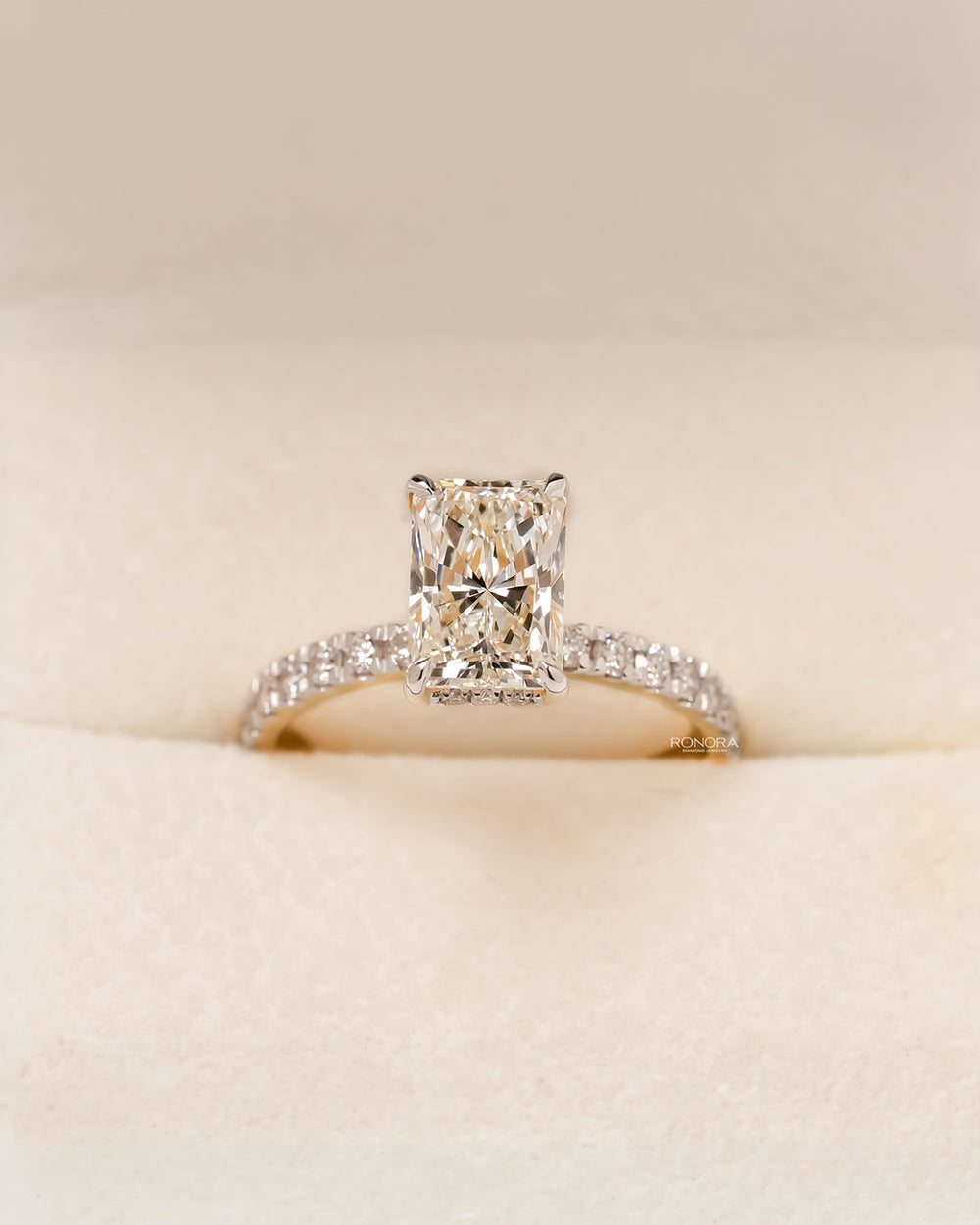
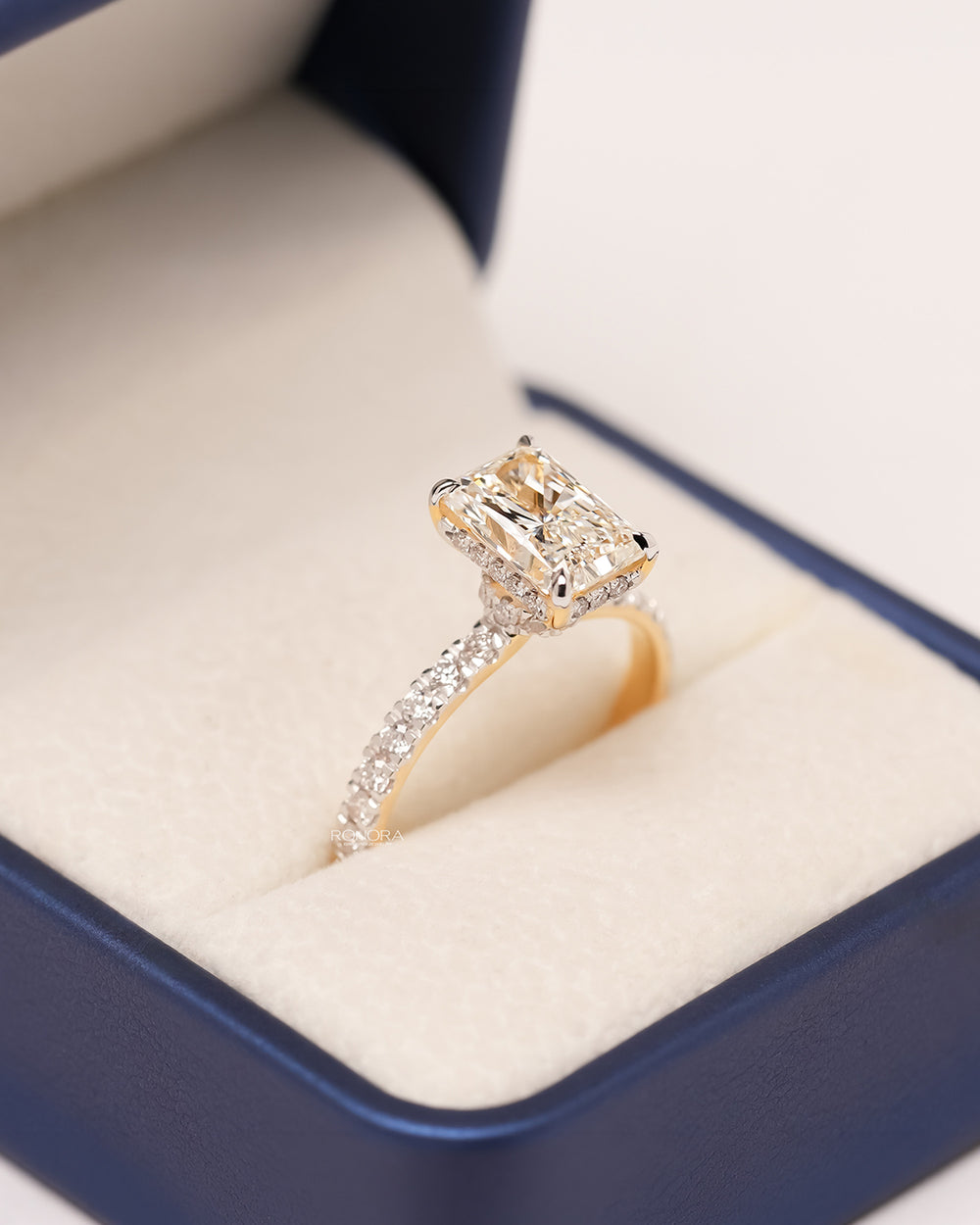
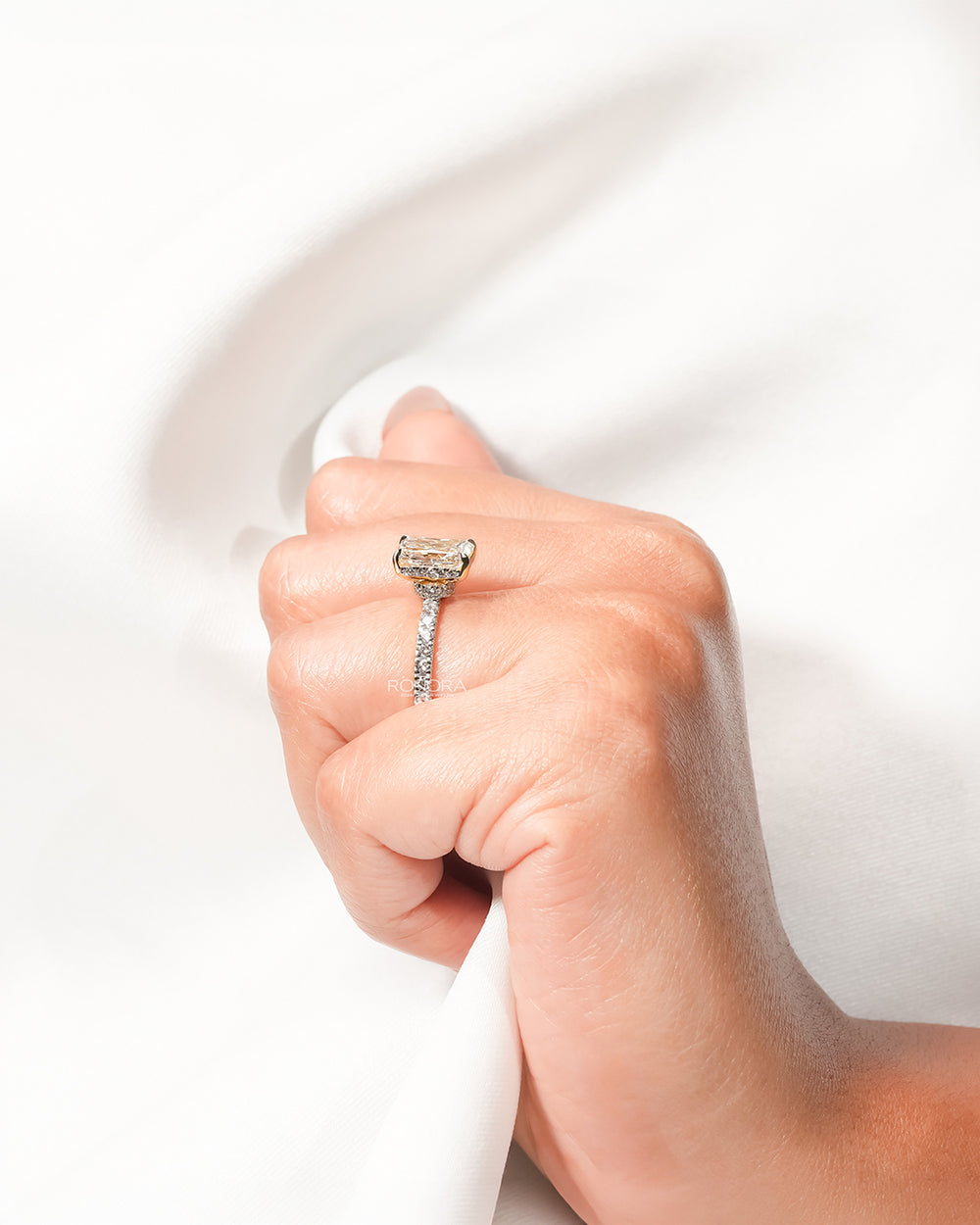
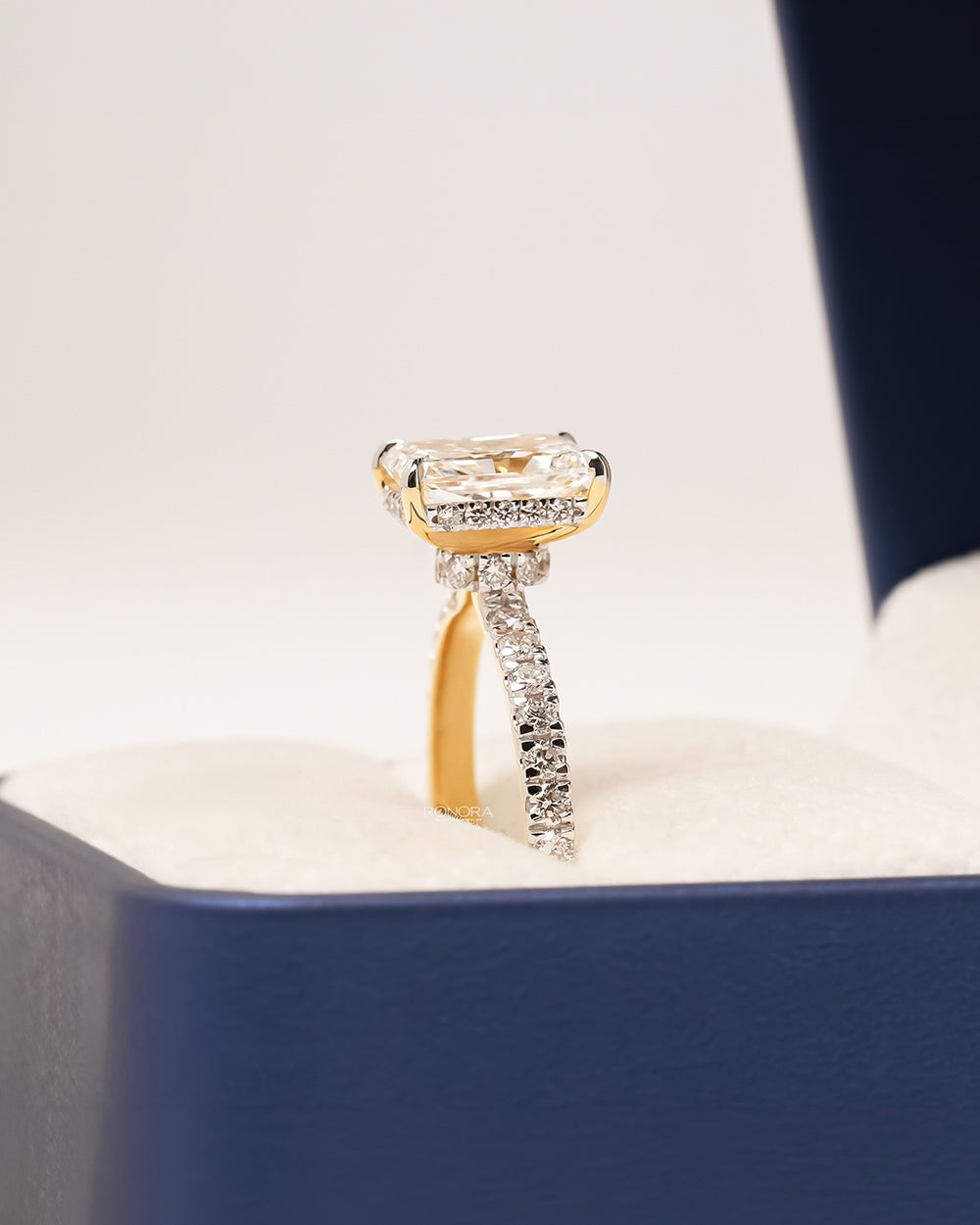
Hidden halo. The same tier tucked beneath the girdle where only the wearer knows it is there. It lifts the stone and adds light from the side without touching the silhouette.
Cluster. Several stones arranged to read as one larger shape. A way to get visual size for a lower carat cost.
Pave accents set along the shoulders of the band
Shank and Profile
The shank is the band itself, and its shape changes how the whole ring reads.
Straight. A constant width all the way round. Simple, strong and easy to pair with a wedding band.
Tapered. Narrower at the back than at the setting, so the centre stone looks larger and the ring sits more comfortably between the fingers.
Split shank. The band divides as it approaches the setting. Frames the centre stone and makes a modest carat weight look more substantial.
Twisted or bypass. Two strands cross rather than meet. Softer and more organic than a straight band.
Knife edge. The band rises to a ridge along the top, catching a line of light. Slimmer-looking than its actual weight.
Comfort fit. The inside of the band is domed rather than flat, so it slides over the knuckle more easily. Worth asking for on anything wider than about 4mm, and see our ring size guide for how width affects fit.
How to Choose a Setting
Does the shape have a point or a corner?Pear, marquise, Dutch marquise, heart and princess all have something that can chip. A V-prong or a bezel is the answer, and we build them that way as standard.
How does the wearer use their hands? Gardening, climbing, nursing, lifting. If the answer is anything active, go low profile and choose bezel, flush or channel over raised prongs and pave.
How much light do you want? Prongs let in the most, bezels the least. On a step cut such as an emerald that matters less, because the stone was never relying on rapid sparkle.
What will sit next to it? A cathedral, a high basket or a hidden halo may not let a wedding band sit flush. Decide before, not after, and see curved bands.
Will it need resizing? Full eternity bands and tension settings are the hardest to resize. A half eternity keeps the option open.
The Eight Settings Compared
Every setting trades light against protection. This is where each one sits on that line.
The Eight Settings Compared
Setting
What it does
Light in
Durability
Best for
Prong
Slim claws grip the girdle
Most of any setting
Good, check every year or two
Showing the maximum of the diamond
Bezel
A metal rim wraps the girdle
Less from the sides
Highest
Active hands and pointed shapes
Pave
Tiny beads hold many small stones
High across the band
Needs checking every few months
Sparkle along the shank
Channel
Stones sit between two walls
Moderate
Very high, nothing to snag
Bands worn hard every day
Tension
Compression alone holds the stone
Very high
Needs periodic tension checks
A floating, dramatic look
Flush
Stone sunk level with the metal
Least, through the table only
Highest of all, maintenance free
Men's rings and working hands
Cathedral
Arches lift and brace the head
More light from underneath
Good, but it sits tall
A sculptural side profile
Cluster
Many stones read as one shape
High
Many small settings to check
Maximum spread for the carat weight
Prong and bezel are the two real alternatives for a centre stone. Everything else is either a variation on those or a way of holding accent stones. Read each in full below.
Every Setting in Detail
Prong setting. Four, six or eight claws, V-prongs for pointed shapes, and when prongs wear down.
Bezel setting. The most secure setting there is, compared point by point against prongs.
Pave setting. Micro, French and U-cut pave, and the five signs of good bench work.
Channel setting. Diamonds between two walls, with nothing at all to snag.
Tension setting. True tension against tension style, and which one you actually want.
Flush setting. Gypsy set stones level with the metal. The toughest setting made.
Cathedral setting. Arches, height, and why it is the home of the hidden halo.
Cluster setting. Many stones reading as one, and how it differs from a halo.
Every Setting Made by Hand
Ronora settings are made to order in Surat and set by hand, which means the setting is chosen for the stone rather than the stone squeezed into a stock mount. If you are unsure which one suits your shape or your daily life, ask us before you order. Next, read about ring styles, the metals we work in, or the hidden halo in detail.
Join for new designs, ring guides and private offers.
Sign up in one step with Google or your email.
By signing up, you agree to receive Ronora Diamond marketing emails and accept our Privacy Policy. You can unsubscribe at any time. The 10% code works once, on your first order.