index
Home Asscher Cut Lab Grown Diamond Rings
Asscher Cut Lab Grown Diamond Rings Asscher Cut Lab Grown Diamond Rings

RINGS MADE TO ORDER

Asscher Cut Lab Grown Diamond Rings

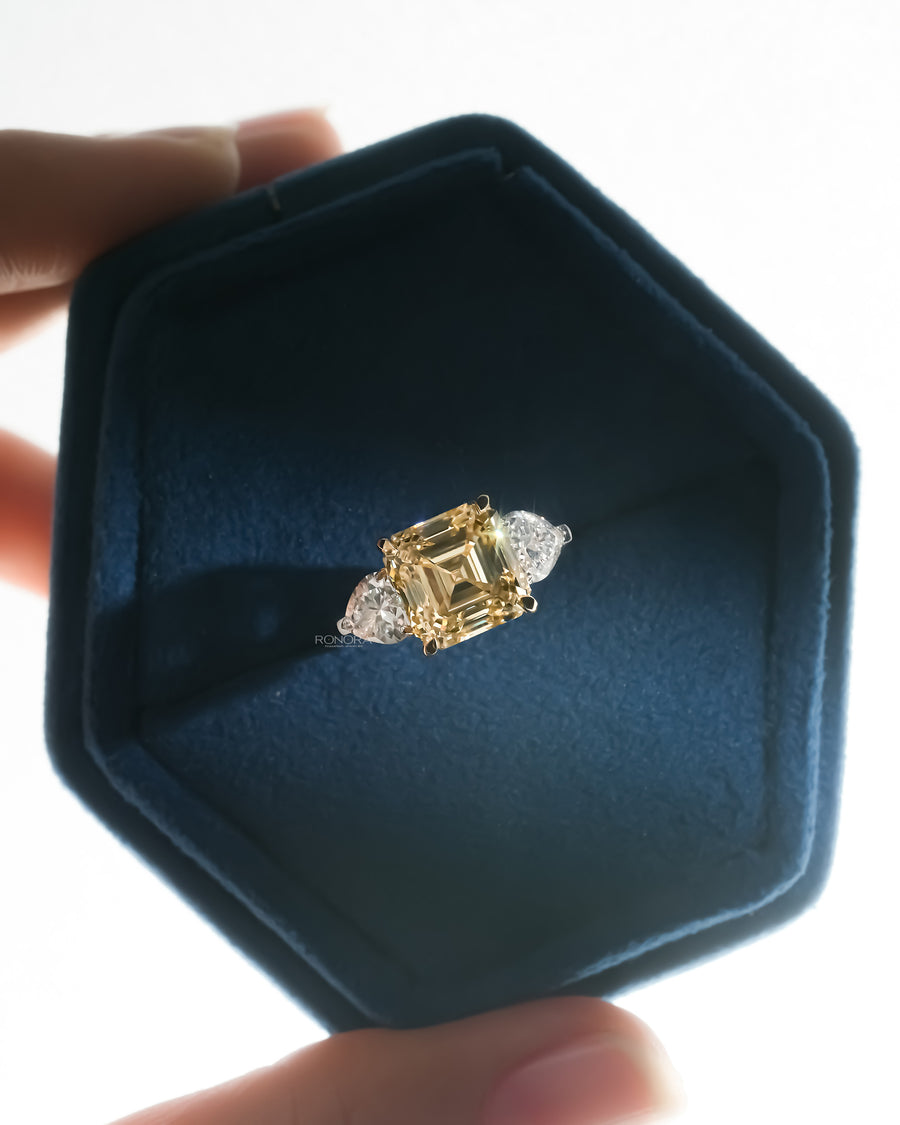
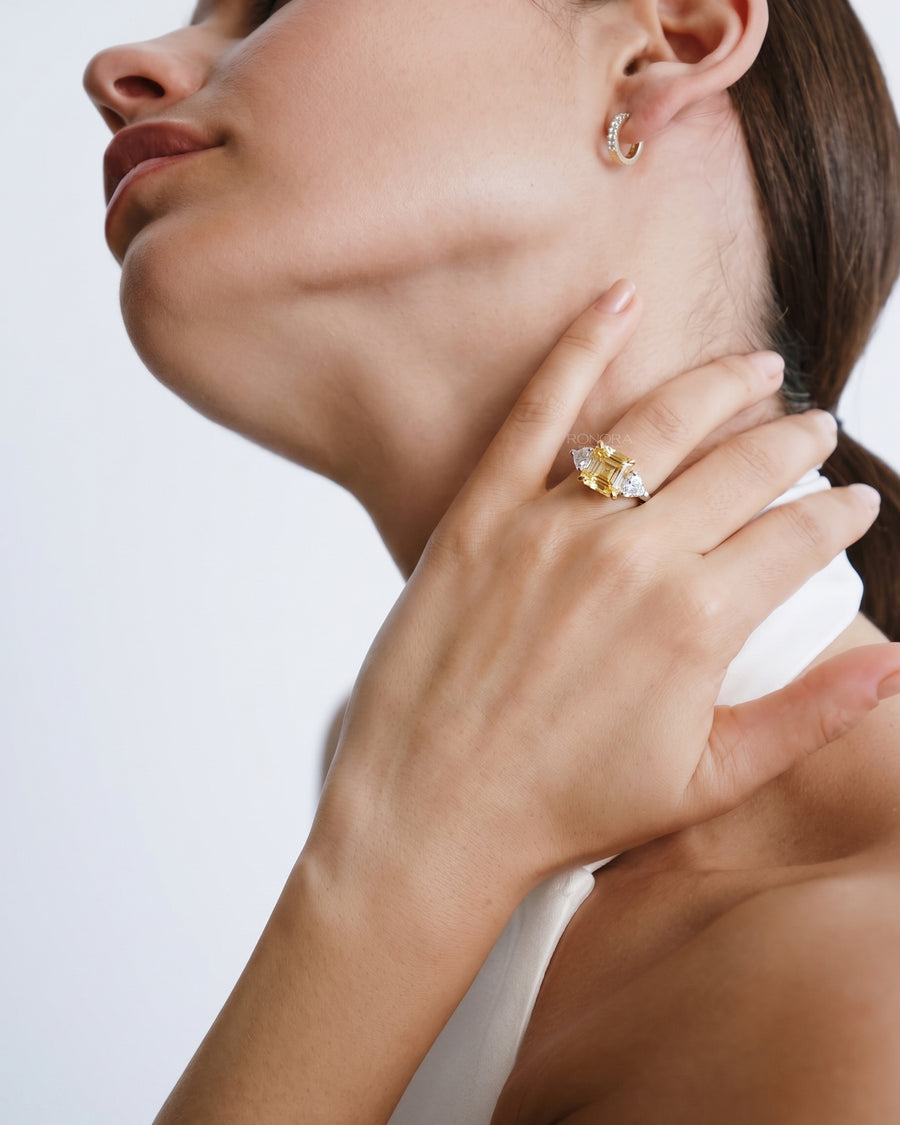
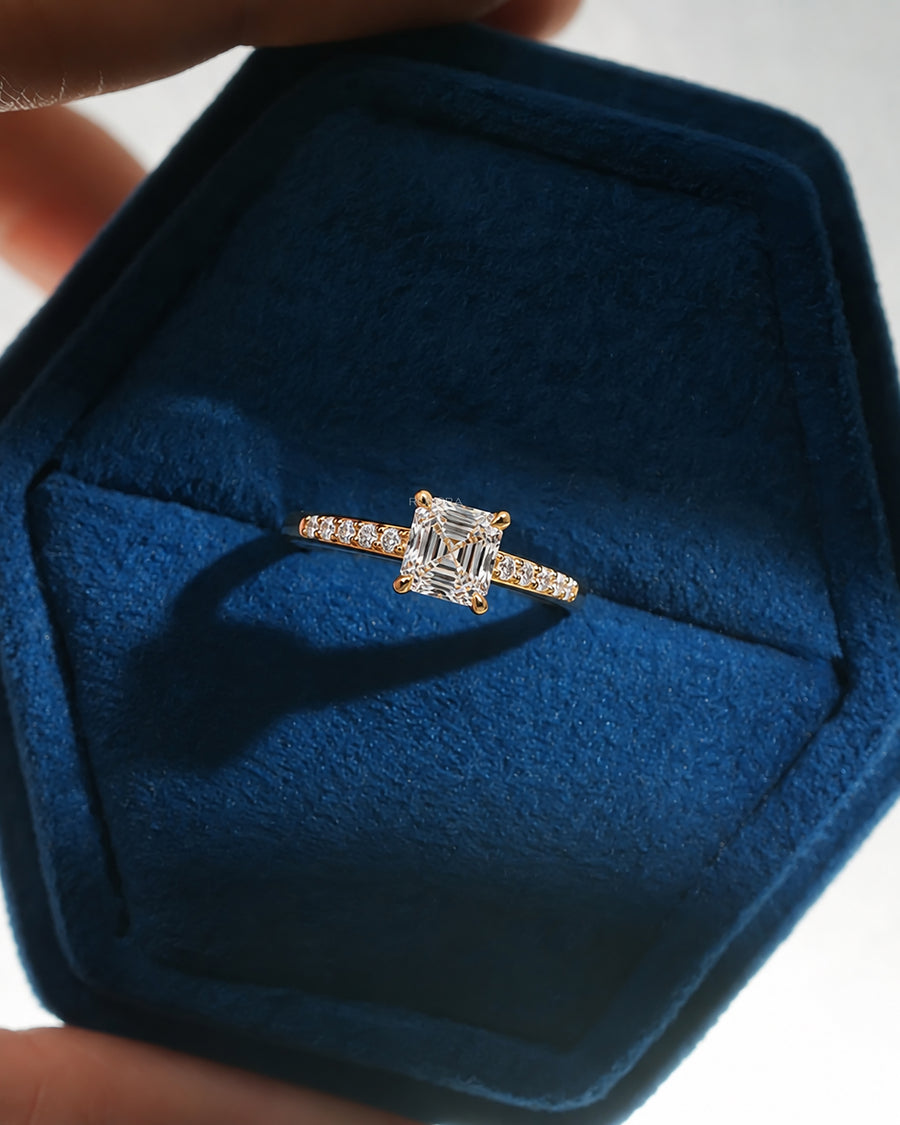
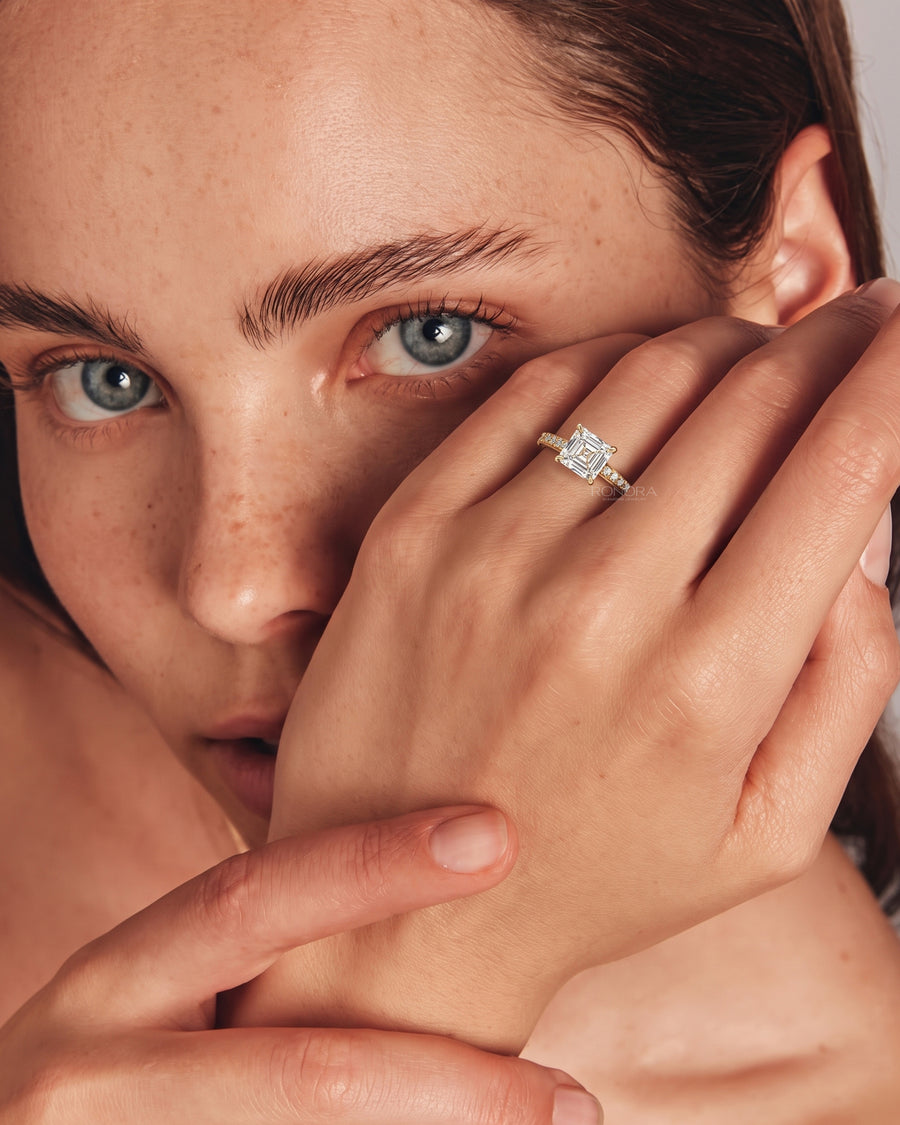
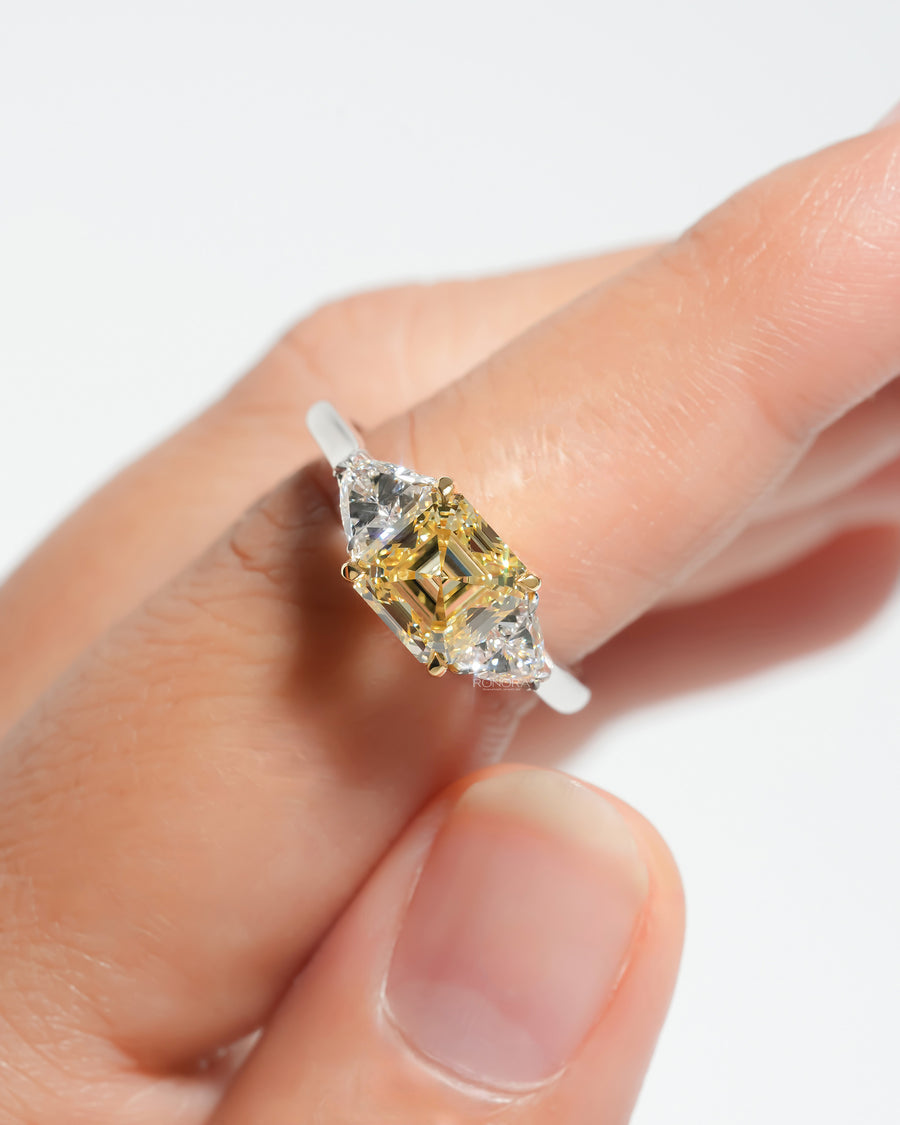
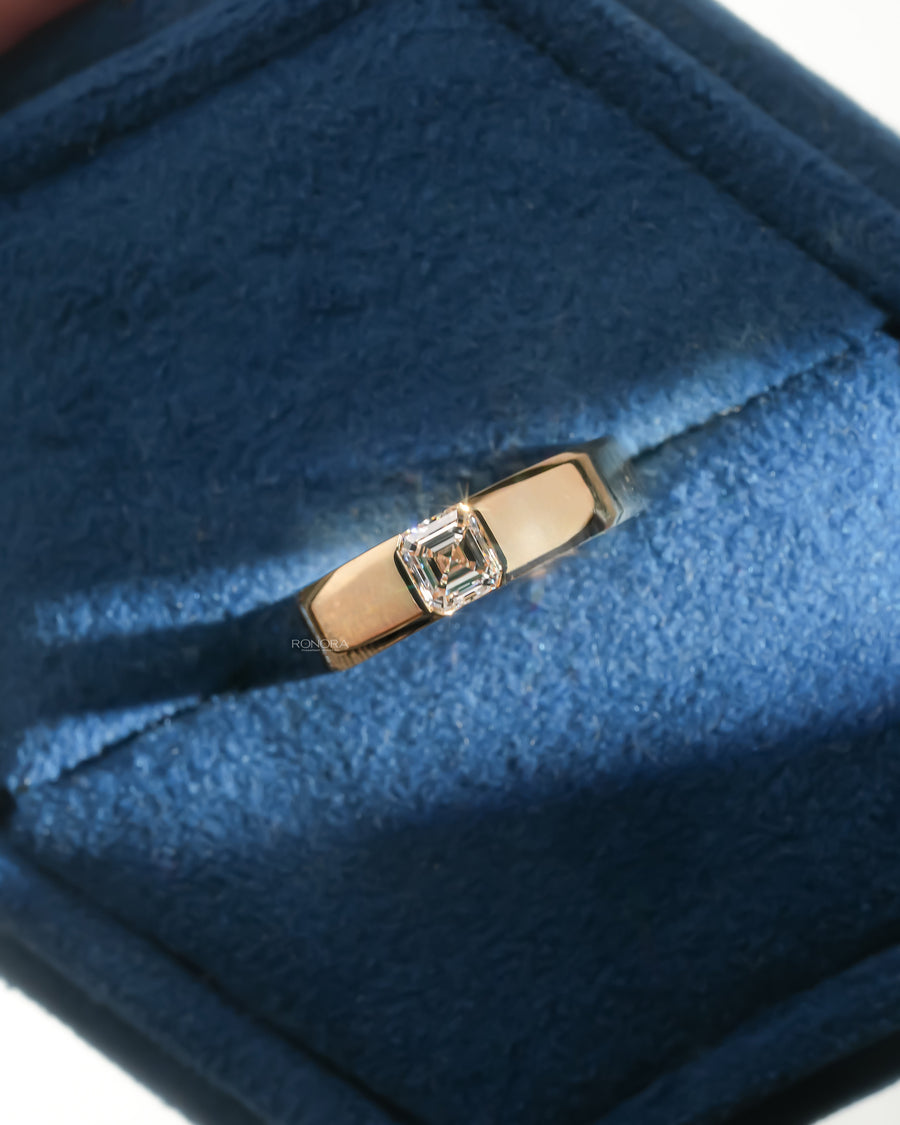
The asscher cut is a square step cut with cropped corners and a deep pavilion, patented by Joseph Asscher in 1902 and revived through the Art Deco period. It trades the fire of a brilliant cut for clarity and depth, drawing the eye downward through concentric squares rather than scattering light across the surface. Every asscher here is a real CVD lab grown diamond, VVS-VS clarity, D-E-F colorless.

How is an asscher different from an emerald cut?

Proportion, mainly. An emerald cut is rectangular; an asscher is square, with a length-to-width ratio close to 1.0. The asscher also has a smaller table and deeper pavilion, which produces the distinctive windmill pattern visible when you look straight down into the stone.

Why does clarity matter so much in an asscher?

Because a step cut has open, mirror-like facets with nothing to disguise an inclusion. In a brilliant cut, scattered light hides small flaws; in an asscher you look straight through to the bottom. This is exactly why Ronora sets VVS-VS clarity here (VVS1 or VVS2 wherever available, VS1 only when neither is) and never lower.

Frequently asked questions

Is it rare? Among the less common shapes, which is part of the appeal. Asscher cuts read as a deliberate choice.

Are the corners fragile? No. The cropped corners are far more durable than a princess cut's sharp points.

5 products
5 products

Step Cuts, Not Sparkle Cuts

An Asscher is a square emerald cut. Its wide flat facets trade fire for long clean flashes of light, the effect people call a hall of mirrors.

Clarity Has Nowhere To Hide

Open step facets show everything inside a stone, which is why we only cut Asschers at VVS-VS (VVS1 or VVS2 wherever available, VS1 only when neither is). At lower clarity this shape is unforgiving.

A 1920s Shape, Made Now

The Asscher was cut for Art Deco jewellery and still carries that architecture. Set in a modern bezel or a plain solitaire, it looks deliberate rather than nostalgic.

What is an Asscher cut diamond?

An Asscher cut is a square step cut diamond with cropped corners and deep parallel facets. It produces broad mirror-like flashes rather than the small rapid sparkle of a round brilliant.

What is the difference between Asscher and emerald cut?

They are cut the same way, but an emerald cut is rectangular and an Asscher is square. An Asscher also cuts deeper, which gives it more depth of reflection than an emerald of the same weight.

What clarity should an Asscher cut be?

VVS-VS (VVS1 or VVS2 wherever available, VS1 only when neither is), and we do not offer anything lower. Step cuts show inclusions that a brilliant cut would hide, so clarity is not the place to economise on this shape.

Does an Asscher look smaller than a round diamond?

Slightly, at the same carat weight. Asschers carry more of their weight in depth, so a 2 carat Asscher spreads a little narrower than a 2 carat round while reading as more substantial.

Are these Asscher rings certified?

Every lab grown diamond of 1.00ct and above arrives with its own IGI certificate documenting cut, colour, clarity and carat.

Which setting suits an Asscher cut best?

Bezel and four prong settings suit it most. Both protect the cropped corners, which are the only vulnerable points on an otherwise very stable shape.