


Cart
0


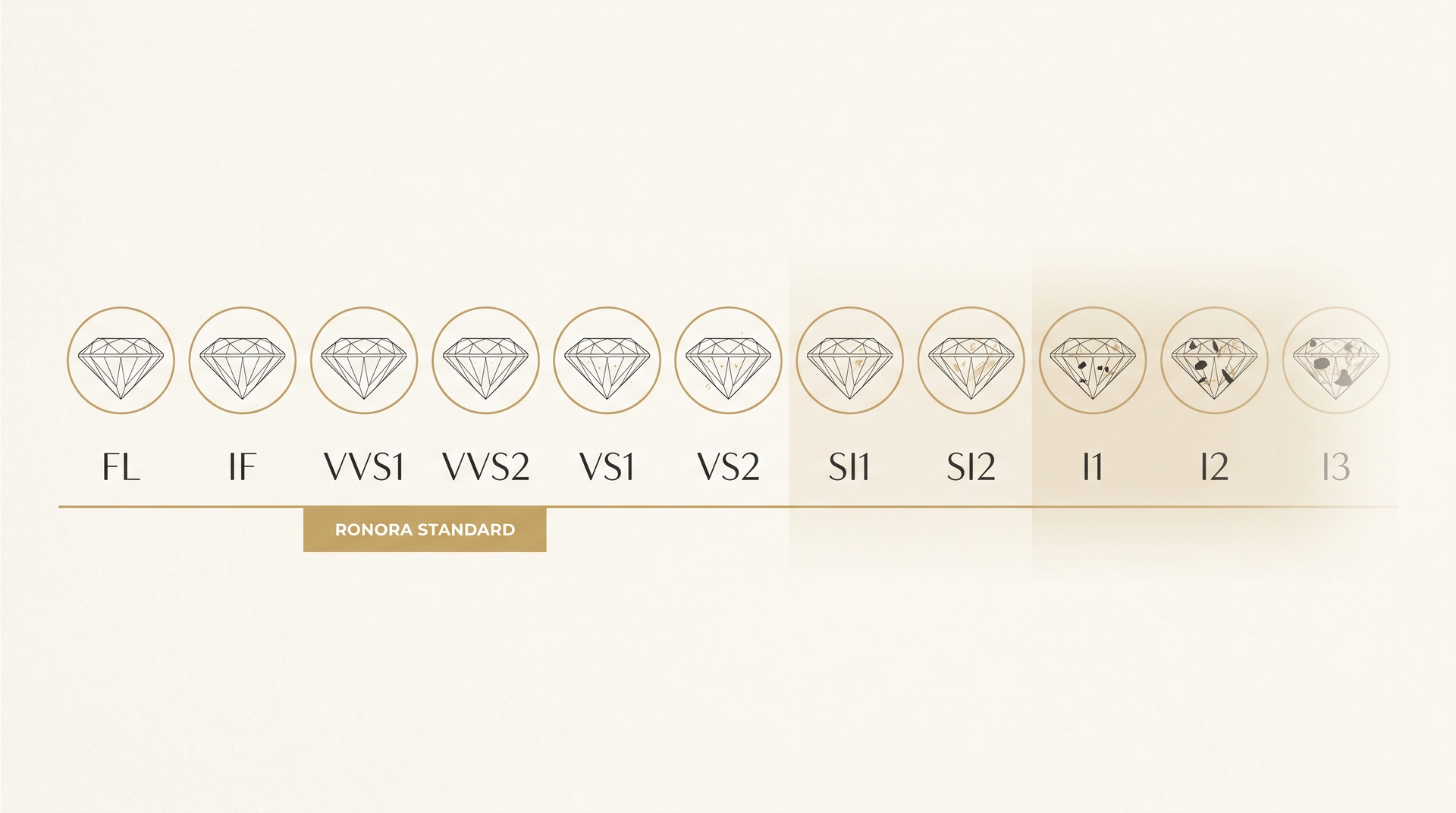
Clarity is one of the most misunderstood of the 4Cs of diamond grading. Many buyers choose a lower clarity grade thinking the difference is visible. For most clarity grades, it is not -- not to the naked eye. Here is what you actually need to know before you decide.

The Diamond Clarity Scale
Diamond clarity is graded by the number, size, and position of inclusions (internal characteristics) and blemishes (surface characteristics). The GIA scale runs from Flawless (FL) at the top to Included (I1, I2, I3) at the bottom. VVS and VS sit near the top of this scale:
- VVS1 and VVS2 (Very Very Slightly Included): Inclusions are extremely difficult to see even under 10x magnification by a trained gemologist. Essentially invisible in normal wear.
- VS1 and VS2 (Very Slightly Included): Inclusions are minor and difficult to see under 10x magnification. Not visible to the naked eye in a well-cut stone.
-
SI1 and SI2 (Slightly Included): Inclusions are easier to see under magnification and may be visible to the naked eye in some stones.

Is VS Clarity Better Than VVS?
No. VVS is the higher grade. VVS1 sits above VVS2, which sits above VS1, which sits above VS2 on the clarity scale. A VVS diamond has fewer or smaller inclusions than a VS diamond when viewed under 10x magnification.
Can You See the Difference Between VVS and VS?
Almost never with the naked eye. Both VVS and VS diamonds are considered eye-clean -- meaning a person looking at the ring in normal conditions will not see any inclusions without magnification. The difference only becomes visible under a jeweler's loupe or microscope.
Why Ronora Uses VVS Only
At Ronora, every lab-grown diamond is VVS clarity -- no lower. This is a deliberate quality decision. VVS clarity ensures the long-term structural integrity of the stone. Lower clarity grades can include inclusions close to the surface or girdle that, over years of daily wear, can become stress points. VVS inclusions are deep within the stone and present no such risk.
VVS clarity also preserves maximum brilliance. Even inclusions not visible to the naked eye can slightly interrupt the internal light reflection that creates a diamond's sparkle. VVS stones have fewer such interruptions.

VVS vs VS: Price Difference
In mined diamonds, moving from VS to VVS can add 20 to 40 percent to the price for the same carat and color. In lab-grown diamonds, the difference is smaller because production costs are lower across all clarity grades. This makes VVS more accessible in lab-grown form than in mined -- another advantage of choosing CVD lab-grown diamonds.
Browse Ronora's VVS lab-grown diamond rings or explore engagement rings -- every stone is VVS clarity, D-E-F colorless.
Frequently Asked Questions
Is VS Clarity better than VVS?
No. VVS is the higher clarity grade. VVS (Very Very Slightly Included) has fewer or smaller inclusions than VS (Very Slightly Included) when viewed under 10x magnification. Both are eye-clean in normal wear conditions.
What is the difference between VVS and VS diamond clarity?
VVS diamonds have inclusions that are extremely difficult to see even under 10x magnification. VS diamonds have inclusions that are difficult but somewhat easier to see under magnification. Neither grade shows inclusions to the naked eye in a well-cut stone.
Is VVS the same as VVS1?
No. VVS is the overall clarity tier, which has two sub-grades: VVS1 and VVS2. VVS1 is the higher grade. At Ronora, all diamonds meet VVS standard across both sub-grades.
How much is a VVS lab grown diamond worth?
VVS lab-grown diamonds cost significantly less than VVS mined diamonds of the same quality -- typically 60 to 80 percent less. The premium for VVS over VS is smaller in lab-grown diamonds than in mined, making VVS more accessible in CVD form.


