index

✦ BLOG HERO IMAGE — 4:3 RatioA soft aspirational lifestyle hero shot: a diamond engagement ring (round brilliant solitaire in 14K rose gold) resting on the rim of a small clear glass bowl of warm soapy water, with a soft-bristled brush beside it on a clean white marble bathroom counter. Morning light streams from a window, catching the wet diamond which sparkles brightly. A folded soft lint-free cloth and a small dish of mild soap complete the gentle home-care scene. The mood is calm, fresh, and domestic-premium. Camera 50mm f/2.8, the ring and bowl in sharp focus. Soft natural daylight from the left. Color palette: white marble, clear water, soft soap bubbles, rose gold ring, icy diamond sparkle, pastel cloth. Photorealistic 8K. Premium lifestyle editorial photography. The hero should make ring care feel easy and beautiful. No text overlays.

A lab-grown diamond ring is built to last a lifetime. Diamond is the hardest natural material -- it scores 10 on the Mohs scale and cannot be scratched by anything except another diamond. But the metal setting, the prongs, and the diamond surface all benefit from regular, simple care. Here is everything you need to know.

✦ IMAGE PROMPT — 16:9
A beautiful lifestyle flat-lay photograph on a white Carrara marble surface. Center frame: a diamond engagement ring -- round brilliant solitaire in 14K rose gold -- submerged in a small clear glass bowl filled with warm water and a small amount of dish soap, creating gentle transparent bubbles around the ring. The ring is clearly visible through the soapy water, the diamond sparkling even underwater. To the right of the bowl: a clean white soft-bristled toothbrush with pastel-colored handle. To the left: a small amber glass bottle of dish soap with a clean dispenser pump. Lighting is soft natural daylight from a large window to the top-left, creating gentle specular highlights on the bowl, bubbles, and diamond. Color palette: white marble, clear water, soap bubbles, rose gold ring, pastel accessories. Shot on 50mm f/4 for full depth of field across the scene. Clean and aspirational domestic lifestyle aesthetic. Premium editorial photography. Photorealistic 8K.

Can You Shower With a Lab Grown Diamond Ring?

It is generally safe to shower with a lab-grown diamond ring, but it is not recommended as a daily habit. Soap, shampoo, and conditioner leave a film on the diamond and inside the setting that dulls the sparkle over time. The diamond itself is unaffected, but the buildup reduces how much light passes through the stone.

If you shower with your ring regularly, cleaning it weekly will maintain its brilliance. If you remove it before showering, monthly cleaning is usually sufficient.

✦ IMAGE PROMPT — 4:5
A portrait-orientation lifestyle photograph in a soft bathroom setting. A woman's elegant hand with a diamond engagement ring on the ring finger is held underneath a gently flowing stream of clean water from a polished chrome bathroom faucet. The water flows over the ring and diamond in a clear stream, individual water droplets visible on the diamond facets and gold band, catching the bathroom light and sparkling. The water is perfectly clear. The ring is a round brilliant CVD lab-grown diamond in 14K white gold solitaire setting. Bathroom background is clean and minimal: white tiles, soft warm white overhead light, slightly blurred bokeh. 85mm lens f/1.8, shallow depth of field, ring and water in sharp focus. Color palette: white gold, crystal clear water, soft white tile, warm bathroom ambient light. Natural unmanicured nails, no nail polish. No face visible. Photorealistic 8K. Premium lifestyle editorial photography.

Can Lab Grown Diamonds Be Worn Every Day?

Yes. Diamond scores 10 on the Mohs hardness scale and is designed for everyday wear. Lab-grown diamonds are physically identical to mined diamonds and will not scratch or lose brilliance with daily use. The metal setting (gold or platinum) will show wear over years, which is why professional servicing every few years is recommended -- but the diamond itself will remain unchanged.

How to Clean a Lab Grown Diamond Ring at Home

  1. Fill a small bowl with warm water and a few drops of mild dish soap.
  2. Place the ring in the bowl and let it soak for 20 to 30 minutes.
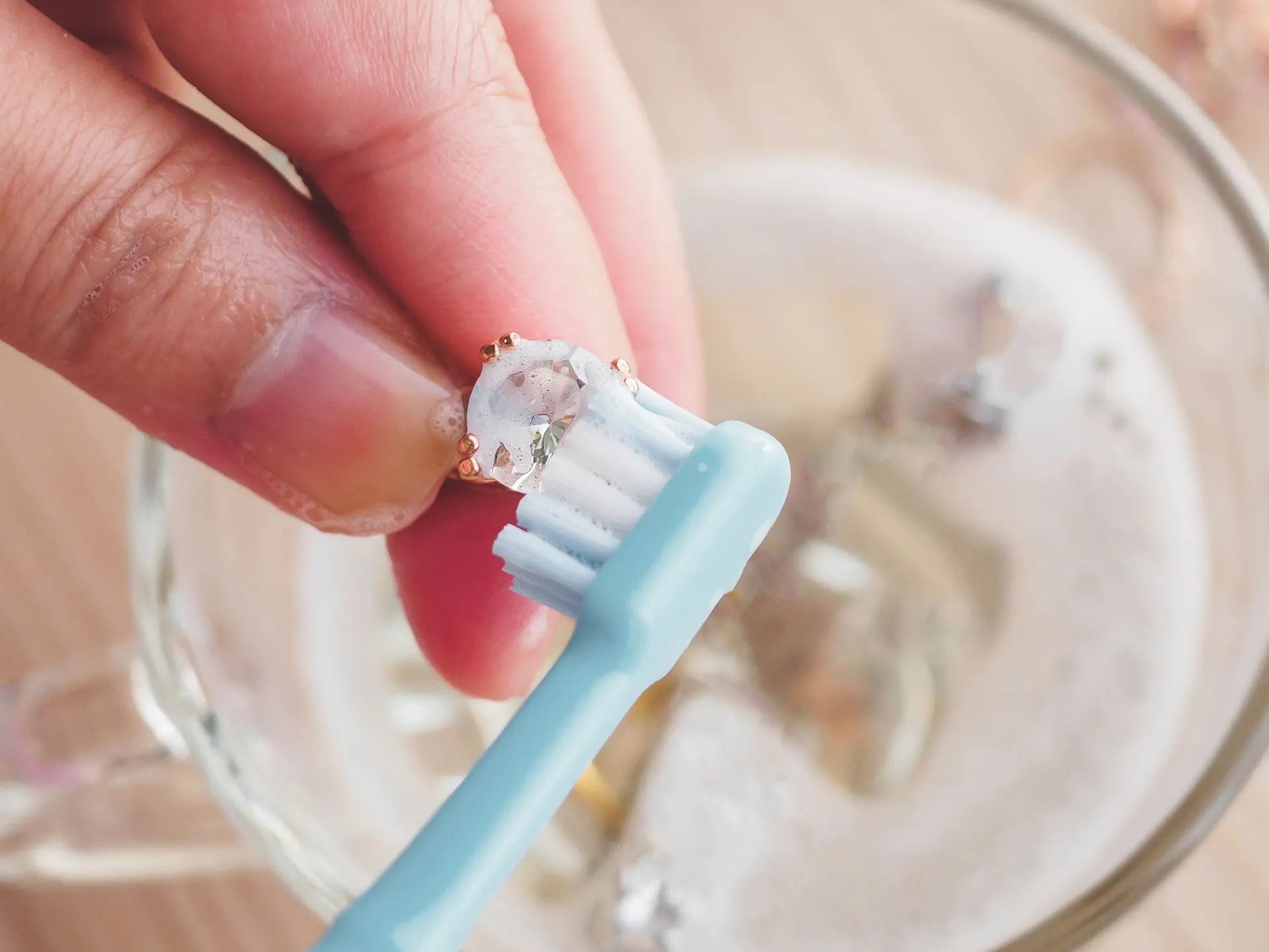
  3. Use a soft toothbrush to gently scrub around the diamond, under the setting, and along the band.
  4. Rinse thoroughly under warm running water.
  5. Pat dry with a lint-free cloth.

Do this weekly for a ring worn daily, or once a month for a ring worn occasionally. This method is safe for all gold types (white, yellow, rose) and for platinum.

Amara minimal round lab grown diamond solitaire ring in rose gold inside Ronora box
The Amara Minimal Solitaire -- weekly cleaning keeps this ring sparkling for decades. Shop this ring

What Not to Do With a Lab Grown Diamond Ring

Avoid ultrasonic cleaners at home unless you know your ring has no loose stones. Ultrasonic vibrations can loosen prongs over time.

Avoid harsh chemicals -- bleach, chlorine, and acetone can damage the metal setting and discolor the prongs. Remove your ring before swimming in a chlorinated pool or using cleaning products.

Avoid abrasive cleaning -- baking soda and toothpaste are abrasive and can scratch gold. Stick to mild dish soap.

Remove before heavy activity -- gardening, weightlifting, and manual work can bend prongs and expose the setting to impact.

✦ IMAGE PROMPT — 16:9
A clean warning-style infographic on warm cream background (#f5f0e8). Four equally spaced rectangular panels arranged in a 2x2 grid, each showing a hazard to avoid for diamond rings. Panel 1: A bottle of household bleach (generic white bottle with an orange skull warning label) with a bold red X icon overlaid in the corner. Label below: "Bleach & Chlorine" in thin uppercase charcoal sans-serif. Panel 2: A swimming pool illustrated in top-down view with turquoise water and lane lines, red X overlay. Label: "Chlorinated Pool". Panel 3: An ultrasonic jewelry cleaning machine, silver device on white surface, red X overlay. Label: "Ultrasonic Cleaner (at home)". Panel 4: A tube of toothpaste (white with mint green cap) squeezed slightly, red X overlay. Label: "Toothpaste & Abrasives". Gold (#c9a96e) thin border around the entire 2x2 grid. Headline above the grid in elegant gold serif: "Remove Your Ring Before These". Color palette: cream, gold, charcoal, red X accents only. Clean illustration style with minimal photorealistic product icons. Premium brand aesthetic. No clutter.

Why Does My Lab Grown Diamond Look Dirty?

The most common reason a diamond looks dull or dirty is lotion, soap film, or natural skin oils that coat the surface over time. This is not damage -- it is surface buildup that blocks light. A 20-minute soak and a soft brush will restore full brilliance in most cases.

Professional Servicing

Ronora recommends having your ring professionally inspected once a year. A jeweler will check the prong condition, the security of the stone, and clean the setting with professional tools.

Margaux oval lab grown diamond eternity band in white gold inside Ronora box
The Margaux Oval Eternity Band -- well cared for, these rings last a lifetime. Shop this ring

Have a Ronora ring? Contact us via our contact page for care advice specific to your piece. Browse our engagement rings.

Frequently Asked Questions

Can you shower with a lab-grown diamond ring?

Yes, but soap and conditioner build up over time and dull the sparkle. If you shower with your ring, clean it weekly with warm water and mild dish soap to maintain brilliance.

Can lab grown diamonds be worn every day?

Yes. Lab-grown diamonds are identical in hardness and durability to mined diamonds. They are designed for daily wear and will not scratch or lose brilliance with everyday use.

What not to do with a lab grown diamond ring?

Avoid bleach, chlorine, and harsh chemicals. Avoid abrasive cleaners like toothpaste. Remove the ring before heavy manual work or swimming in chlorinated pools.

Why does my lab grown diamond look dirty?

Surface buildup from soap, lotion, and skin oils is the most common cause. A 20-minute soak in warm water with mild dish soap followed by a gentle scrub with a soft toothbrush will restore sparkle in most cases.