


Cart
0


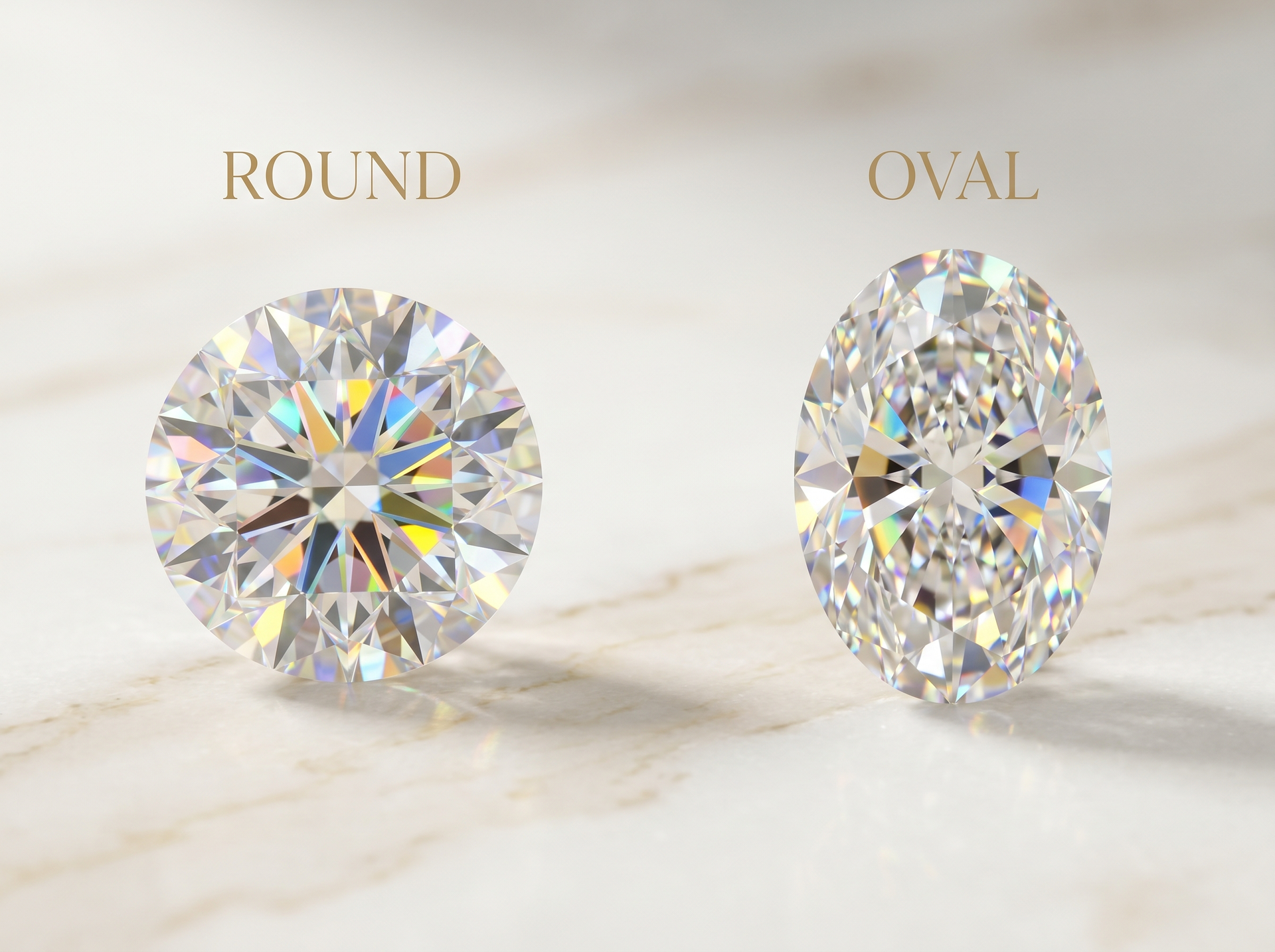
Oval and round are the two most searched diamond shapes for engagement rings in 2026. Both are brilliant-cut diamonds -- designed to maximise light return, fire, and sparkle. But they wear differently, look different on the hand, and suit different ring styles. Here is an honest breakdown to help you decide.

The Round Lab Grown Diamond
The round brilliant cut has 58 facets arranged to maximise light reflection. It is the most researched, most optimised diamond shape in history. Because so much of a round diamond's rough is removed during cutting, round diamonds command slightly higher prices per carat than other shapes -- even in lab-grown form.
Round diamonds are versatile. They suit solitaire settings, halo settings, pavé bands, and vintage-inspired designs equally well. If you want a diamond that looks brilliant from every angle and works with almost any ring style, round is the safe and timeless choice.

The Oval Lab Grown Diamond
The oval cut has been the most searched engagement ring shape since 2022. It has the same brilliant faceting as a round diamond -- the same fire, the same light return, the same sparkle. What it adds is length.
An oval diamond elongates the finger. A 1.5-carat oval appears visually larger than a 1.5-carat round because its elongated footprint covers more surface area. This is called the "face-up" size -- and oval diamonds consistently look larger face-up than rounds of the same carat weight. For buyers who want visual impact per carat, oval delivers more.

How Much Is a Lab Grown Oval Diamond?
In lab-grown form, oval diamonds typically cost slightly less per carat than round diamonds of the same quality because less rough material is wasted in cutting. A VVS, D-E-F lab-grown oval in 1 to 2 carats is significantly more accessible than a mined equivalent. At Ronora, oval lab-grown diamonds are available across engagement ring, halo, and three-stone settings at multiple carat sizes.
Oval vs Round: Key Differences
Brilliance: Equal. Both are brilliant-cut with similar light return when well-cut.
Finger elongation: Oval wins. The elongated shape makes fingers appear longer and slimmer.
Face-up size: Oval wins. Looks larger per carat than round.
Versatility: Round wins slightly. Easier to find matching wedding bands and side stones.
The bow-tie effect: Oval diamonds can show a dark shadow across the center if not well-cut. All Ronora ovals are selected for minimal bow-tie visibility.

Which Shape Should You Choose?
If you want timeless and universally flattering: round. If you want modern, finger-elongating, and visually impactful: oval. Both shapes are available in Ronora's CVD lab-grown diamond collection in VVS clarity and D-E-F colorless grading.
Browse oval and round engagement rings or explore halo settings in both shapes.
Frequently Asked Questions
How much is a lab grown oval diamond?
Lab-grown oval diamonds cost 60 to 80 percent less than mined oval diamonds of the same cut, color, clarity, and carat. In VVS clarity and D-E-F colorless, a 1-carat lab-grown oval is significantly more affordable than the mined equivalent.
Do oval diamonds look bigger than round?
Yes. Oval diamonds have a larger face-up surface area than rounds of the same carat weight, making them appear larger on the finger. This is one of the main reasons oval has become the most popular engagement ring shape.
Why do jewelers sometimes not recommend lab grown diamonds?
Traditional jewelers who sell mined diamonds earn higher margins on natural stones. Lab-grown diamonds offer better value to buyers, which has disrupted the traditional jewelry market. The diamonds themselves are identical in quality.
What is the bow-tie effect in oval diamonds?
The bow-tie effect is a dark shadow visible across the center of some oval diamonds. It is caused by how certain facets reflect light. A well-cut oval diamond minimises this effect. Always view oval diamonds in natural light before purchasing.


