


Cart
0


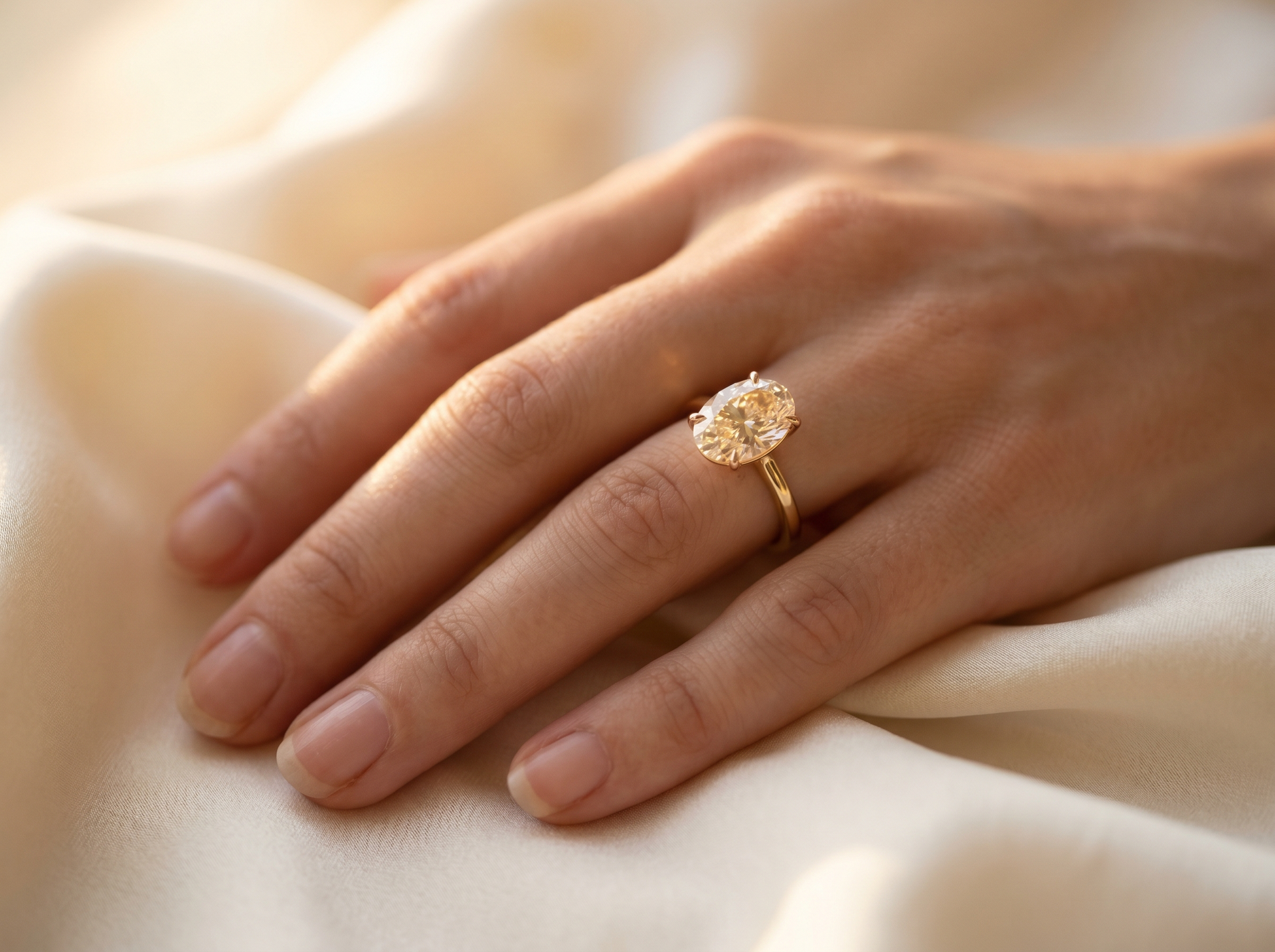

Oval has been the most searched diamond shape for engagement rings for the past three years, and in 2026 that shows no sign of slowing. The oval cut elongates the finger, looks larger than a round diamond of the same carat weight, and has a romantic silhouette that works with almost every setting style. Here is everything you need to know before buying an oval lab grown diamond ring.

Why Oval Cuts Look Larger Than Round
Surface area is the key. An oval diamond spreads more of its carat weight across its face compared to a round brilliant cut. A 1 carat round diamond has a diameter of roughly 6.5mm. A 1 carat oval typically measures around 7.7 by 5.7mm, which means it has a visibly larger face when viewed from above.
For buyers who want maximum visual presence from their diamond, oval delivers that without requiring a higher carat weight. In a lab grown diamond, where you are already getting significantly better value per carat than with a mined stone, an oval cut pushes that value further.

The Bow-Tie Effect in Oval Diamonds
One thing to be aware of with oval cuts is the bow-tie effect. A bow-tie is a dark shadowing that appears across the center of some oval diamonds when they are viewed face up. It is caused by how the facets at the widest part of the oval reflect light back to the eye.
A slight bow-tie is normal and barely noticeable in a well-cut oval. A strong bow-tie is a sign of poor proportions and reduces the brilliance of the stone. When buying an oval lab grown diamond, look for a stone with an excellent or very good cut grade. At Ronora, every oval lab grown diamond is selected for cut quality to minimise bow-tie.

Best Settings for Oval Lab Grown Diamonds
Solitaire settings let the oval take center stage. A four-prong or six-prong solitaire with prongs placed at the tips of the oval gives maximum light exposure. This is the most classic choice.
Halo settings, including hidden halo designs, pair beautifully with oval centers. A round halo visually extends the oval's outline. A hidden halo adds side sparkle without changing the clean top-down view.
Three-stone settings with marquise or pear side stones are especially popular with oval centers. The combination of elongated shapes creates a cohesive, elegant look that has become one of the most recognisable engagement ring styles of 2026.
Side-stone settings with pave or channel-set accent diamonds add brilliance along the band without distracting from the center oval.

Choosing the Right Carat Size for an Oval
Because oval cuts show their carat weight so efficiently, you can often go one step down in carat compared to what you might choose in a round diamond and still achieve a similar visual size. A 1.5 carat oval often reads as large as a 2 carat round on the finger.
The most popular oval sizes for engagement rings right now are 1.5 to 2.5 carats for rings intended to be worn as a solitaire or with a slim band. For halo settings, the halo adds visual size so the center stone can be slightly smaller while the overall ring reads larger.

Oval Lab Grown Diamonds at Ronora
Ronora offers oval lab grown diamond rings across several styles: solitaire, halo, hidden halo, three-stone with marquise side stones, and side-stone pave. Every oval diamond is VVS clarity and D-E-F colorless. For ovals above 1 carat, IGI certification is included.
All rings are made to order in 925 Sterling Silver, 10K, 14K, or 18K Solid Gold in white, yellow, or rose gold. Ships to the USA, UK, Australia, and Canada. Browse the engagement ring collection or explore oval halo rings specifically.
Frequently Asked Questions
How much should I expect to spend on a lab grown oval diamond engagement ring?
A CVD lab-grown oval diamond engagement ring in VVS clarity and D-E-F colorless typically costs 60 to 80 percent less than a mined oval of the same specifications. At Ronora, oval lab-grown diamond rings are available across a range of carat sizes -- contact us for current pricing on specific sizes.
Is it okay to propose with a lab grown diamond?
Yes. Lab grown diamonds are real diamonds, and a proposal is about the person and the moment, not the origin of the stone. More than 60 percent of engagement rings sold in the US now feature a lab-grown diamond. The quality is the same; the price is significantly better.
What is the bow-tie effect in oval diamonds?
The bow-tie is a dark shadow visible across the center of some oval diamonds when viewed face up. It is caused by facet proportions that reflect dark areas toward the eye. A well-cut oval minimises this. At Ronora, every oval is selected for minimal bow-tie visibility.
Do oval diamonds look bigger than round?
Yes. An oval diamond has a larger face-up surface area than a round diamond of the same carat weight, making it appear visually larger on the finger. A 1.5-carat oval often looks as large as a 2-carat round, which makes the oval one of the most efficient shapes for visual impact per carat.


