


Cart
0


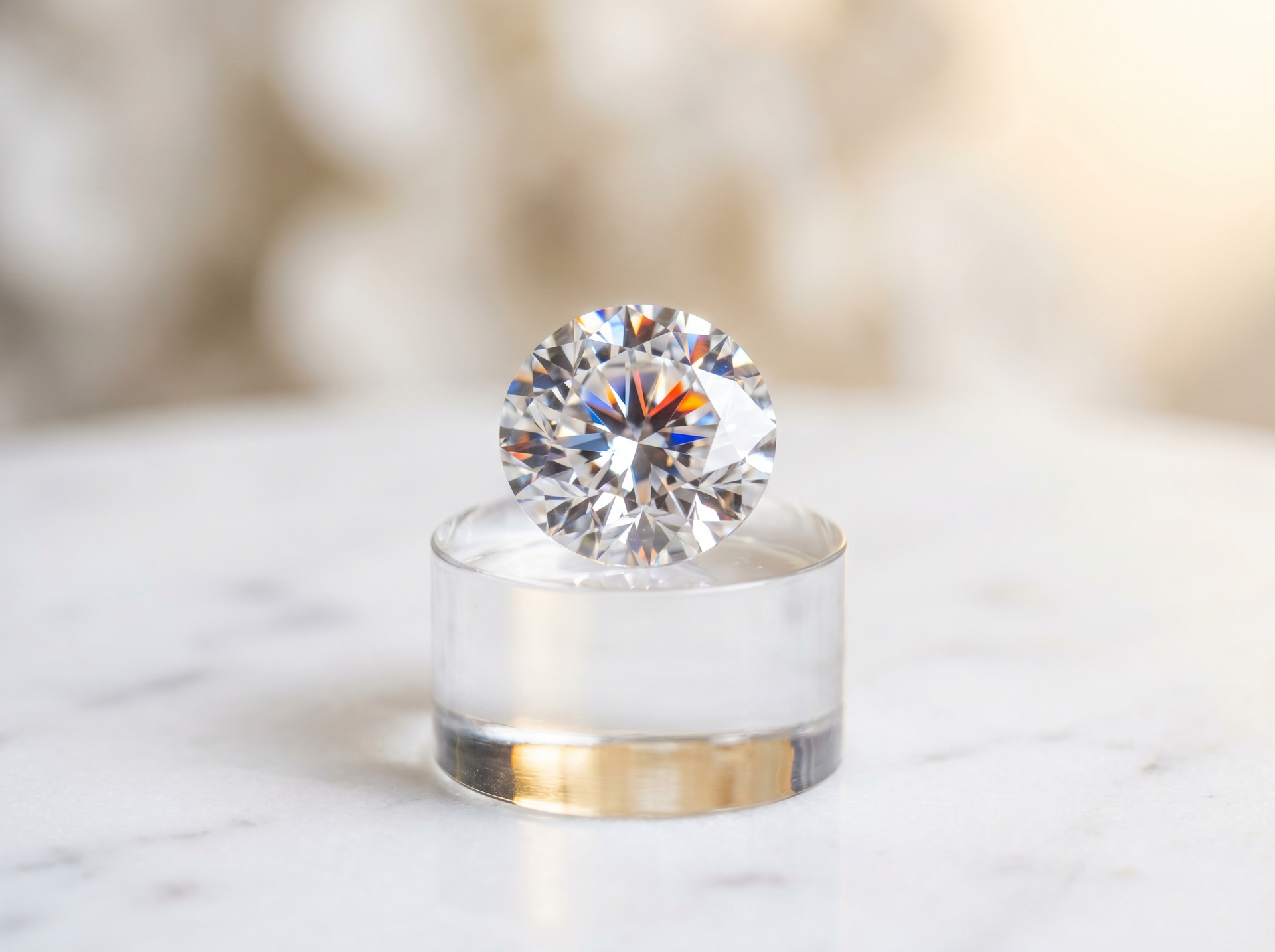
If you have ever searched for an engagement ring and come across lab grown diamonds, you have probably asked yourself this question. Are these actually real? It is the most common question people have before buying, and the answer is simple. Yes, a lab grown diamond is a real diamond.
Not a simulant. Not a fake. Not cubic zirconia or moissanite. A lab grown diamond is chemically, physically, and optically identical to a diamond pulled from the earth. The only difference is where it was made.

What Makes a Diamond Real
A diamond is defined by its atomic structure. Carbon atoms arranged in a specific crystal lattice, called a diamond cubic structure, create the hardest material on earth. That structure gives diamond its hardness of 10 on the Mohs scale, its refractive index of 2.42, and the way it bends and disperses light into fire and brilliance.
A lab grown diamond has exactly the same carbon atom arrangement. It scores 10 on the Mohs scale. It has the same refractive index. It disperses light in exactly the same way. Gemologists use the same grading scales and the same 4Cs framework to evaluate lab grown and mined diamonds because they are measuring the same material.
How Lab Grown Diamonds Are Made
The most advanced method for growing diamonds is called Chemical Vapor Deposition. A small diamond seed crystal is placed inside a sealed chamber filled with a carbon-rich gas mixture and heated to temperatures above 800 degrees Celsius. Carbon atoms build up on the seed crystal layer by layer, growing a full diamond over several weeks.
The result is a single-crystal diamond that is physically indistinguishable from a mined diamond under any standard gemological instrument. Ronora uses only diamonds grown using this process. Every stone in every ring is held to VVS clarity and D-E-F colorless, the top tier of both grading scales.

Will a Lab Grown Diamond Pass a Diamond Tester
Yes. Standard diamond testers work by measuring how quickly heat passes through a material. Diamond conducts heat faster than any other substance, which is how the tester distinguishes diamond from simulants like moissanite or cubic zirconia.
A lab grown diamond conducts heat at exactly the same rate as a mined diamond. It passes every standard diamond tester because it is a diamond. More advanced instruments used in gemological laboratories can detect trace growth patterns that distinguish lab grown from mined stones, but these are specialist tools. When you wear a lab grown diamond ring, nobody can tell the difference.

What Does a Lab Grown Diamond Cost Compared to Mined
This is where things get interesting. A lab grown diamond in VVS clarity and D color typically costs 70 to 85 percent less than a mined diamond with the same specifications. The material is identical. The price difference comes entirely from supply chain, mining operations, and artificial scarcity.
At Ronora, all lab grown diamonds are VVS clarity and D-E-F colorless. That is the top tier of both scales. In a mined diamond, that quality level would push the price well beyond what most buyers can access. In a lab grown diamond, it is the standard applied to every stone in every ring.
IGI Certification for Lab Grown Diamonds
For diamonds above 1 carat, Ronora includes IGI certification. IGI, the International Gemological Institute, grades lab grown diamonds using the same 4Cs system applied to mined stones: cut, colour, clarity, and carat weight. An IGI certificate gives you documented proof of exactly what you are buying.

The Bottom Line
Lab grown diamonds are real diamonds. They pass every test, carry the same certifications, and have the same physical properties as mined diamonds. The only difference is that they were grown in a controlled environment rather than extracted from the earth, which makes them more affordable and conflict-free by design.
Every ring at Ronora Diamond is set with a real lab grown diamond. VVS clarity, D-E-F colorless, made to order in your choice of metal and carat size. Browse the full collection here.
Frequently Asked Questions
Is a lab grown diamond a real diamond?
Yes. A lab grown diamond is a real diamond -- chemically, physically, and optically identical to a mined diamond. It has the same carbon crystal structure, the same hardness of 10 on the Mohs scale, and is graded by the same international standards as mined stones.
Will a lab grown diamond pass a diamond tester?
Yes. A lab grown diamond conducts heat at exactly the same rate as a mined diamond and passes every standard handheld diamond tester. Only advanced gemological laboratory instruments can distinguish a lab grown diamond from a mined one.
Are lab grown diamonds as good as real diamonds?
Yes. Lab grown diamonds are real diamonds. They are graded by IGI and GIA using the same 4Cs system and perform identically to mined diamonds in every measurable way. Ronora uses VVS clarity and D-E-F colorless -- the top tier of both scales.
Why are jewelers against lab grown diamonds?
Traditional jewelers who sell mined diamonds earn higher margins on natural stones. Lab grown diamonds represent better value for buyers, which disrupts the traditional jewelry market. The diamonds themselves are not inferior -- the resistance is commercial, not scientific.


