


Cart
0


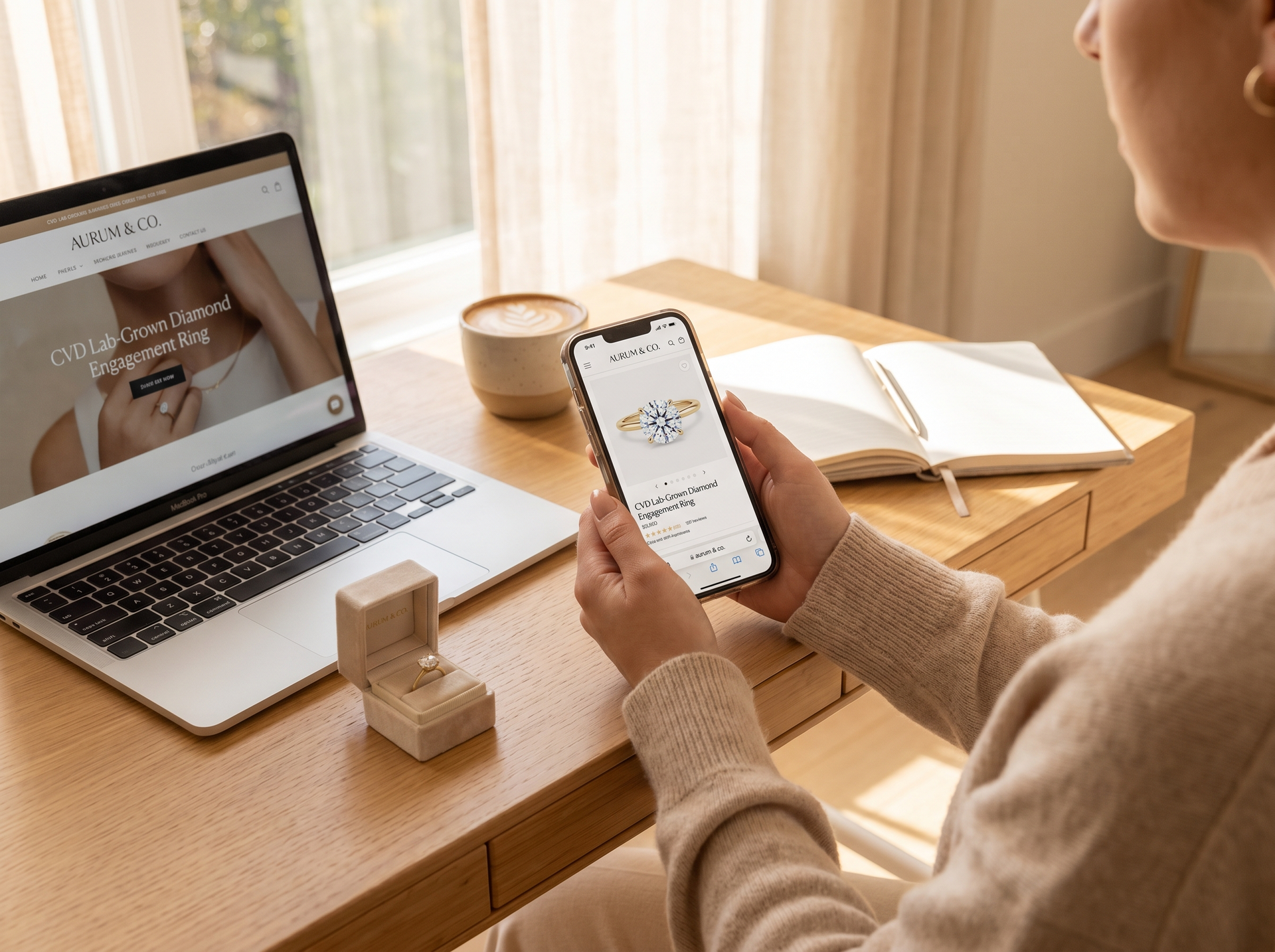
Buying a diamond engagement ring online has become the standard for a growing number of buyers. You have more styles to choose from, better prices, and the ability to research at your own pace without a salesperson. But there are also things that can go wrong if you do not know what to check. Here is a clear guide for US buyers buying a lab grown diamond ring online.

Step 1: Understand the 4Cs Before You Shop
The 4Cs are the four criteria used to grade every diamond: cut, colour, clarity, and carat weight. Before you spend anything, understanding these will stop you from overpaying for a stone that looks worse on your finger than the specifications suggest.
Cut is the most important. A well-cut diamond reflects light efficiently and looks brilliant. A poorly cut diamond looks dull even if it has a high colour and clarity grade. Look for excellent or very good cut grades.
Colour for a white diamond ranges from D, which is completely colourless, down through the alphabet. D-E-F is the colourless range. G-H is near-colourless and still looks white to the naked eye in most settings. Ronora uses only D-E-F colorless lab grown diamonds.
Clarity grades measure internal inclusions. VVS means very very slightly included -- essentially eye-clean and loupe-clean. VS is still eye-clean in most cases. SI has visible inclusions under magnification and sometimes to the naked eye. Ronora uses only VVS clarity.
Carat weight is how the diamond is measured by mass. Because oval, pear, and marquise cuts spread their carat weight more efficiently across their face, they often look larger than a round diamond of the same carat.

Step 2: Look for Independent Certification
Any lab grown diamond above 1 carat should come with an independent grading report from IGI or GIA. An IGI certificate confirms the 4Cs as assessed by a laboratory that has no financial stake in selling you the diamond. Without certification on larger stones, you are taking the seller's word on quality grades.
For diamonds below 1 carat, certification is less standard. What matters is that the seller clearly states the quality grades on the product page. Reputable jewellers do this.
Step 3: Check the Metal Quality
The metal of the ring is as important as the diamond. Karat indicates how much pure gold is in the alloy. 18K gold is 75 percent pure gold. 14K gold is 58.5 percent pure gold. 10K gold is 41.7 percent pure gold. Higher karat means richer colour but slightly softer metal. 14K is the most popular choice for engagement rings because it balances durability and richness.

Step 4: Understand How Sizing Works for Online Orders
Getting your ring size right before ordering is important because resizing after delivery adds time and sometimes cost. Most online jewellers provide a ring size guide. The most accurate method is to use a ring sizer tool or to measure the inside diameter of a ring you already wear.
US ring sizes run from about 3 to 14 for women's rings. The most common women's sizes are 5 to 7. If you are unsure, most jewellers recommend sizing up slightly, since rings are easier to resize down than up. Ronora offers free resizing within the first year of purchase.
Step 5: Check the Return and Shipping Policy
Before buying any ring online, read the return policy. You should be able to return or exchange the ring within a reasonable window if it does not meet your expectations. A jeweller who does not offer returns on made-to-order rings should be approached with caution.
For US buyers purchasing from an international jeweller, check whether shipping is tracked and insured. Ronora ships to the US with full tracking and insurance coverage, with production time of 10 to 14 days and shipping time of 5 to 10 days depending on location.
Step 6: Look at the Product Photography
Good product photography tells you a lot about how a jeweller operates. Look for multiple angles, close-up shots that show the stone and setting clearly, and ideally a hand shot that shows scale. If a jeweller only shows one blurry image, that is a warning sign.

Summary
Know the 4Cs and the grades you are paying for. Look for IGI certification on stones above 1 carat. Check the metal karat. Measure your ring size before ordering. Read the return and shipping policy. Look for detailed product photography. Buy from a jeweller who is transparent about every specification.
Browse Ronora's full engagement ring collection or start with the most popular styles in the lab grown diamond rings collection.
Frequently Asked Questions
What should I look for when buying a lab grown diamond online?
Look for VVS clarity, D-E-F colorless grading, excellent cut, IGI or GIA certification for stones 1ct and above, clear metal karat information, a detailed return policy, and multiple product photos including a hand or scale shot. These are the signs of a transparent, quality jeweller.
How do I know if a lab grown diamond is real?
A lab grown diamond is a real diamond -- not a simulant. It passes every standard diamond tester and is graded by IGI or GIA using the same 4Cs as mined diamonds. A reputable seller will provide the grading specifications on every product page.
Is it safe to buy an engagement ring online?
Yes, if you buy from a jeweller who is transparent about specifications, offers tracked insured shipping, and provides a clear return or exchange policy. Read the return window and the resizing policy before ordering.
What is the best lab grown diamond to buy?
The best lab grown diamond is one with VVS clarity, D-E-F colorless grading, excellent cut, and CVD growth method. These specifications ensure maximum brilliance, longevity, and visual quality. At Ronora, every diamond meets all four standards.


