index
Home Pear Cut Engagement Rings | Lab Grown Diamond | IGI
Pear cut lab grown diamond engagement rings collection at Ronora Diamond Pear Cut Engagement Rings | Lab Grown Diamond | IGI

RINGS MADE TO ORDER

Pear Cut Engagement Rings | Lab Grown Diamond | IGI

The pear cut is the shape for someone who wants the elongating effect of an oval but not the ring everybody already has. One rounded end, one point, complete asymmetry. Worn with the point toward the fingernail it lengthens the finger the way a marquise does, without the sharp formality.

Every pear cut lab grown diamond engagement ring here is made to order in our Surat studio. The centre stones are Real CVD Lab-Grown Diamonds in VVS clarity and the D-E-F Colorless range, grown using Chemical Vapor Deposition technology. A pear has a single point where light escapes, so cut precision and clarity carry more weight in this shape than in a symmetrical one.

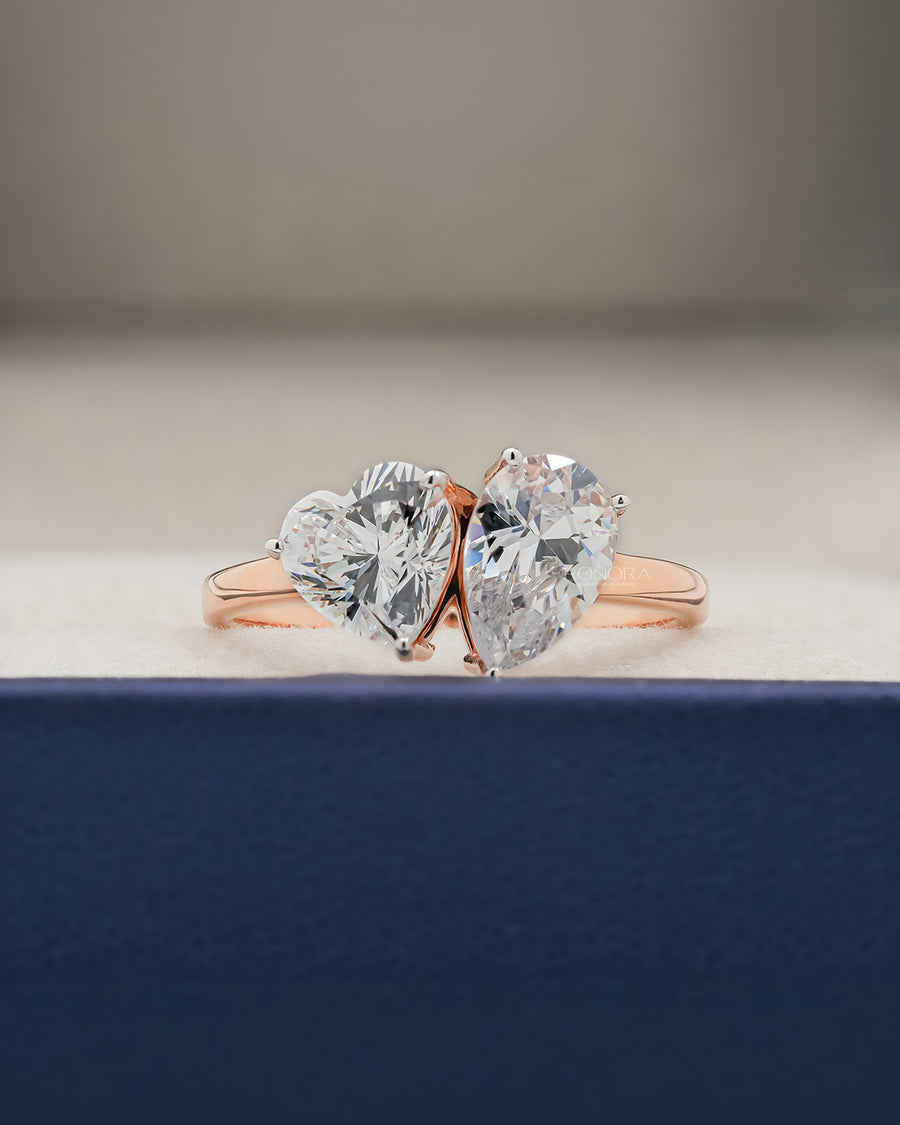
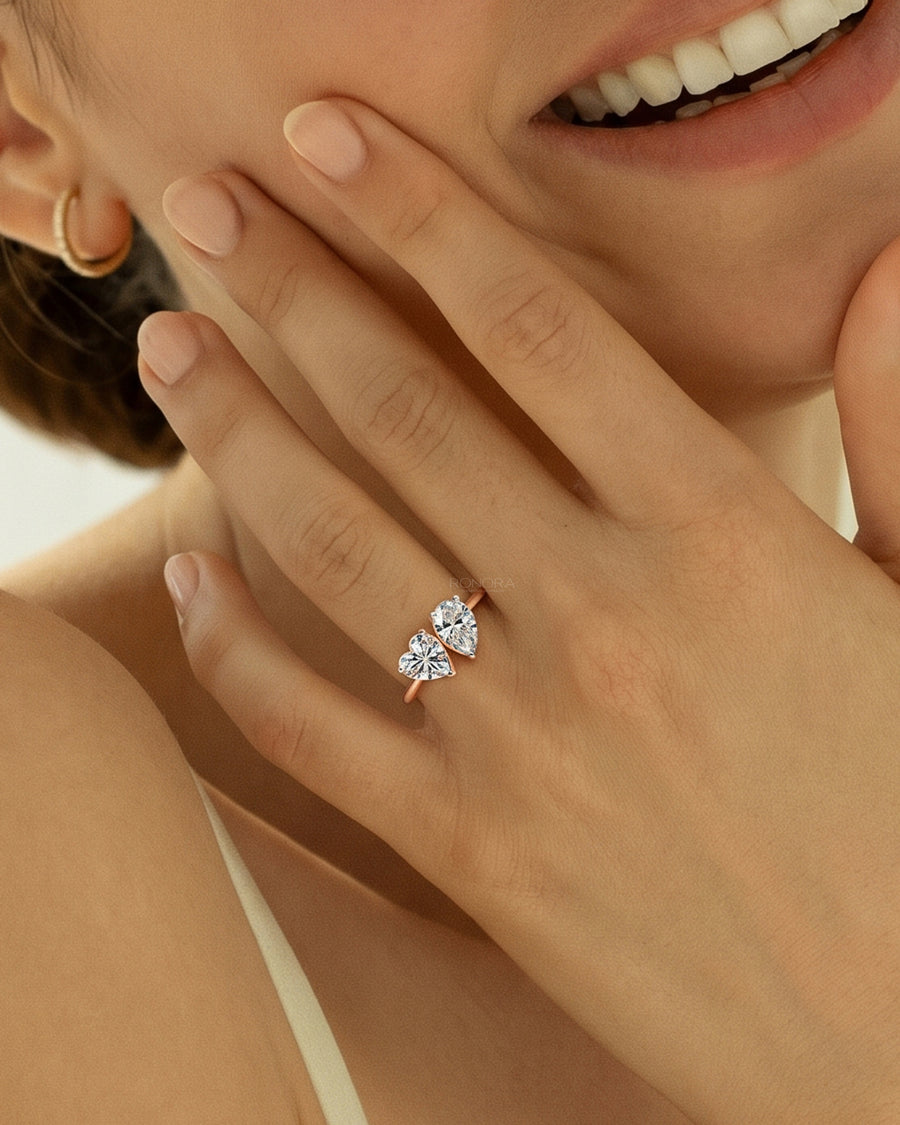
Available in solitaire, bezel, halo, three stone, bypass, toi et moi and eternity settings, including fancy yellow centre stones, in 10K, 14K and 18K solid gold across white, yellow and rose, plus platinum.

2 Carat Pear Cut Lab Grown Diamond Engagement Rings

A 2 carat pear measures roughly 10.5mm by 7mm against a 2 carat round at about 8.1mm across. It delivers most of the marquise's length advantage while keeping one soft, rounded end, which is why it reads as elegant rather than dramatic.

Every centre stone from 1 carat upward arrives with IGI certification.

Pear Cut Lab Grown Diamond Ring Prices

Real starting prices for the lab grown diamond rings in this collection. Each ring is made to order, and the price moves with carat weight, metal and setting.

Ring Setting Price from
Pear Bezel Ring Bezel solitaire, IGI certified $579
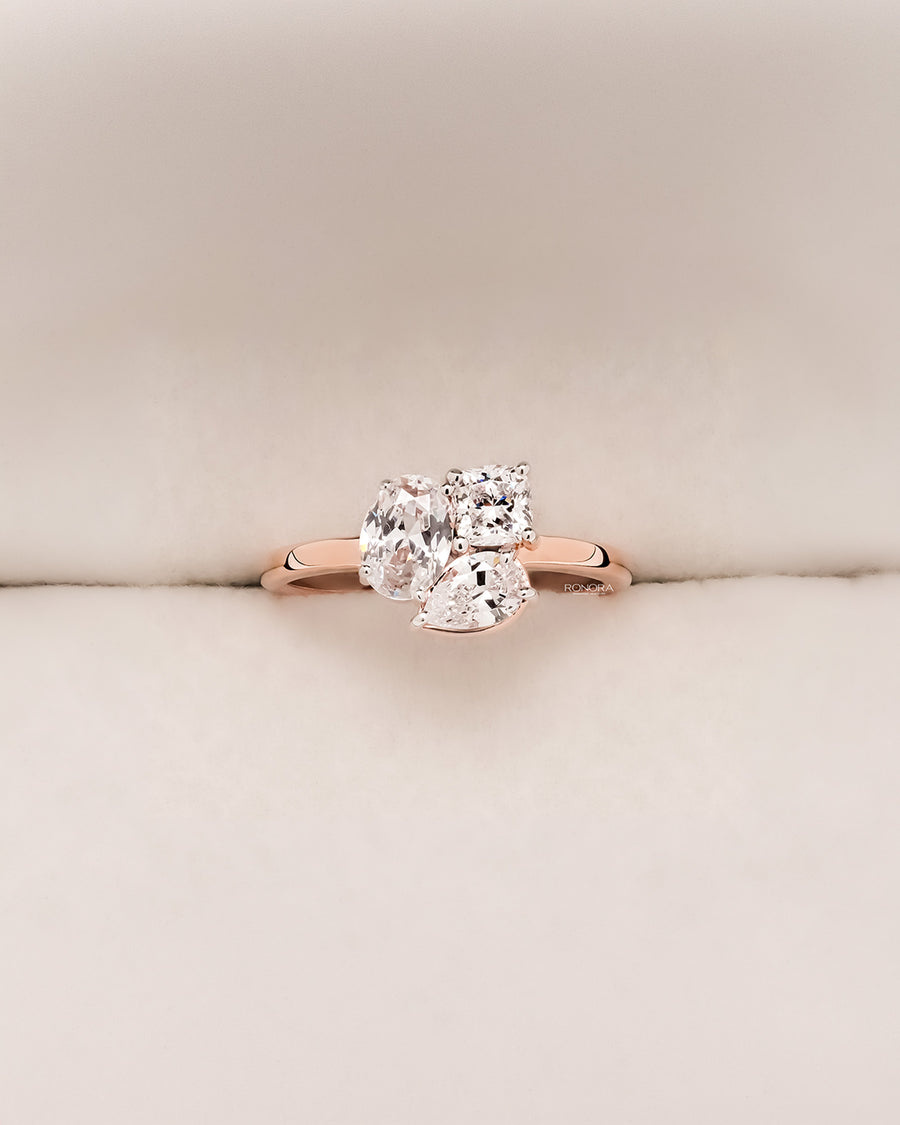
Oval Pear Cluster Ring Cluster, IGI certified $816
Yellow Pear Baguette Halo Ring Fancy yellow halo, IGI certified $822
Yellow Pear Halo Ring Fancy yellow, split shank, IGI certified $976
Pear Three Stone Ring Three stone, IGI certified $1,037
Yellow Pear Three Stone Ring Fancy yellow three stone, IGI certified $1,068
Pear Five Stone Band Stackable five stone $1,226
Pear Eternity Band Stackable eternity $1,317
Pear Bypass Ring Toi et moi bypass, IGI certified $1,680

How the Pear Compares to Other Diamond Shapes

Shape Surface per carat Character Best suited to
Pear High, close to oval Asymmetric, one point, elegant Elongation with a shape that is still uncommon
Oval High, about 10 percent above round Soft, symmetrical, brilliant The safest elongating choice
Marquise Highest of any shape Dramatic, two points Maximum finger coverage
Round The benchmark Maximum fire and sparkle Classic taste over visual size
Heart Similar to pear Romantic, unmistakable Buyers who want the sentiment stated outright

Frequently Asked Questions

How much does a pear cut lab grown diamond ring cost?
At Ronora a pear cut lab grown diamond engagement ring starts at $579 and most of the collection sits between $820 and $1,700 depending on carat weight, metal and setting. A comparable mined pear typically costs several times more for the same size and grade.

Which way should a pear shaped ring point?
Convention places the point toward the fingernail, which lengthens the finger. There is no rule, and some buyers prefer it pointing toward the wrist. Both are set the same way and neither affects durability.

Is a pear cut good for an engagement ring?
Yes. It gives most of the visual size advantage of a marquise with a softer outline, and because it is chosen less often than round or oval it tends not to date. The single point should be protected by a prong or bezel, which every setting here does.

Is a lab grown diamond suitable for daily wear?
A lab grown diamond is chemically, physically and optically identical to a mined diamond and measures 10 on the Mohs hardness scale. It handles daily wear exactly the same way. The only difference is origin and price.

What clarity and colour are Ronora's pear diamonds?
Every pear lab grown diamond we set is VVS clarity in the D-E-F Colorless range, other than the fancy yellow centre stones, which are graded for colour intensity rather than the colourless scale.

Explore More Lab Grown Diamond Shapes and Settings

By shape: oval cut engagement rings, marquise cut engagement rings, round cut engagement rings, emerald cut engagement rings, heart cut engagement rings.

By setting: solitaire rings, halo rings, three stone rings, bezel rings, fancy coloured rings.

To complete the set: wedding bands, eternity bands and anniversary rings.

Ronora. Made for the Moments.

13 products
13 products
The Point Is Protected

The Point Is Protected

A pear's single point needs a guardian. Our setters cap it in a hand-finished V-prong so the most delicate part becomes the safest.

Distinct, Documented

Distinct, Documented

An unusual shape should not mean unusual risk. IGI certification, free resizing, and honest returns cover every pear we make.

The Unexpected Advantage

The Unexpected Advantage

Pears cost less per carat than rounds and look larger. Choosing the interesting shape is also choosing the smarter one.

Which way should a pear cut point be worn?

Tradition says point toward the fingertips to elongate the hand, but plenty wear it reversed. It is her ring, her direction.

Is the pear's point fragile?

It is the one spot that needs protection, so we always cover it with a V-tip prong set by hand.

Do pear diamonds look bigger than rounds?

Yes, the elongated teardrop spreads more visible surface per carat, so it wears noticeably larger.

Is a pear cut good for a halo setting?

Excellent. A halo traces the teardrop outline and pushes the perceived size up by nearly a full carat look.

What ratio makes the prettiest pear?

Around 1.45 to 1.65 length to width keeps the classic teardrop balance. We check every stone's proportions before setting.

Are pear center stones IGI certified?

Yes, every eligible pear arrives with its IGI certificate in the box.