


Cart
0


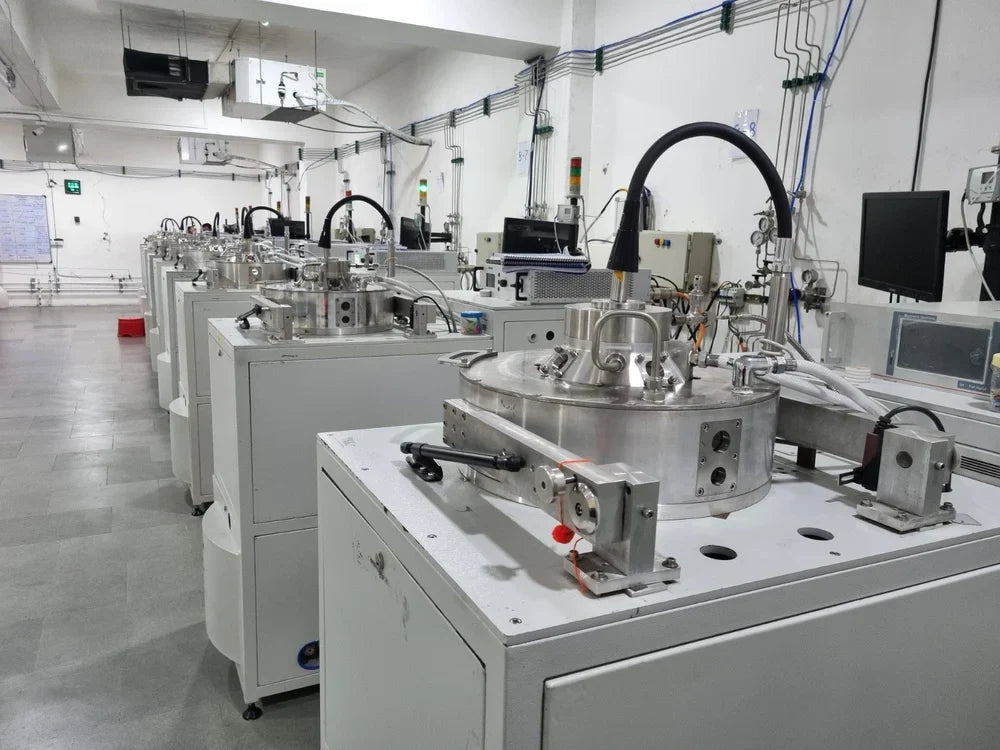
When you shop for a lab-grown diamond, you will see the term CVD. At Ronora, every diamond is CVD. Understanding what that means -- and why it matters -- will help you make a more confident purchase.

What Does CVD Stand For?
CVD stands for Chemical Vapor Deposition. It is the primary method used to grow lab-grown diamonds in a controlled laboratory environment. The result is a diamond that is chemically, physically, and optically identical to one formed underground -- just created in weeks rather than millions of years.
How Is a CVD Diamond Made?
The CVD process begins with a tiny diamond seed -- a thin slice of an existing diamond -- placed inside a sealed growth chamber. The chamber is filled with a carbon-rich gas mixture and heated to extremely high temperatures. Under these conditions, carbon atoms bond to the diamond seed and build up the crystal structure layer by layer over several weeks. The resulting rough diamond is then cut, polished, and graded exactly like a mined diamond.

Is a CVD Diamond a Real Diamond?
Yes. A CVD diamond is a real diamond by every scientific and gemological definition. It scores 10 on the Mohs hardness scale -- the hardest natural substance. Its refractive index, thermal conductivity, and physical structure are identical to a mined diamond. The GIA and IGI certify CVD diamonds using the same grading system as mined stones.
The only difference between a CVD diamond and a mined diamond is origin. One grew underground over millions of years. The other grew in a laboratory over several weeks. Their properties are the same.
What Are the Advantages of a CVD Diamond?
Purity: CVD growth allows for exceptional control over the diamond's composition. Many CVD diamonds have fewer impurities than comparable mined stones.
Value: CVD diamonds cost 60 to 80 percent less than mined diamonds of equivalent quality -- the same cut, color, clarity, and carat at a dramatically lower price.
Ethics: CVD diamonds have a fully traceable origin with no mining, no land disruption, and no conflict sourcing concerns.
Consistency: The controlled growth environment produces diamonds that consistently meet strict grading standards. Every Ronora diamond is VVS clarity and D-E-F colorless -- no exceptions.

Are CVD Diamonds Worth Buying?
For buyers who want the highest quality stone at the best value, absolutely. A CVD lab-grown diamond in VVS clarity and D-E-F colorless grading is identical to a mined diamond of the same grade in every way that affects how it looks, sparkles, and wears. At a fraction of the cost, you can invest more in the setting, metal, or center stone size.
At Ronora, all diamonds are CVD, VVS clarity, and D-E-F colorless. Explore the full collection or shop engagement rings.

Frequently Asked Questions
Is a CVD diamond a real diamond?
Yes. A CVD diamond is a real diamond -- identical in chemical structure, hardness, and optical properties to a mined diamond. It is graded by the same international gemological standards used for mined stones.
What are the disadvantages of CVD diamonds?
The main disadvantage is lower resale value compared to mined diamonds. CVD diamonds do not command the same secondary market prices as mined stones.
Are CVD diamonds worth buying?
Yes. CVD diamonds of the same cut, color, clarity, and carat as mined stones cost 60 to 80 percent less and are visually and physically identical. For buyers focused on quality and value, they are an excellent choice.
How do I know if a CVD diamond is good quality?
Look for IGI or GIA certification, VVS clarity, and D-E-F colorless grading. At Ronora, every diamond meets these standards -- no exceptions, no lower-grade stones.


