


Cart
0


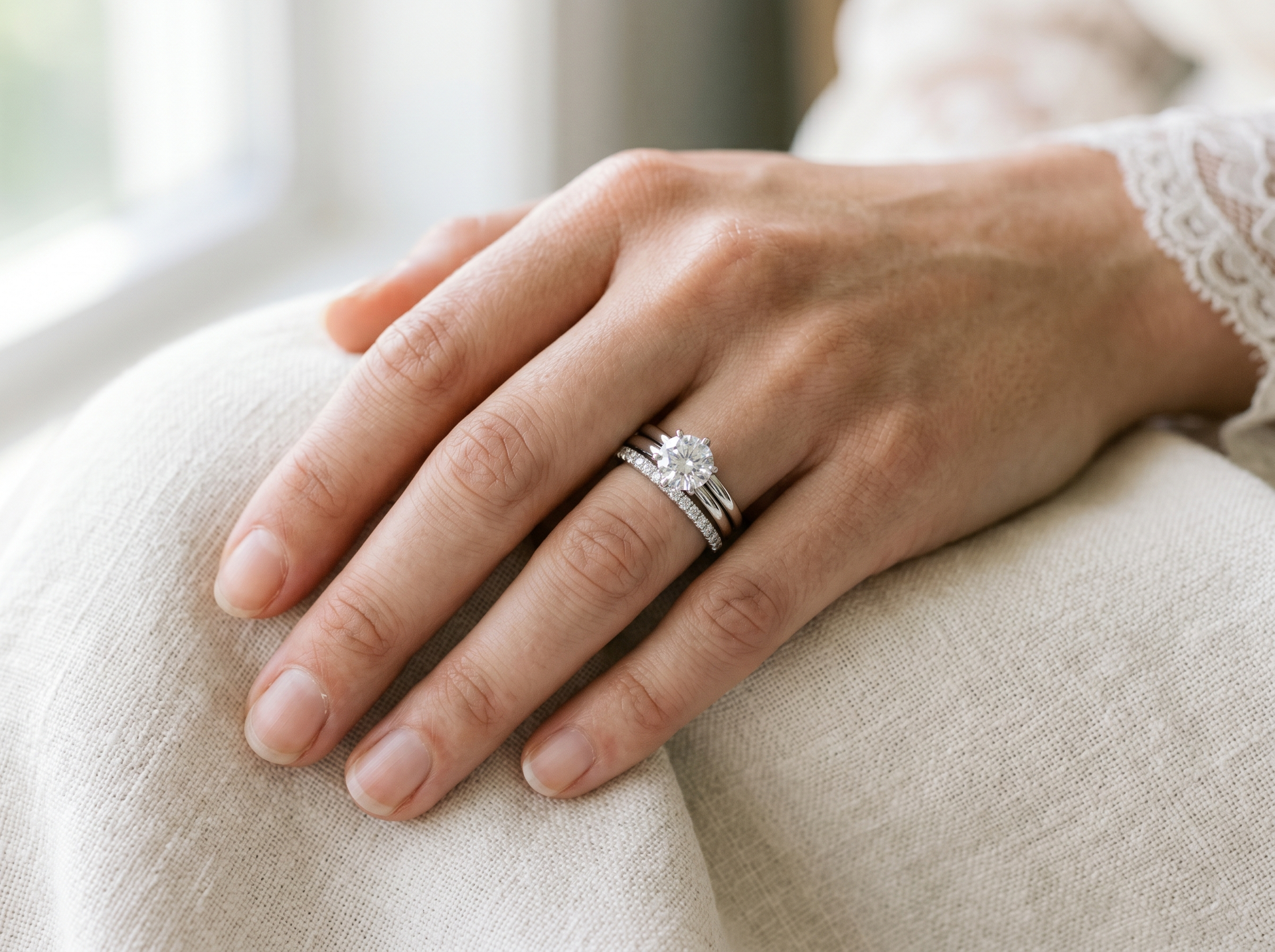
Choosing a wedding band is different from choosing an engagement ring. The engagement ring is about the diamond and the statement it makes. The wedding band is about fit, proportion, and how it works alongside what you already wear every day. Here is a practical guide to finding the right lab grown diamond wedding band.

Eternity Band vs Half Eternity Band
The first decision is whether you want a full eternity band or a half eternity band. A full eternity band has diamonds set all the way around the ring. A half eternity band has diamonds on the top face of the ring only, with a plain metal shank on the bottom.
Full eternity bands are more visually impactful and photograph beautifully from every angle. They are also harder to resize because cutting through the diamond-set portion of the band is more complex. If your ring size might change over time, that is worth considering.
Half eternity bands are easier to resize and are often slightly more comfortable for people who are not used to wearing rings. The diamond coverage on top looks identical to a full eternity band when the ring is on the finger.

Flat Band vs Curved Band
If you already have an engagement ring, the profile of your wedding band matters for how the two rings sit together. A flat or straight wedding band will sit against most engagement rings with a small gap at the sides where the bands curve away from each other. This is normal and many people prefer the look of two distinct rings sitting together.
A curved or shadow band is shaped to follow the profile of an engagement ring with a prominent center stone. It sits flush against the engagement ring, leaving no gap. If you want your bridal set to look like one continuous ring when worn together, a curved band is the right choice.

Band Width
Width affects how the band looks on the finger and how it sits next to your engagement ring. A 1.5 to 2mm band is delicate and minimal -- works well alongside an engagement ring with a prominent center stone because it does not compete for attention. A 3 to 4mm band is more substantial and works well as a standalone ring or when you want the wedding band to have its own presence.
For stacking, thinner bands are easier to mix and match. If you plan to stack two or three bands alongside your engagement ring, a slim eternity band in the 1.5 to 2mm range gives you the most flexibility.
Diamond Shapes in Wedding Bands
Round brilliant cut diamonds are the most common in wedding bands and work with every engagement ring style. Oval cut bands pair especially well with oval center stones in the engagement ring. Emerald cut eternity bands have a more editorial, architectural look. Pear and radiant cut bands create a distinctive all-around sparkle.
At Ronora, wedding bands are available in round, oval, pear, emerald, and radiant cut lab grown diamonds. Every stone is VVS clarity and D-E-F colorless, consistent with the engagement ring collection.

How to Stack Multiple Bands
Stacking two or three bands alongside an engagement ring is one of the biggest jewellery trends. The most balanced stacks follow a simple rule: vary the width or texture of each band so they read as a set rather than duplicates.
A common stack would be the engagement ring in the center, a slim pave eternity band on one side, and a plain polished metal band on the other. Another popular combination is two slim diamond eternity bands flanking the engagement ring. The engagement ring always sits in the center of the stack.

Lab Grown Diamond Wedding Bands at Ronora
Ronora's wedding band collection includes 31 styles: full eternity bands, half eternity bands, pave bands, multi-row bands, and curved shadow bands designed to sit flush against engagement rings. All are available in 925 Sterling Silver, 10K, 14K, and 18K Solid Gold in white, yellow, and rose gold. Made to order with free sizing. Ships to USA, UK, Australia, and Canada.
Browse the full wedding band collection or explore eternity bands separately.
Frequently Asked Questions
When should a woman get an eternity ring?
An eternity ring is traditionally given on a significant anniversary -- often the first, fifth, or tenth -- or after the birth of a child. There is no strict rule. Many couples choose an eternity band as the wedding band itself, worn from the wedding day.
Can eternity bands be resized?
Full eternity bands are difficult to resize because the diamonds run all the way around the band. Half eternity bands are easier to adjust. For this reason, Ronora recommends measuring your ring size carefully before ordering an eternity band.
What is the difference between an eternity band and a wedding band?
An eternity band has diamonds set around part or all of the ring. A wedding band can be a plain metal band, a pavé band, or an eternity band. Eternity band is a specific style within the broader category of wedding bands.
How do I choose a wedding band to match my engagement ring?
Match the metal type and color. Match the diamond shape if you want visual continuity. If your engagement ring has a high-profile center stone, consider a curved shadow band that sits flush against it. If your engagement ring has a slimmer profile, a flat eternity band sits cleanly alongside it.


